Choose fewer experiences, but understand them better.
For a first Mekong Delta visit, combine one village journey by bicycle or on foot, one water experience on both a larger river and a small canal, one meal connected to a family kitchen, and unplanned time where you stay. Ask who hosts each activity, how many people join and whether a stop is daily work, a demonstration or a shop. Two nights usually reveal more local life than a rushed multi-province day tour.
I grew up in Ben Tre and have lived among coconut farms for decades. Since returning to run our family farm in 2017, I have hosted travellers with very different ideas of “the real Mekong.” Some expect floating markets everywhere. Some believe an experience is authentic only if it is uncomfortable. Others want a private performance that looks spontaneous.
Real life is less tidy. A farmer may use a smartphone. A traditional workshop may also sell products. A family meal may be simple but still prepared especially for guests. Authenticity does not mean pretending tourism has no effect. It means being honest about what you are seeing, who benefits and how the activity relates to life outside the tour.
What makes an experience authentic?
Four things matter more than rustic appearance. First, the place has a purpose beyond entertaining visitors. Second, someone local can explain what normally happens there. Third, the group is small enough to observe and ask questions. Fourth, the schedule allows ordinary moments instead of rushing from photograph to photograph.
- Your host explains what is daily life and what is arranged for visitors
- Group size, prices and shopping stops are clear in advance
- The route stays within one realistic local area
- Questions are welcome and there is no pressure to perform
- Local people are paid for their time, transport or skills
- Every stop feels like a sales room with a short demonstration
- A packed schedule leaves no time to understand where you are
- The description promises the same fruit, wildlife or festival all year
- “Local family” is used vaguely without saying who hosts you
- Surprise fees appear for boats, meals or transport already implied
 A coconut harvest follows the condition of the garden and the fruit, not a visitor timetable. Photo: Coco Happy Farm.
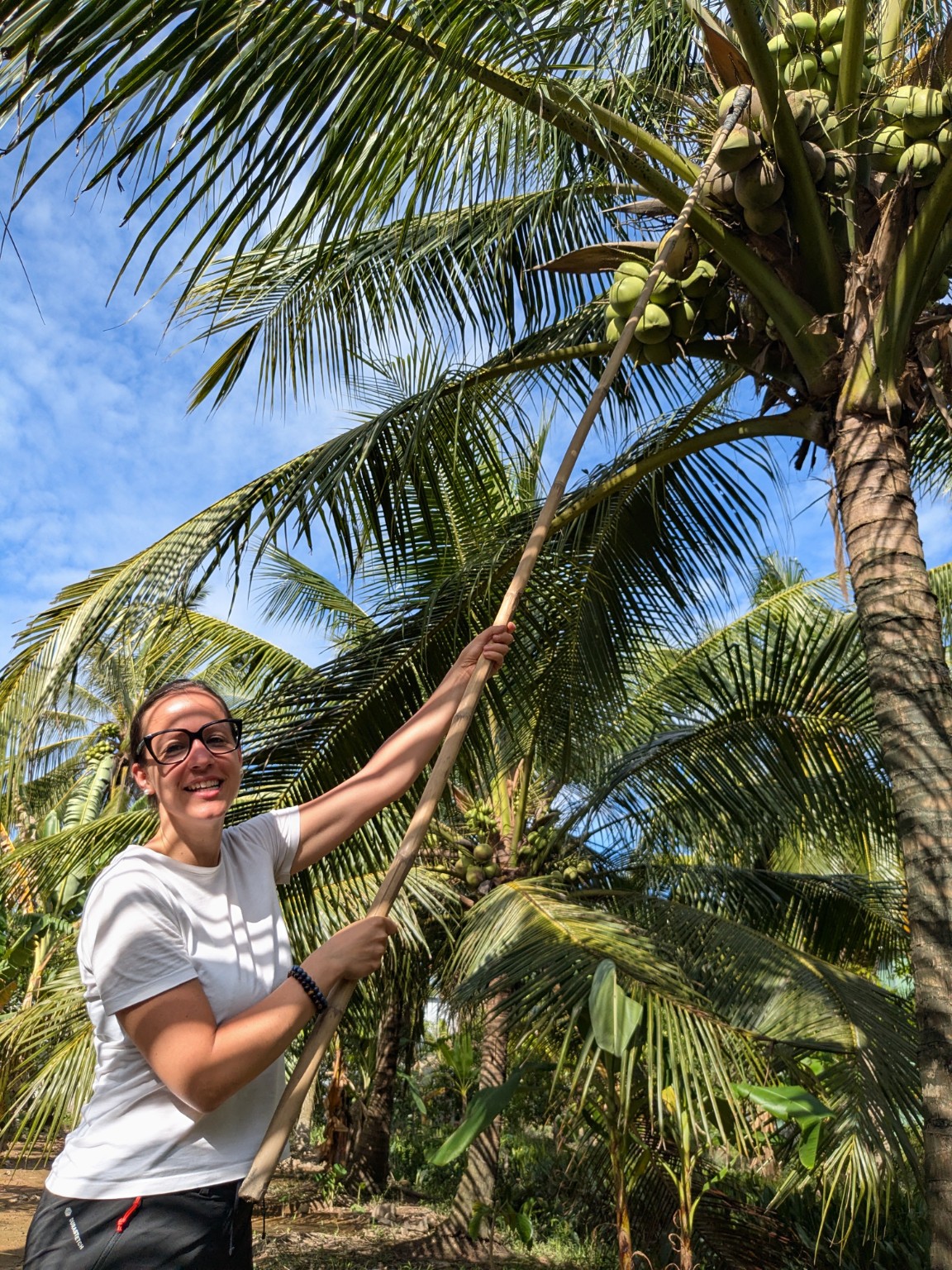 A working garden changes with rain, harvests and the season; it is never a fixed display. Photo: Coco Happy Farm.
Seven Mekong Delta experiences worth slowing down for
1. Cycle through an ordinary village
Cycling is valuable because the space between stops becomes part of the experience. You notice school times, small bridges, household gardens, local cafés and how narrow lanes connect homes to markets. A good village ride does not need constant attractions. In hot weather, start in the morning, carry water and accept that a short route can be enough.
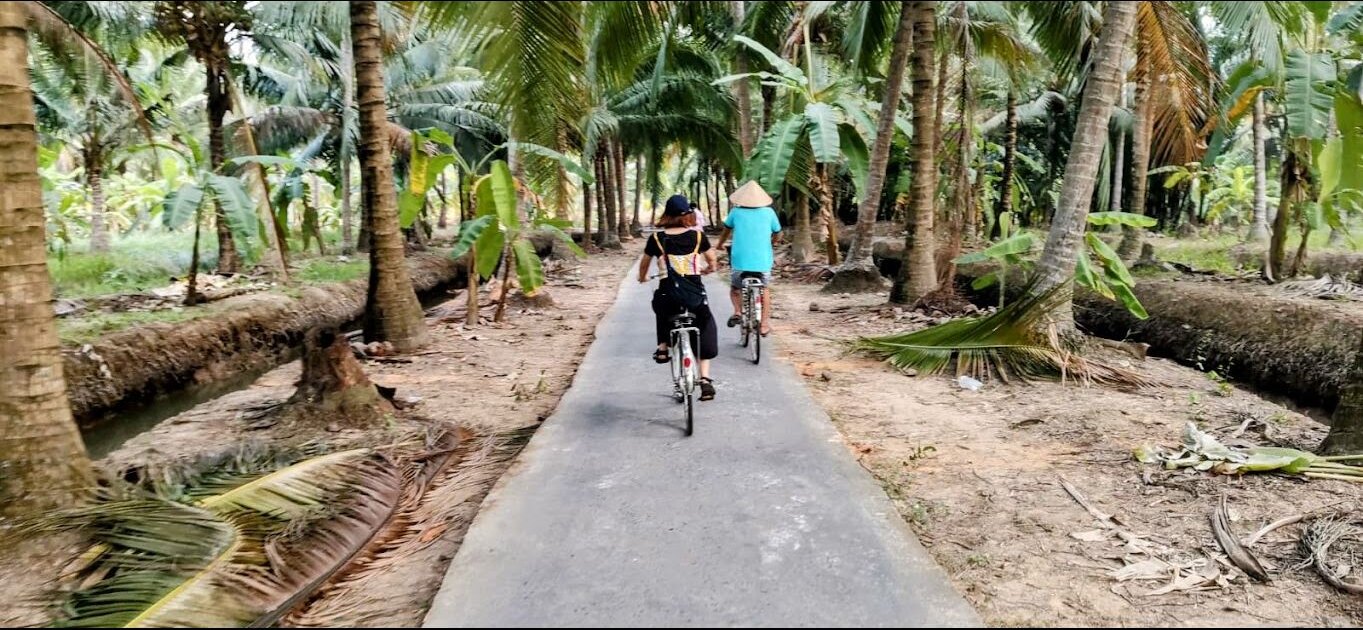
2. See both the broad river and the small canals
The Delta is not one type of waterway. A motorboat on a larger river shows distance, trade and changing light. A hand-rowed sampan enters the narrow channels where engines are less suitable. The small boat should not be treated as a theme-park ride: the rower’s work, water level and route all matter. Wear a life jacket and follow the boat operator’s instructions.
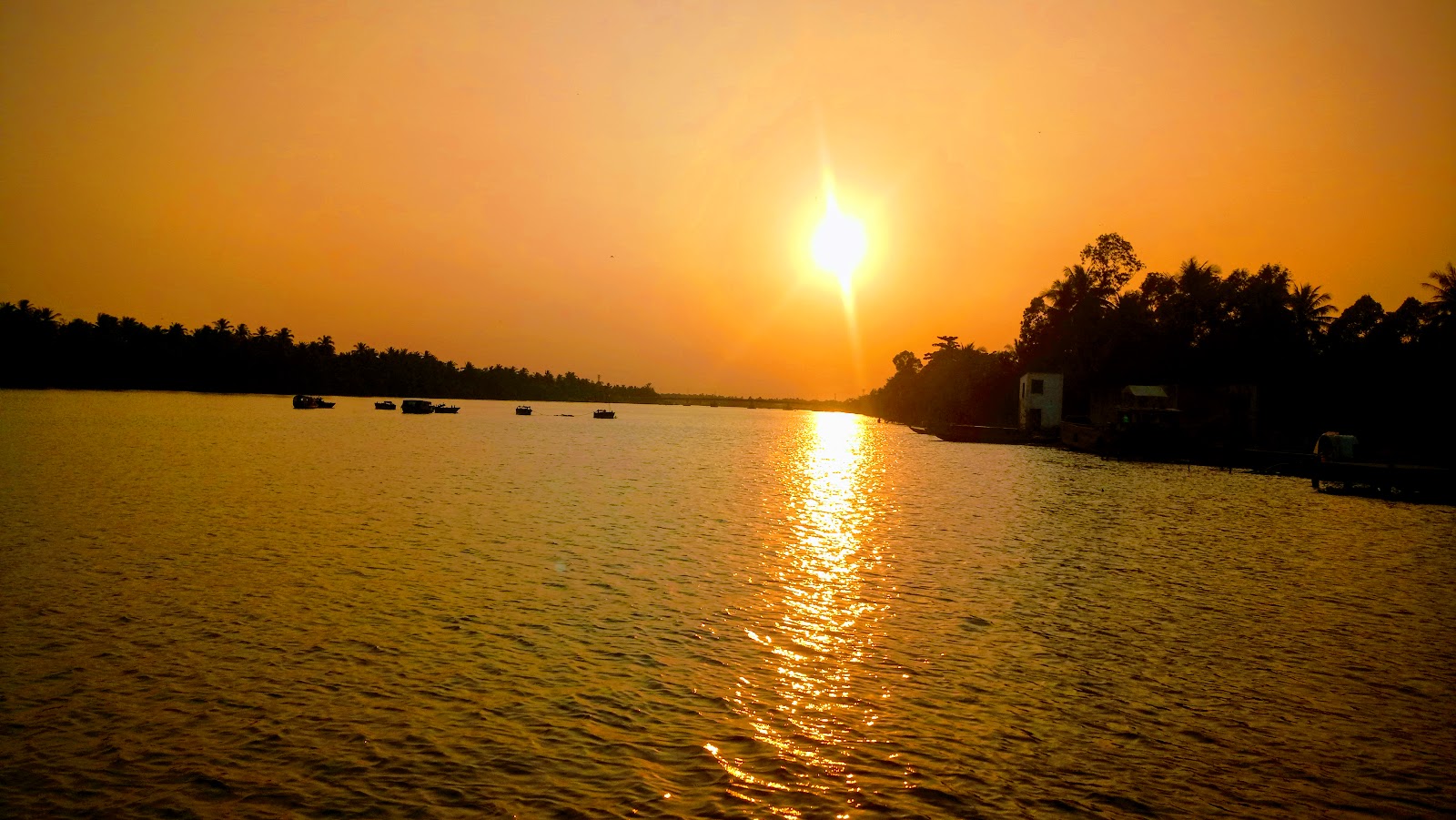 A larger river journey gives context before entering the quieter canals. Photo: Coco Happy Farm.
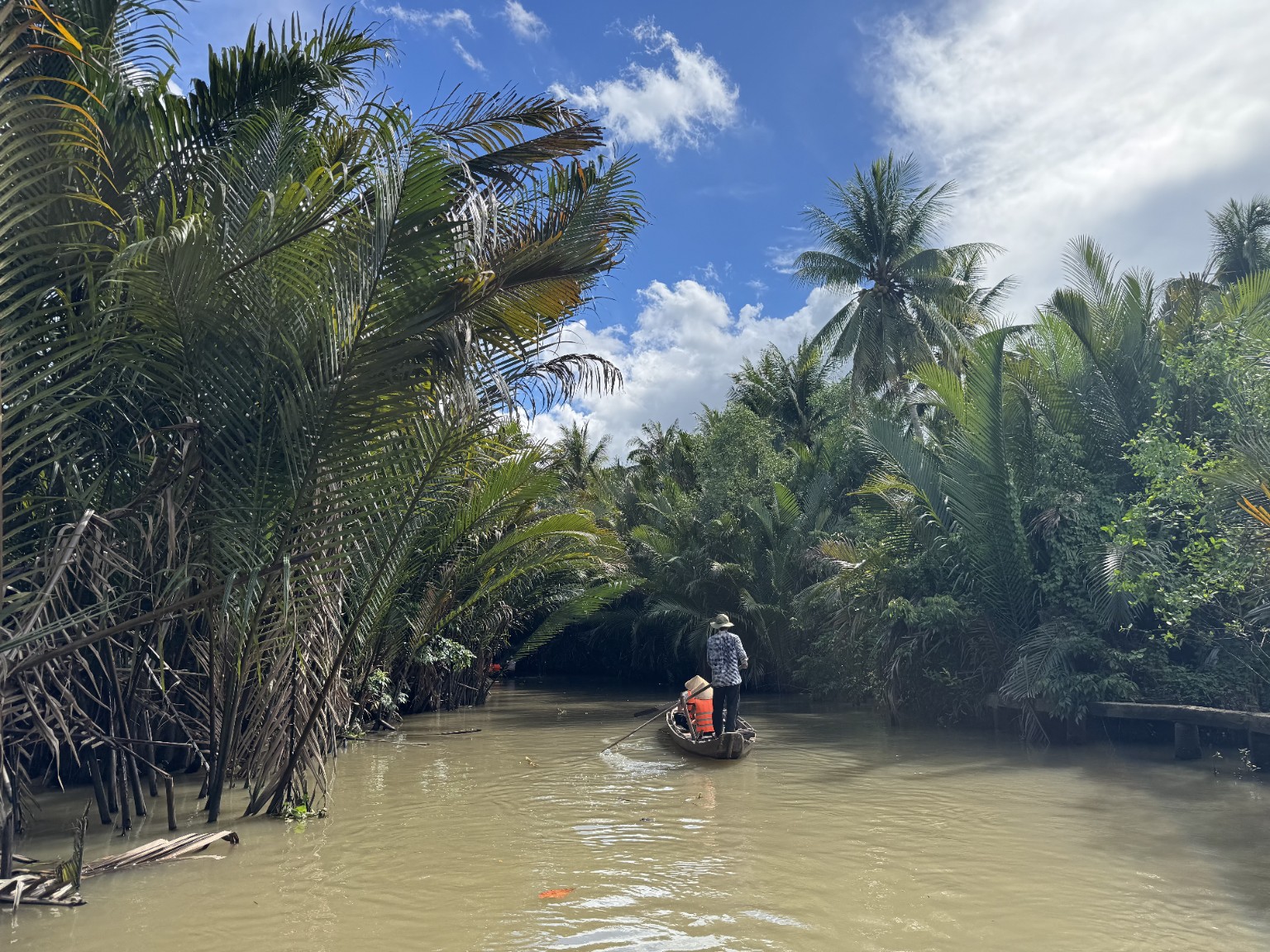 On narrow canals, a sampan moves at the pace of the person rowing it. Photo: Coco Happy Farm.
3. Spend time on a real family farm
A farm visit is strongest when the host explains the land rather than promising that every guest can harvest everything. Coconut work is seasonal and skilled. Fruit availability changes. Some tasks are unsafe or disruptive for visitors to attempt. Walking through the garden, tasting what is actually ripe and learning how a family uses the land can be more honest than a staged harvest.
4. Understand coconut work beyond the fruit
In Ben Tre, coconuts connect farming with small industries: husks, fibre, shells, candy, household products and transport. Ask who buys the materials, whether the work is done regularly and how machines have changed it. A workshop can welcome tourists and still be genuine; the important question is whether the explanation respects the workers instead of turning them into scenery.
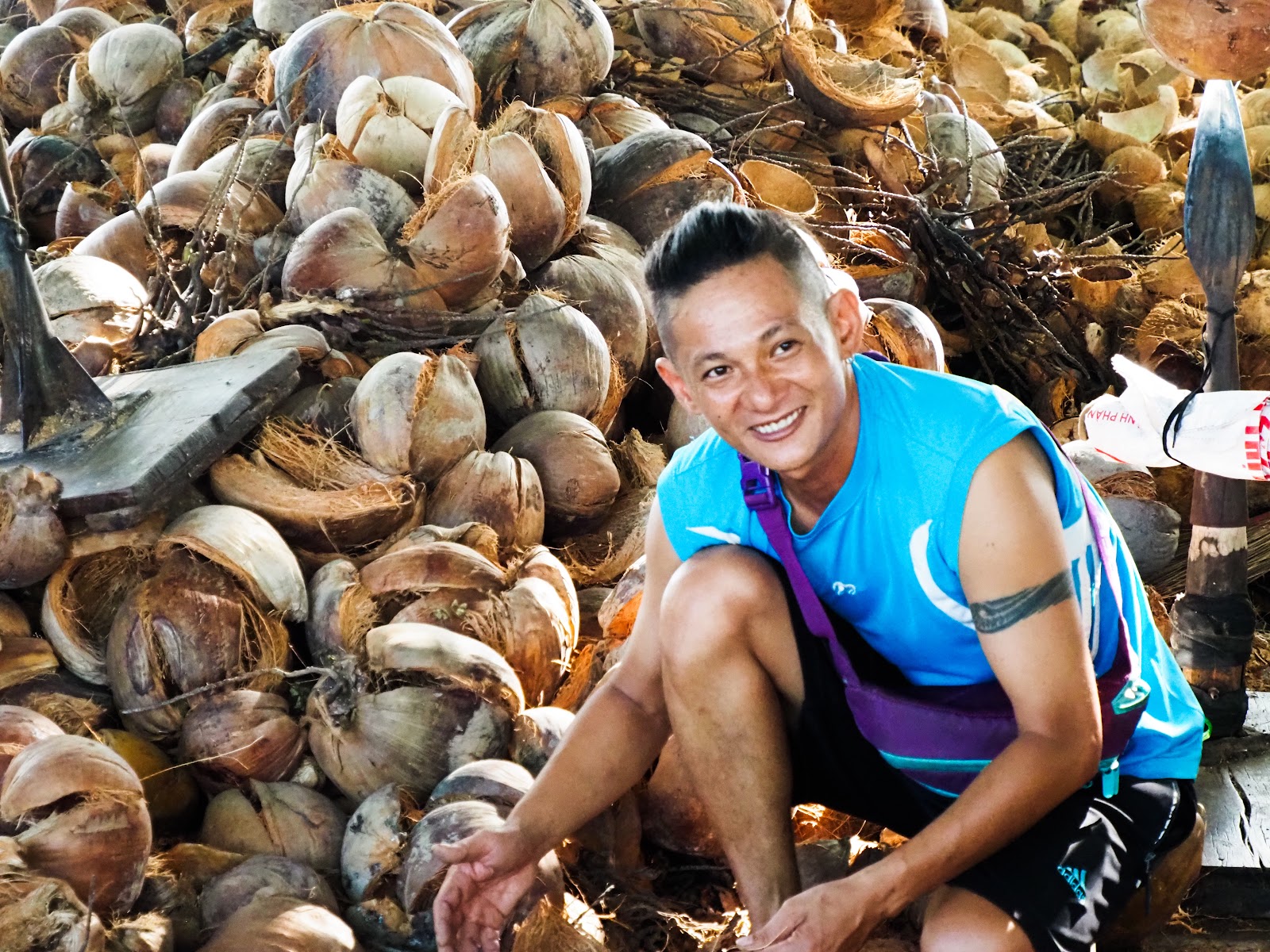 Coconut culture is a chain of farming, transport and small-scale work—not one souvenir stop. Photo: Coco Happy Farm.
 Harvested coconuts still move through the village in small working vehicles. Photo: Coco Happy Farm.
5. Share food with context
A local meal becomes meaningful when you know who cooked it, what ingredients were available and how the family normally eats. It does not need ten dishes. Small kitchens also need notice for vegetarian, vegan, gluten-free or allergy requirements. A cooking class should be a conversation around preparation—not simply a photo opportunity with ingredients already finished.
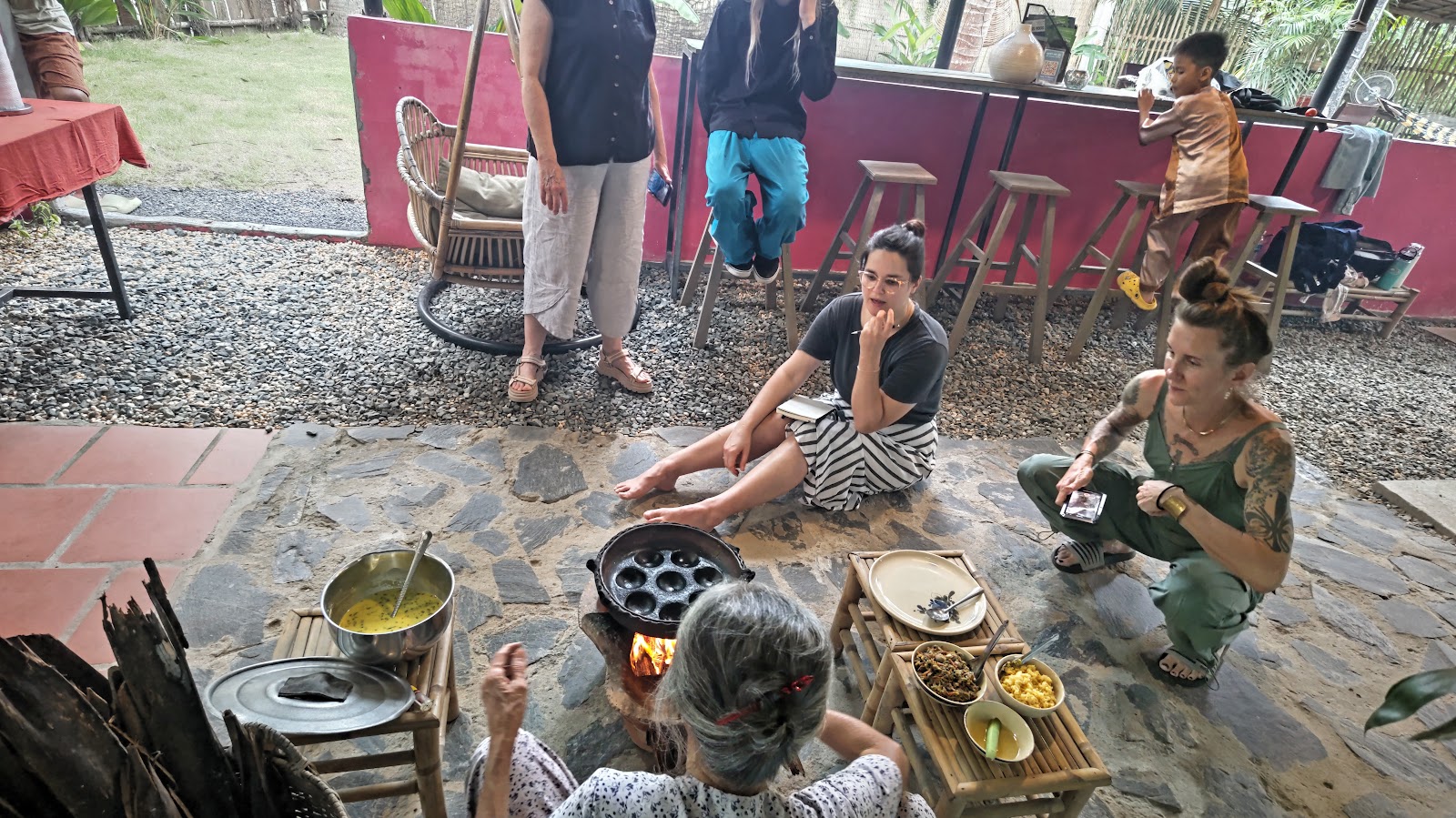 Home meals reflect the cook, the market and the season more than a fixed tasting menu. Photo: Coco Happy Farm.
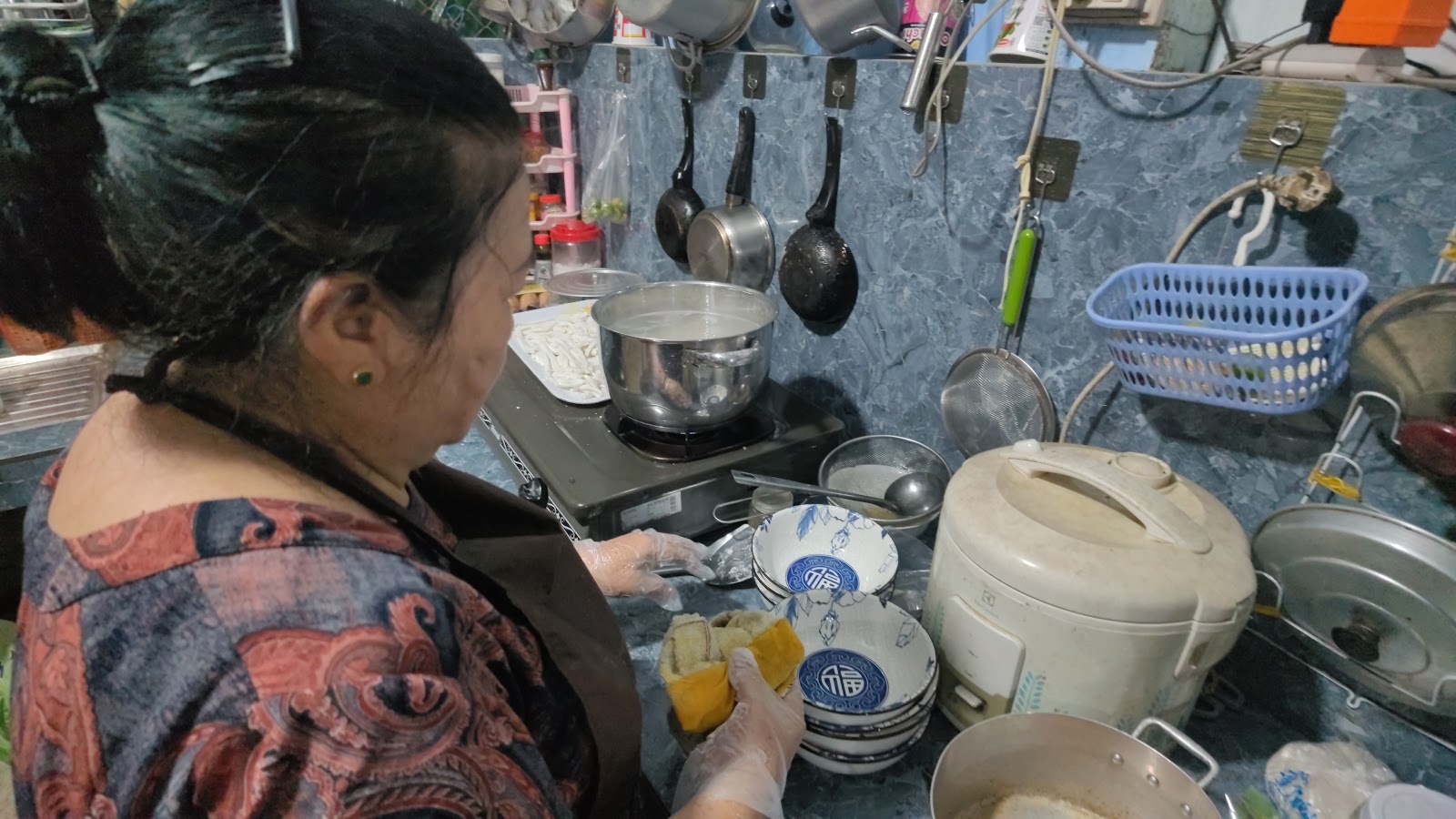 Ordering ahead gives a small family kitchen time to shop and prepare properly. Photo: Coco Happy Farm.
6. Visit a local market without treating it as a show
Village markets are busiest when local people need them, usually earlier in the day. Walk carefully, avoid blocking stalls and ask before photographing people closely. The value is not finding an exotic object. It is seeing how food and household goods move through a community. Buying a fruit or snack is welcome; turning every interaction into bargaining practice is not.
7. Stay for the evening
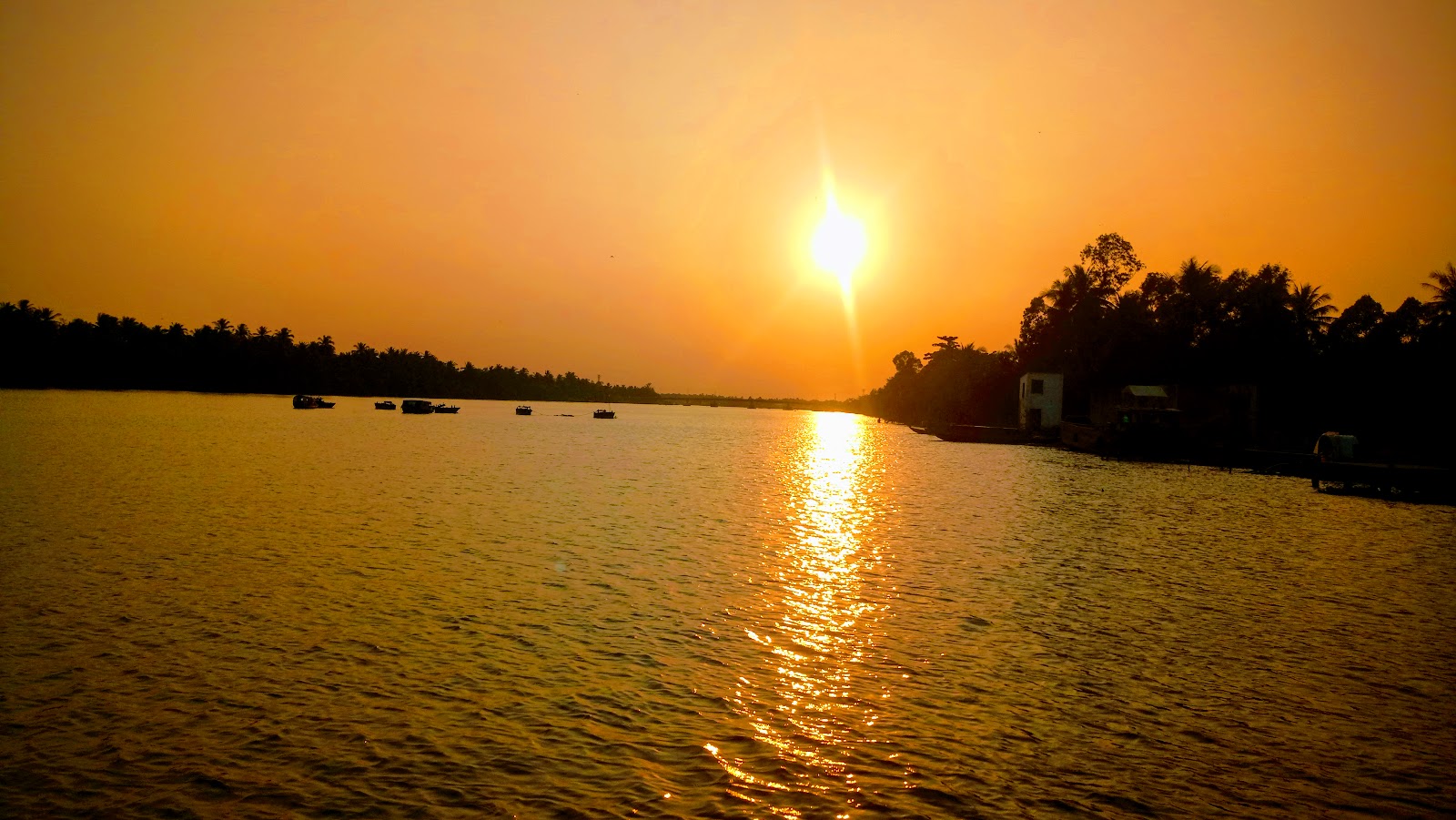
Many visitors leave before the countryside changes character. Sunset softens the river, families return home and the village becomes quieter. In suitable conditions, fireflies may appear along vegetation beside the water. They are wildlife, not a guaranteed light show: rain, wind, moonlight, season and human disturbance all affect what you see. A responsible host never promises a fixed number.
Is a demonstration automatically fake?
No. Visitors cannot arrive at random and expect a household to stop working. A mat weaver, boat rower or cook may set aside time for guests. That is hospitality and paid work. The problem begins when a demonstration is described as an accidental discovery, or when visitors are pressured to buy without being told that shopping is central to the stop.
Ask: “What would happen here if our group did not come today?”
If the answer is farming, cooking, weaving, trading or family life, the visit has a genuine local connection. If the place exists only for tourists, it can still be enjoyable—but it should be described honestly.
How to plan without turning the trip into a checklist
- Choose one base first. Ben Tre, Can Tho, Vinh Long and Chau Doc offer different landscapes; travelling between all of them consumes the time you hoped to spend locally.
- Stay at least two nights when possible. This gives you one evening, one active morning and room for weather or spontaneous farm time.
- Put the lighter activity on arrival day. After travelling, a mostly seated river journey with limited walking is easier than a long bicycle ride.
- Cycle after a full night’s sleep. Morning is cooler, and rested guests observe more instead of simply trying to finish the route.
- Protect free time. Gardens, conversations and short independent rides cannot happen when every hour is booked.
- Ask what is included. Confirm meals, guide, boats, bicycles, transfers, group size and payment before arrival.
Our two-day itinerary and three-day itinerary show how this rhythm works in practice. If you are choosing a base, compare Ben Tre and Can Tho before booking transport.
Why Ben Tre works well for local-life experiences
Ben Tre does not have the Delta’s most famous floating market. Its strength is a landscape of coconut gardens, small waterways and villages where cycling can connect several parts of daily life without a long transfer. It suits travellers who value a quiet morning, family hosting and a slower river evening more than nightlife or a major attraction.
At Coco Happy Farm in Lương Hòa, my parents continue farming, my sister Thúy runs the kitchen and I host guests and experiences. We are not a luxury resort. Fresh coconut, seasonal fruit and bicycles fit naturally here because they belong to the place. Boat trips, cooking and other hosted activities are organised separately and should always be clear before a guest joins.
This also means we are not right for everyone. Travellers seeking a swimming pool, polished resort service or restaurants within walking distance may be happier elsewhere. Our guide to the best Mekong Delta farmstays explains how to choose honestly.
Frequently asked questions
What is the most authentic Mekong Delta experience?
There is no single activity that proves a trip is authentic. A strong experience combines an ordinary place, a local person who can explain it, enough time to observe, and honest expectations. In Ben Tre, cycling through a working village, visiting a family farm and travelling on small waterways can provide that combination.
Is Ben Tre or Can Tho better for local experiences?
Ben Tre is better for quiet coconut villages, cycling and narrow canals. Can Tho is better for Cai Rang floating market, a larger city and easier transport connections. Travellers with four or more days can combine both rather than force one destination to provide everything.
Are Mekong Delta day tours authentic?
Some are thoughtful and some are highly standardised. A day tour can still be meaningful when it stays in one area, uses small groups, explains local life and leaves time for conversation. A long checklist across several provinces usually provides less depth.
How can I avoid staged tourist experiences?
Ask who you will meet, whether the place normally serves tour groups, how many stops are shops, how large the group is and what happens at each stop. Staging is not always harmful, but it should be transparent rather than presented as spontaneous daily life.
How many days do I need for an authentic Mekong Delta trip?
Two nights is a useful minimum for most first-time visitors. It gives you an evening, an early morning and unplanned rural time. One day can work if you choose one compact area and accept that you will see only a small part of the Delta.
Can families with children enjoy local Mekong experiences?
Yes. Short cycling routes, gardens, cooking, fruit and boat rides can work well. Parents should confirm life jackets, water safety, bicycle sizes, heat, stairs and the amount of walking before booking.
Do I need a guide in the Mekong Delta?
Not for every hour. A local host or guide adds value when language, waterways, village businesses or transport are difficult to understand. Free time is equally valuable once you have a safe bicycle route, map pin or clear local advice.
Let the place set the pace.
If rural Ben Tre fits the trip you want, explore our small local experiences or stay at the family farm. Tell Thuần your arrival time and interests; the most useful plan may be shorter than the longest one.
Editorial note: This guide is based on Tran Quoc Thuan’s daily experience living in rural Ben Tre and hosting international visitors at his family farm. Wildlife, fruit, weather, transport and village work change; confirm current conditions rather than expecting a fixed performance.