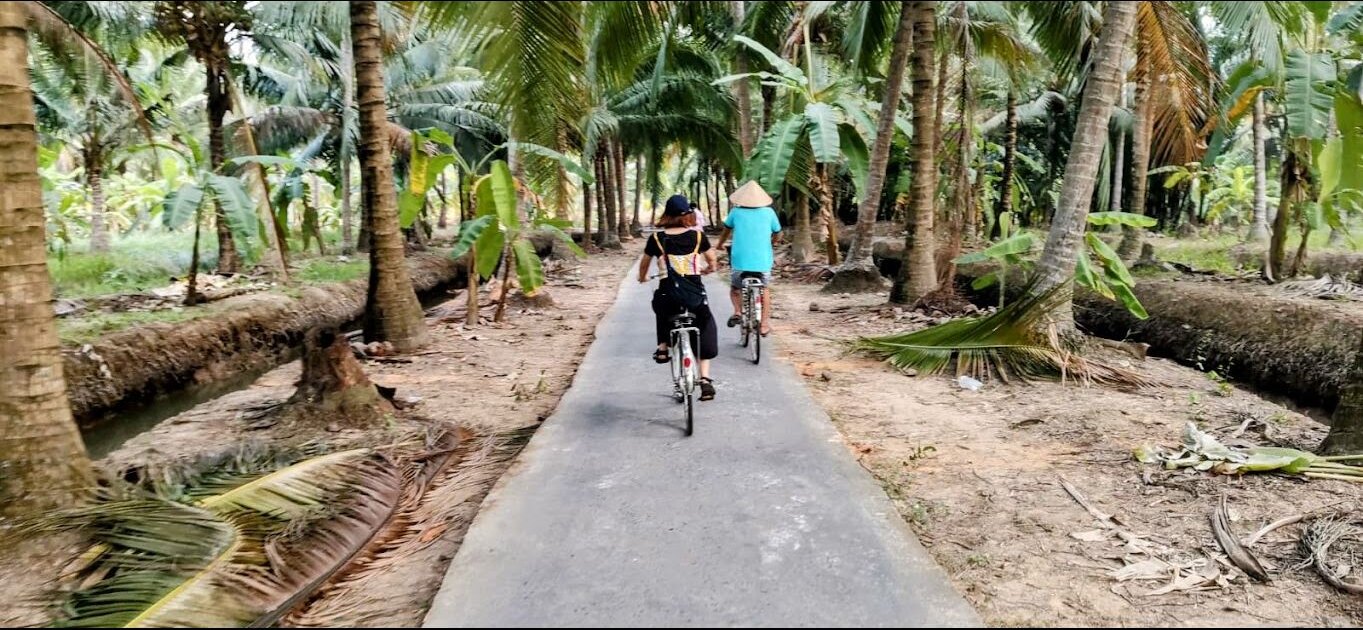
Ben Tre is not the place to visit for famous monuments, nightlife or a long checklist of attractions. Its charm is quieter. You find it on narrow lanes shaded by coconut palms, at a village market in the morning, in a rowing boat beneath nipa palms, or over lunch in a family home.
I live in the Ben Tre countryside and welcome travellers at our family farmstay, now administratively in Vĩnh Long province. My advice is simple: stay locally at least one night if you can. A day trip can cover selected highlights; staying overnight leaves more time for the gardens, coconut work and market trading that connect them.
Quick answer
The best things to do in Ben Tre are cycling through coconut villages, taking a hand-rowed boat through small canals, exploring wider waterways, learning how families use the coconut, visiting a morning market, staying at a family-run farmstay, tasting local food, visiting Phuoc Long Ancient Pagoda or a Cao Dai temple respectfully, seeing household crafts, looking for fireflies, walking through a working garden and leaving space for ordinary village life.
Only have one day?
A day trip can cover selected highlights. An overnight stay gives you more time to see the village while people are working and to experience the river toward dusk. See a realistic 2-day Ben Tre itinerary →
1. Cycle through coconut villages
Cycling is one of the best ways to understand Ben Tre. Small concrete lanes and footbridges connect homes, gardens, markets and places of worship. A bicycle is slow enough to notice coconuts drying beside a house, fruit behind a fence, neighbours talking and boats moving goods along a canal.
Choose shaded village lanes rather than busy provincial roads. Start early or later in the afternoon, carry water, slow down at blind corners and expect occasional motorbikes, dogs and uneven surfaces. After heavy rain, some paths become slippery. A guide adds cultural context, but independent cycling can also work when your accommodation provides a reliable route. See our village cycling experience.
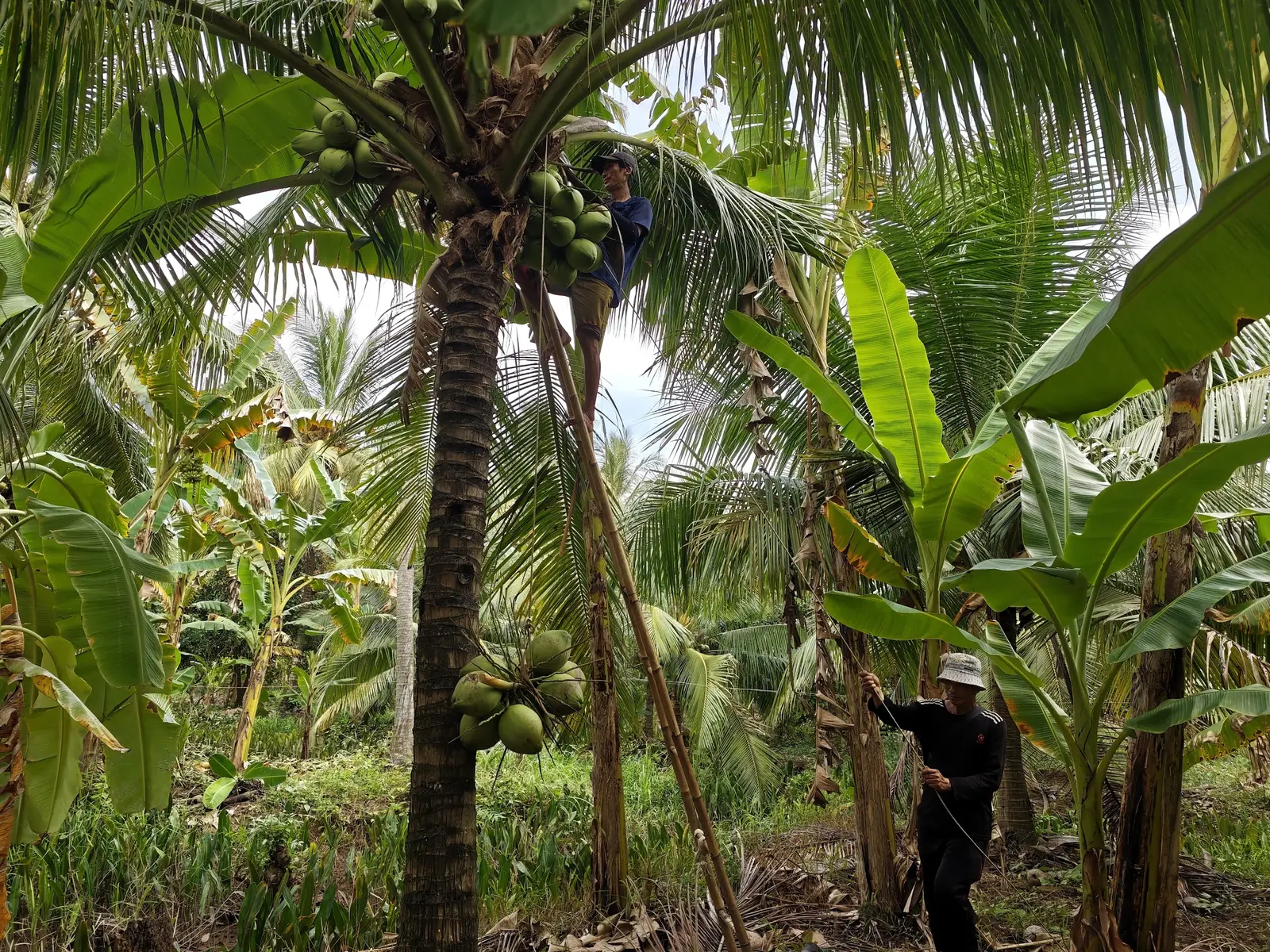
Our regular village experience starts at Coco Happy Farm: a walk through the working garden before taking the bicycles into the lanes. Fruit and coconut harvesting belong to normal farm life, so what guests see depends on the work that day. When I was growing up here, children around 10–12 commonly learned to harvest drinking coconuts with long bamboo poles. Fresh coconuts are heavy; this is context I explain, not an invitation to try without local supervision. Our family harvests regularly, roughly monthly or more often. Read the village cycling guide for route and timing advice.
2–3. See both small canals and wider rivers
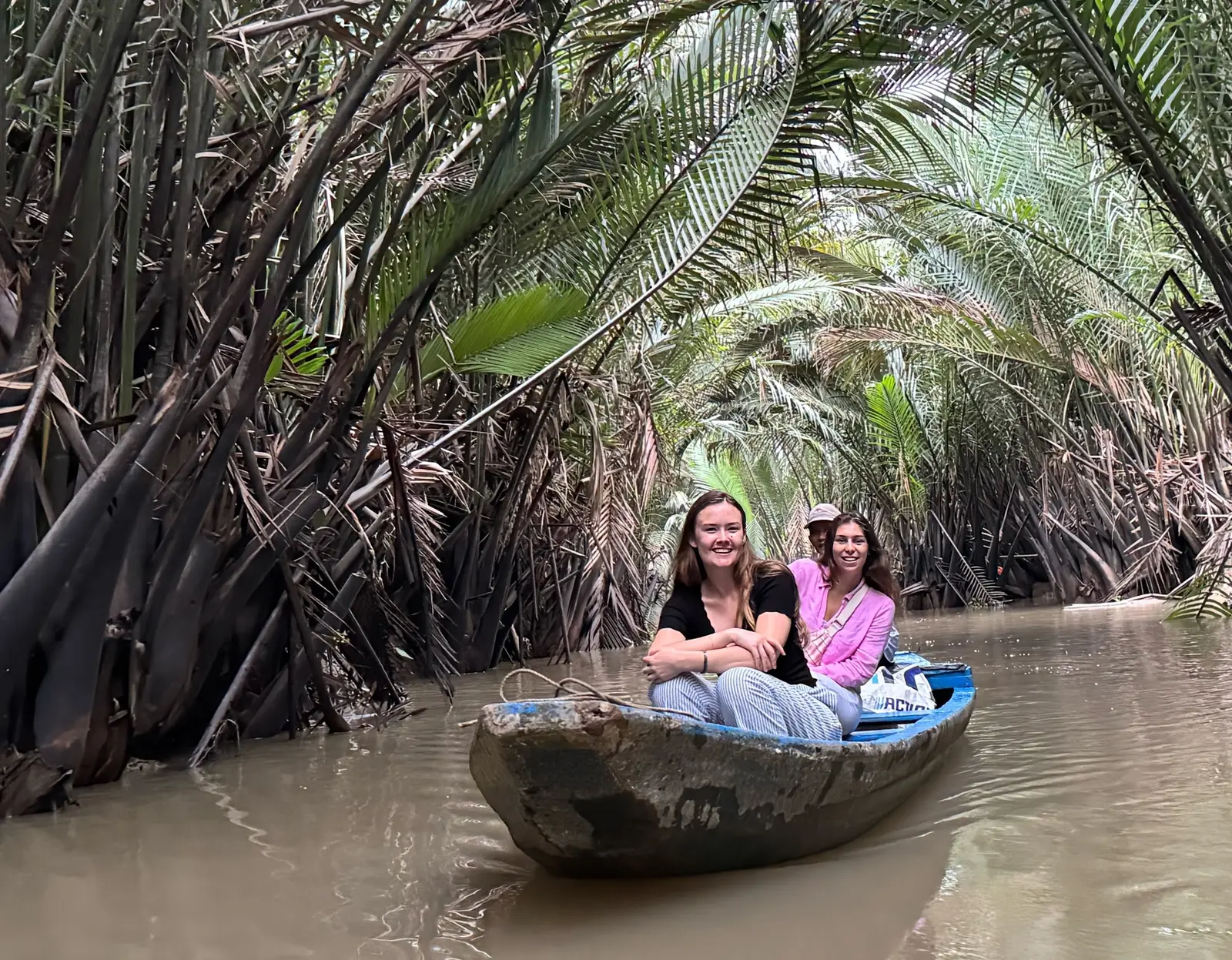
A traditional sampan belongs in the narrow, calm canals that larger boats cannot enter. Without an engine, you hear paddles, birds and sounds from homes along the banks. Wear the provided life jacket, keep your hands inside near tight passages and avoid standing for photographs.
A motorboat reveals the wider geography of the delta: fishing boats, coconut transport, riverside homes and ferries. A thoughtful itinerary combines both. The motorboat shows scale; the sampan brings you close to vegetation and village life. Conditions depend on weather and tide, so follow the local captain’s advice.
Choose by the experience, not simply the word “boat”: a quiet hand-rowed canal journey is different from a larger motorized river route. Neither route nor timing is guaranteed. See the dedicated sampan guide.
4. Understand Ben Tre’s coconut culture
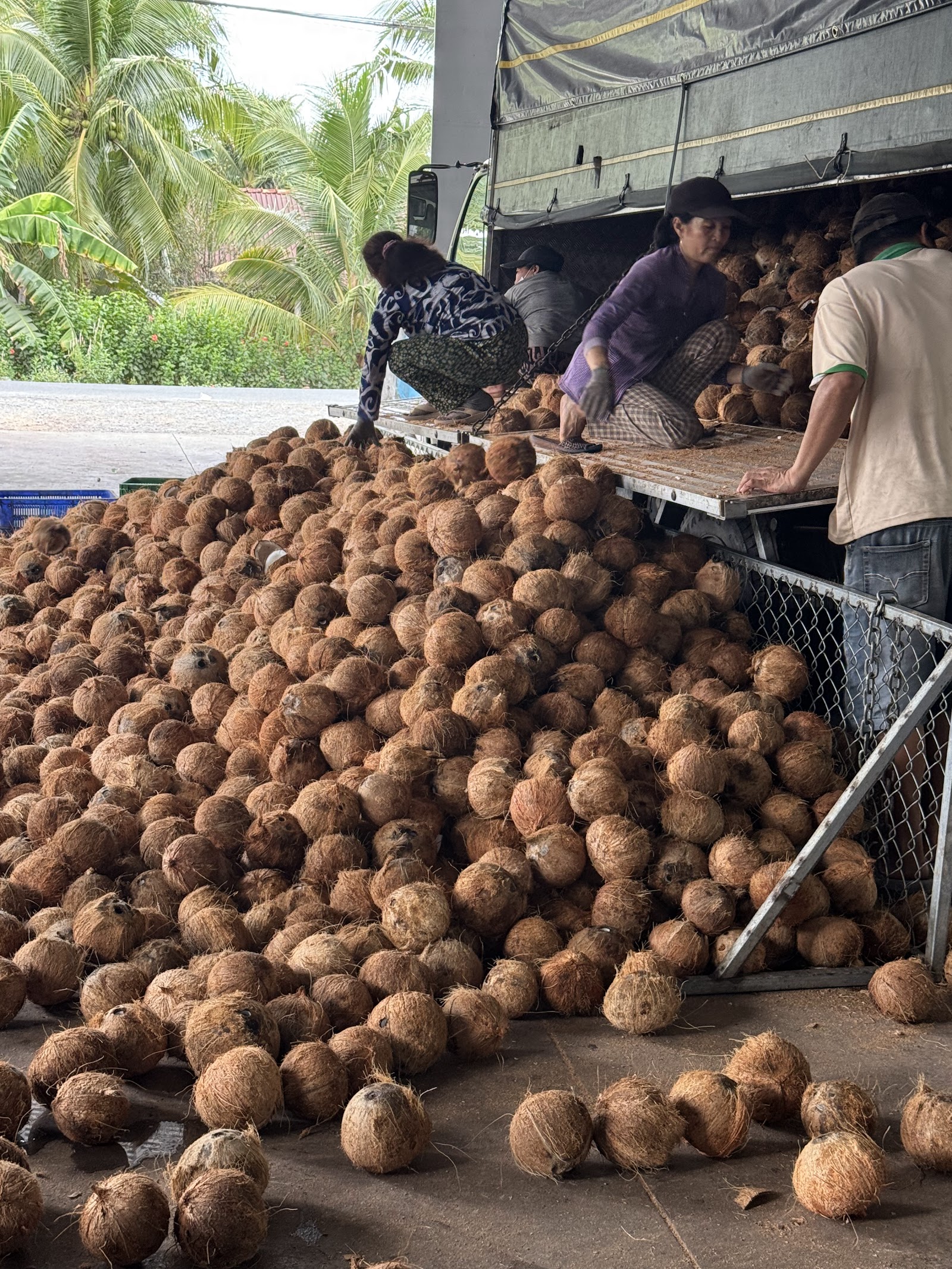
Ben Tre is known as coconut country, but the story is richer than fresh coconut water. Coconut milk appears in food; shells can become charcoal or craft material; fibres are processed for household and industrial uses; leaves have traditional uses; and the flesh becomes candy, oil and other products.
On our village cycling route, a local coconut-processing cooperative makes this economy tangible. Many of the people working there are my relatives or extended family. Guests may see coconuts being handled and prepared for the supply chain, according to production that day. This is ordinary local work, not a performance staged for our visitors. Ask before photographing workers and keep their working space clear.
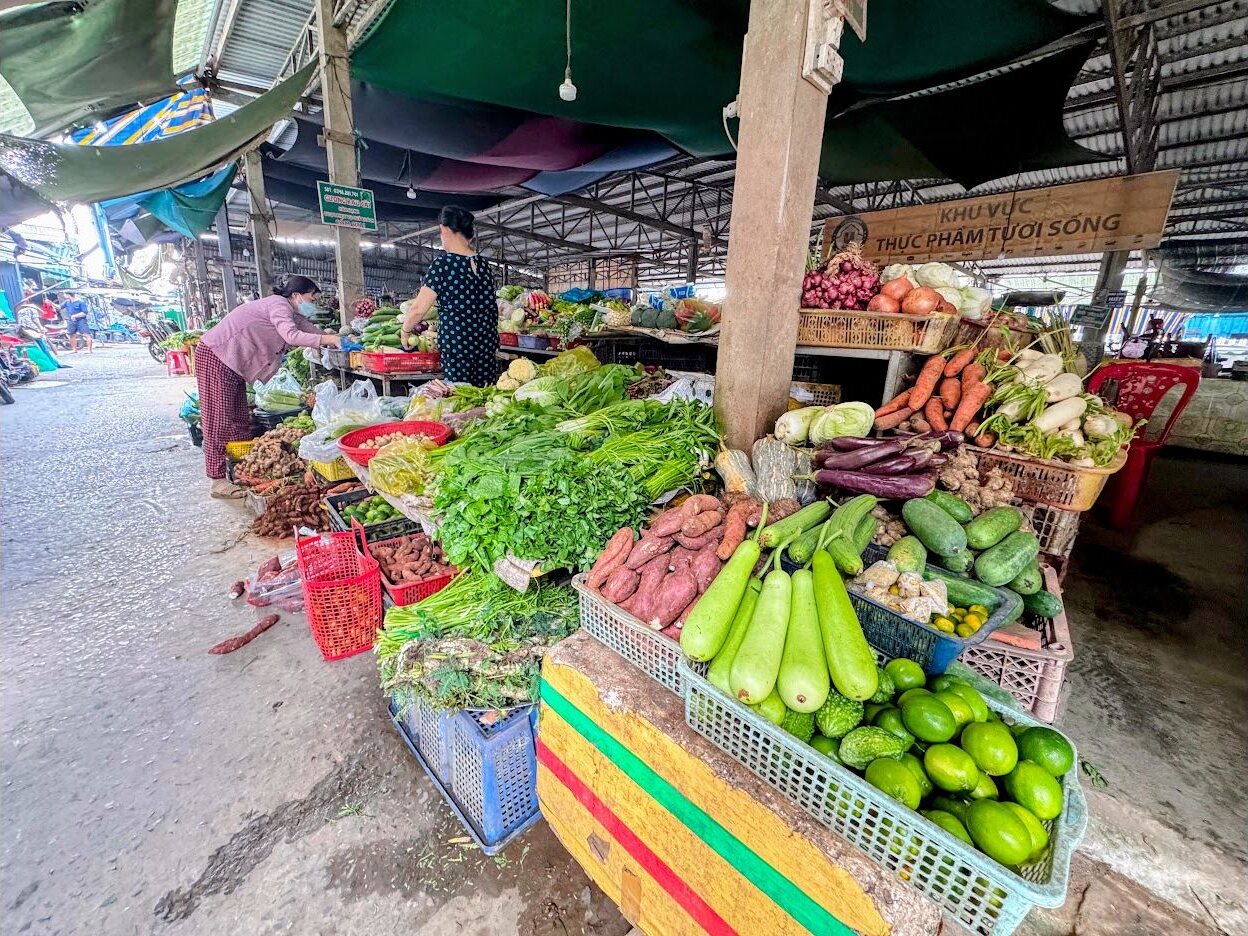
5. Visit a working market in the morning
Mỹ Lồng (My Long) Market sells food and everyday necessities, not primarily souvenirs. Our cycling route commonly arrives around 11:00–11:15, although independent visitors can go earlier. In the layout I know, the river is behind the market, fish and meat activity is toward that side, vegetables are more central and general necessities are toward the front—a practical arrangement for aquatic products arriving by water.
Giant freshwater prawns make the connection with local families visible. My cousin’s family operates a holding/filtering tank here and buys prawns from Coco Happy Farm and other families. Large prawns may be caught in small waterways around coconut-growing land; local families observe smaller prawns moving between these and larger creeks or rivers. These are local observations, not a scientific explanation of their ecology.
Walk slowly, leave sellers room to work and ask before close-up photographs. Carry small banknotes for fruit, coffee or food; small vendors may not accept cards or large notes. What is being traded varies with the day.
6. Stay overnight with a local family
An overnight stay changes the rhythm of a Ben Tre trip. You can rest during the hottest hours, cycle when the temperature drops, eat in the countryside and wake to village sounds. Not every place using “homestay” offers the same experience: some are small hotels, some are family homes, and farmstays may sit inside working gardens.
Before booking, check whether the family lives nearby, whether meals need advance notice, whether bicycles are included, how far the property is from Ben Tre city, and whether the room has air conditioning, a private bathroom and mosquito protection. In the countryside, simple and personal is often more authentic than polished and luxurious.
7. Taste food beyond coconut candy
Look for củ hủ dừa (tender coconut heart), coconut rice, southern hủ tiếu, fresh river fish, herbs and seasonal fruit. Ask what is fresh that day rather than insisting on a fixed list. Family kitchens need advance notice for larger meals, vegetarian food and allergies. Travellers with coeliac disease or serious allergies should explain their needs clearly because cross-contamination and language can matter in rural kitchens.
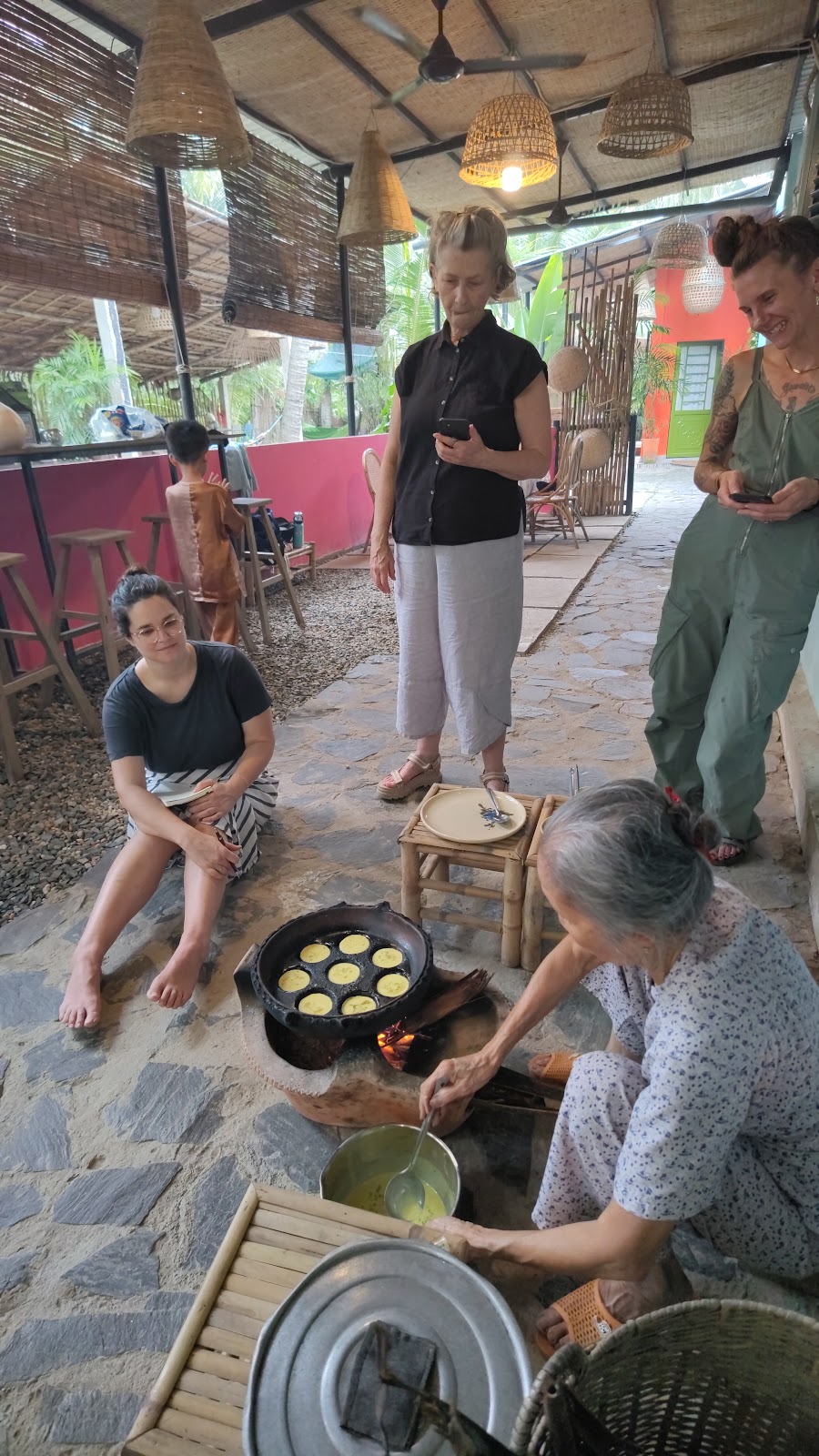
In our cooking-class setting, bánh khọt can be eaten with around ten local leaves and herbs, including young ambarella leaves and young mango leaves. Other leaves do not always have familiar English names. The memorable part is sensory: the same bánh khọt tastes different with a different leaf in each bite. Around ten is an example, not a fixed promise for every class. Explore what to eat in Ben Tre.
8. Visit Phuoc Long Ancient Pagoda—or a Cao Dai temple
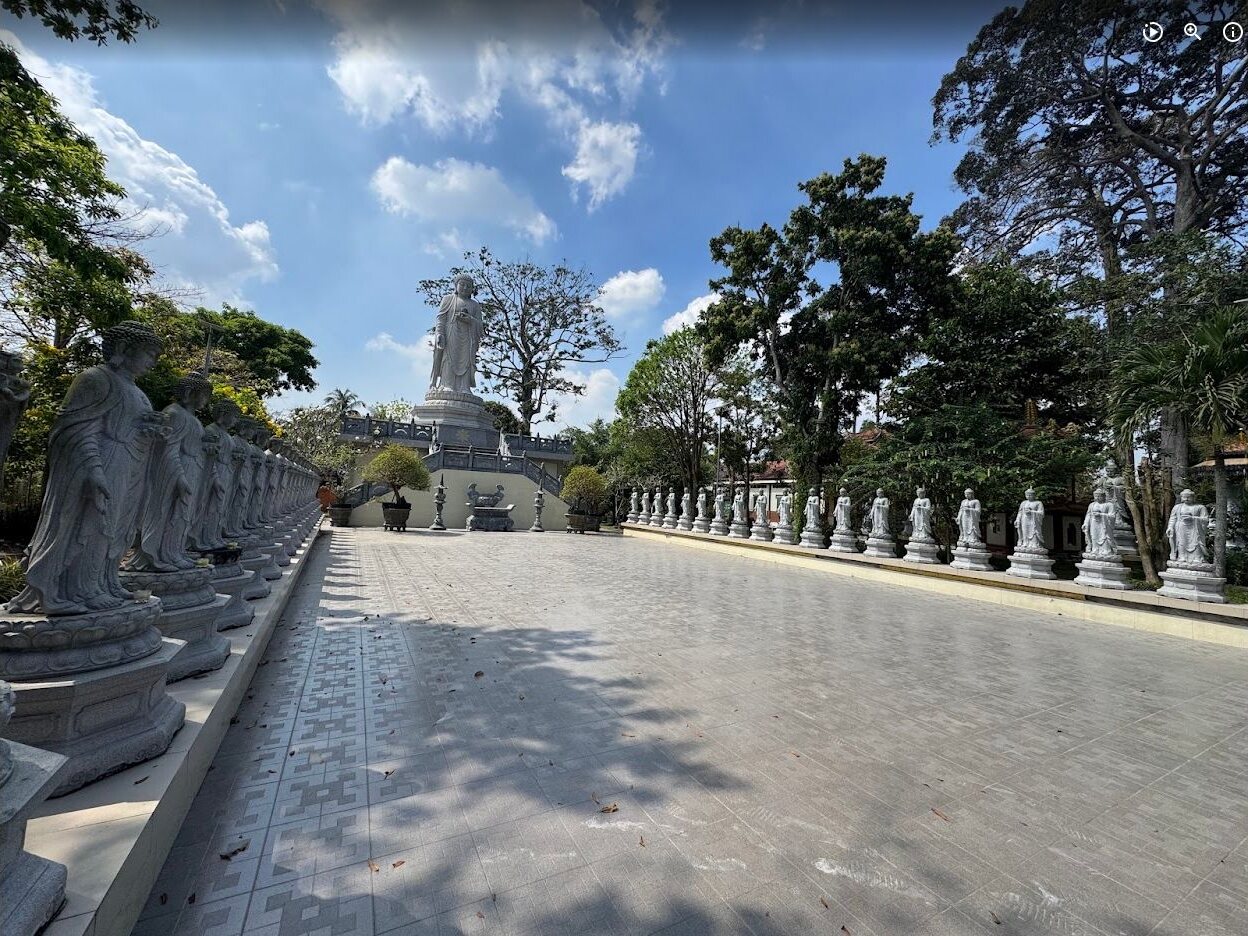
Near Coco Happy Farm, Phuoc Long Ancient Pagoda (Phước Long Cổ Tự) is a meaningful cultural stop. According to an inscription recorded by the pagoda’s abbot, its story began in 1769, when Đặng Văn Hộ discovered 16 bronze Buddhist statues and established a small pagoda called Hưng Long. In 1880, land was donated at the present site; the pagoda moved and was renamed Phước Long. Today it remains an active place of worship, with an Amitabha Buddha garden and a stone gate marking its 250th anniversary.
Older sources may list Cầu Hòa hamlet, Phong Nẫm commune, Giồng Trôm district, Bến Tre. Newer administrative references may use Lương Hòa commune, Vĩnh Long province. Search the complete Vietnamese name to avoid another pagoda with a similar name. A cycling route may also pass a Cao Dai temple. Covering shoulders and knees is a respectful choice; speak quietly, remove shoes where indicated and never interrupt a ceremony. Read the Vietnamese Buddhist profile.
Phước Long is also part of my ordinary village cycling context. I find the atmosphere relaxed and normally do not encounter a formal visitor dress-code requirement there; respectful clothing and behaviour still matter. When he has time, the abbot has sometimes invited foreign visitors to sit for tea. A meeting, tea or special access is never part of a guaranteed programme.
9. Observe a household craft
Depending on the village and whether a family is working that day, you may encounter mat weaving, coconut processing or another small-scale craft. These are workplaces, not guaranteed daily shows. A responsible guide checks whether a visit is convenient and avoids promising that every workshop will always be active.
10. Look for fireflies from the water
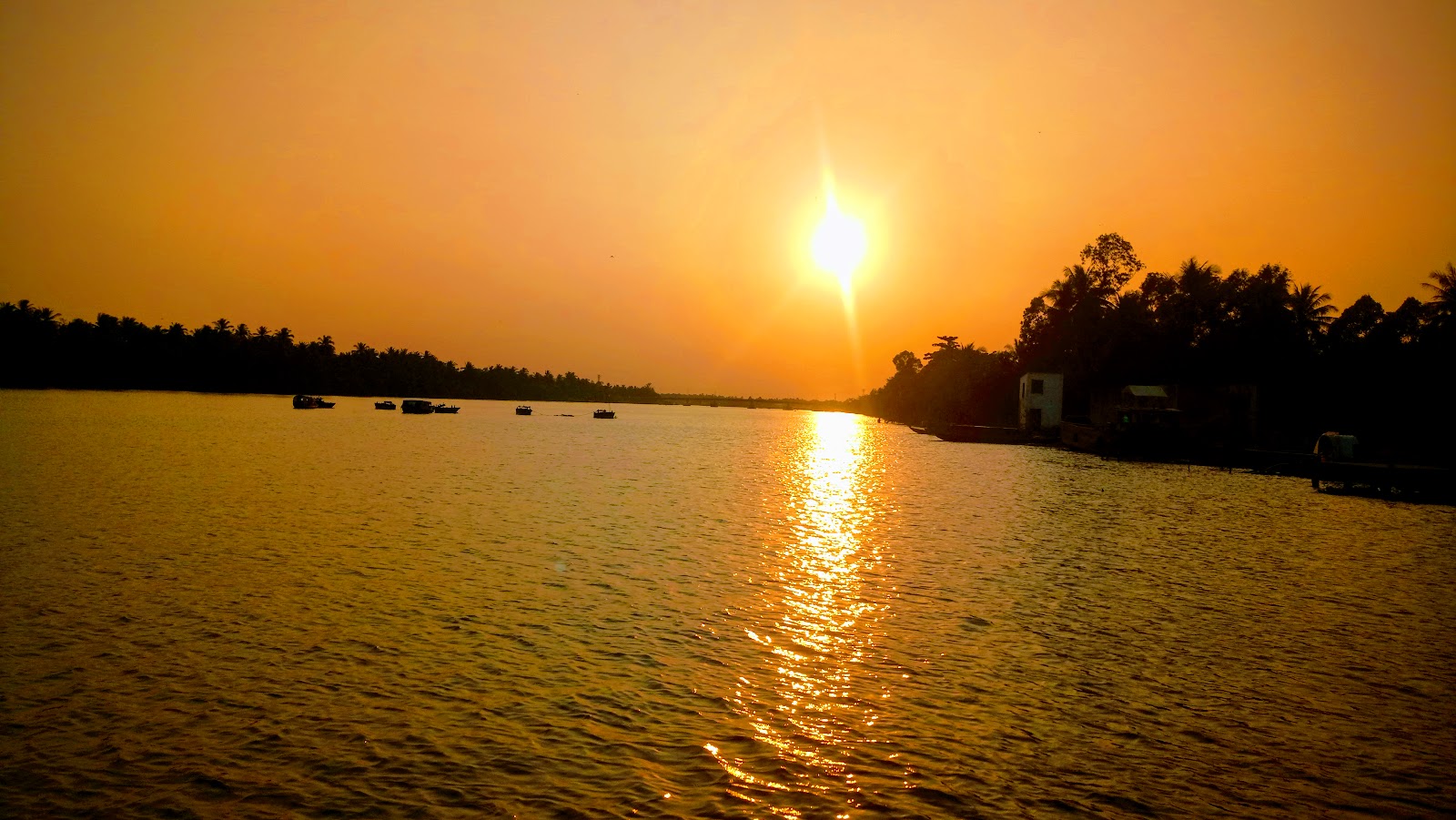
After sunset, fireflies can sometimes be seen around quiet, vegetated waterways. They are wild insects, so numbers are never guaranteed. Weather, wind, rain, moonlight, artificial light and environmental conditions all affect sightings. Avoid bright screens and flash photography. Even on a quieter night, travelling home by river after sunset offers another way to hear and feel the delta. Learn about our evening river experience.
The firefly guide explains responsible expectations in more detail. There is no guaranteed best month, and sunset itself depends on the weather.
11–12. Walk through a real garden, then do less
At Coco Happy Farm, coconut, passion fruit, cacao, banana, orange, pomelo, papaya and jackfruit can be seen fruiting throughout the year. Coconut, passion fruit, cacao, banana and orange normally provide edible fruit year-round. Pomelo, papaya and jackfruit may have fruit on the tree without being ripe during a particular stay. Mango is seasonal, approximately February–June. Fruit on the tree does not always mean fruit ready to eat: no guest is promised every fruit for picking or eating. These are our farm’s crops, not a calendar for every garden or market in Ben Tre.
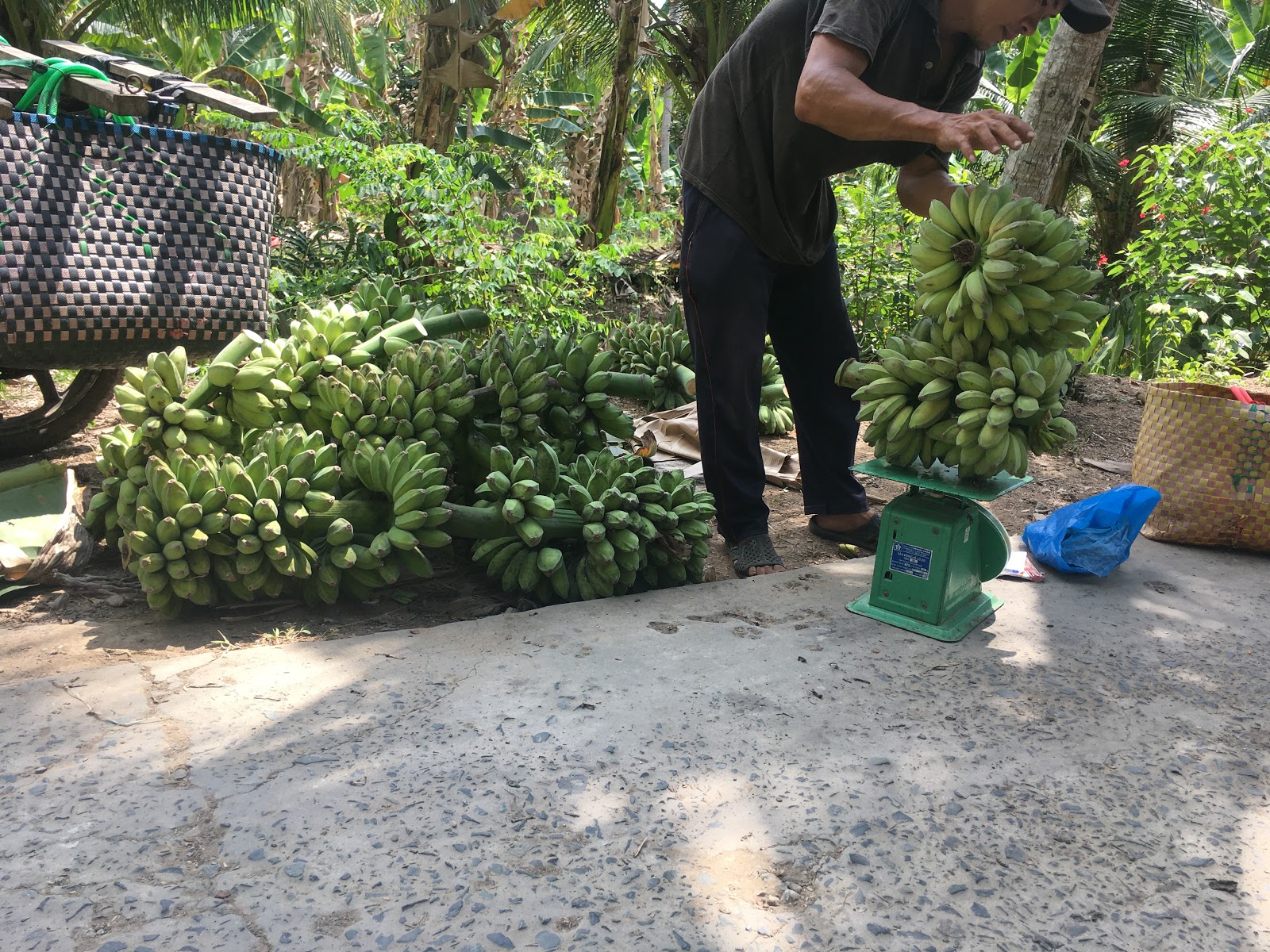
Then leave time with no formal activity. Sit with a fresh coconut, watch the garden, ride to a café, listen to rain or talk with your host if they are free. The Mekong Delta becomes more understandable when every hour is not organised.
What staying overnight changes
A day visit can connect selected attractions, a boat or other activity, a meal and departure. Staying locally leaves room for a working garden, cycling, coconut processing, My Long Market, local food, a slower afternoon and the river toward dusk—not a promise that every stop happens in that order. The difference is time to see people doing normal work and understand how fruit is grown, harvested and eaten.
Coco Happy Farm is one way to stay inside this rural setting rather than commute into it for only a few hours. See the Ben Tre homestay page, then check live room availability.
How long should you spend in Ben Tre?
One day
Choose two or three connected experiences: a market, cycling, lunch and a boat journey. Avoid too many workshops and long transfers.
Two days, with one or two nights
A strong fit for travellers interested in village life, waterways and slower exploration. Combine cycling and food on the first day, then a sunset or evening boat. Use the next morning for a garden walk, market or relaxed breakfast.
Three days
Three days work well for slow travellers, photographers, writers, cyclists and families. Extra time also gives flexibility when tropical rain changes plans.
Plan with our one-day, two-day or three-day itinerary. For quieter stops and family pacing, see hidden gems and Ben Tre with kids.
Practical advice
- Outdoor activities are most comfortable in the morning and late afternoon.
- Carry sun protection, a light rain layer and mosquito repellent.
- Cash is useful in villages; card acceptance is limited.
- Wear light, respectful clothing and shoes suitable for boats or muddy paths.
- Small boats, meals and guides often require advance arrangement.
- Tides, rain, harvests and family schedules may change rural activities.
Frequently asked questions
Is Ben Tre worth visiting?
Yes—especially for rural life, coconut culture, cycling, waterways and family-run accommodation. It is less suitable if nightlife or large attractions are your priority.
Can I visit as a day trip from Ho Chi Minh City?
Yes, but staying one night gives a calmer experience and lets you enjoy the cooler morning and evening.
What is Ben Tre best known for?
Coconut farming and processing, rivers and canals, rowing boats, quiet village lanes and rural Mekong life.
Do I need a guide?
Not everywhere. A local guide is most useful for small village routes, boats, cultural context and family workplaces.
Are fireflies guaranteed?
No. Sightings vary naturally. Choose a low-impact operator and value the nighttime river journey too.
A gentle invitation
Coco Happy Farm is our small family-run farmstay in rural Ben Tre. We offer simple rooms, home-style meals and local experiences—not a luxury resort. In-house guests receive complimentary fresh coconut and seasonal fruit when available, can borrow bicycles and can join a village cycling experience. If you would like to experience Ben Tre slowly, you are welcome to see our rooms or ask Thuần for practical advice.
Editorial note: This guide is based on daily local experience and original Coco Happy Farm photographs. Cultural and historical details about Phuoc Long Co Tu were checked against the profile published by Giác Ngộ, a Vietnamese Buddhist publication.