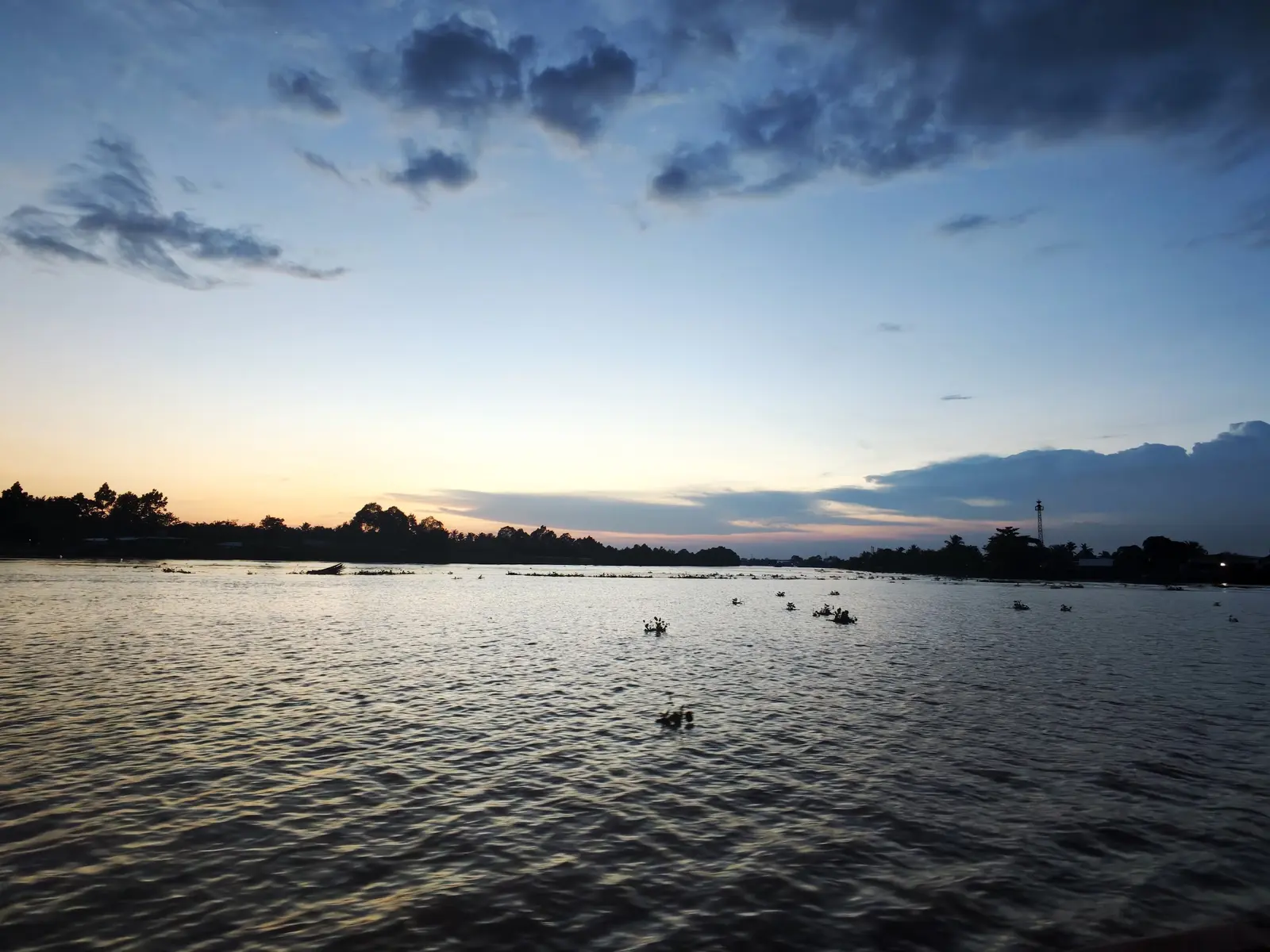
Can you see fireflies in Ben Tre?
Yes. Fireflies are regularly present in current local observations at a dark riverside area in Ben Tre. But they are wild: abundance varies, weather and safe river conditions can alter the route, and no honest host can guarantee a cinematic swarm.
There is also no scientifically established single “best season” for Ben Tre. Ask about recent observations close to your date, then come for the whole river evening—not only a promised number of lights.
The journey begins before the fireflies
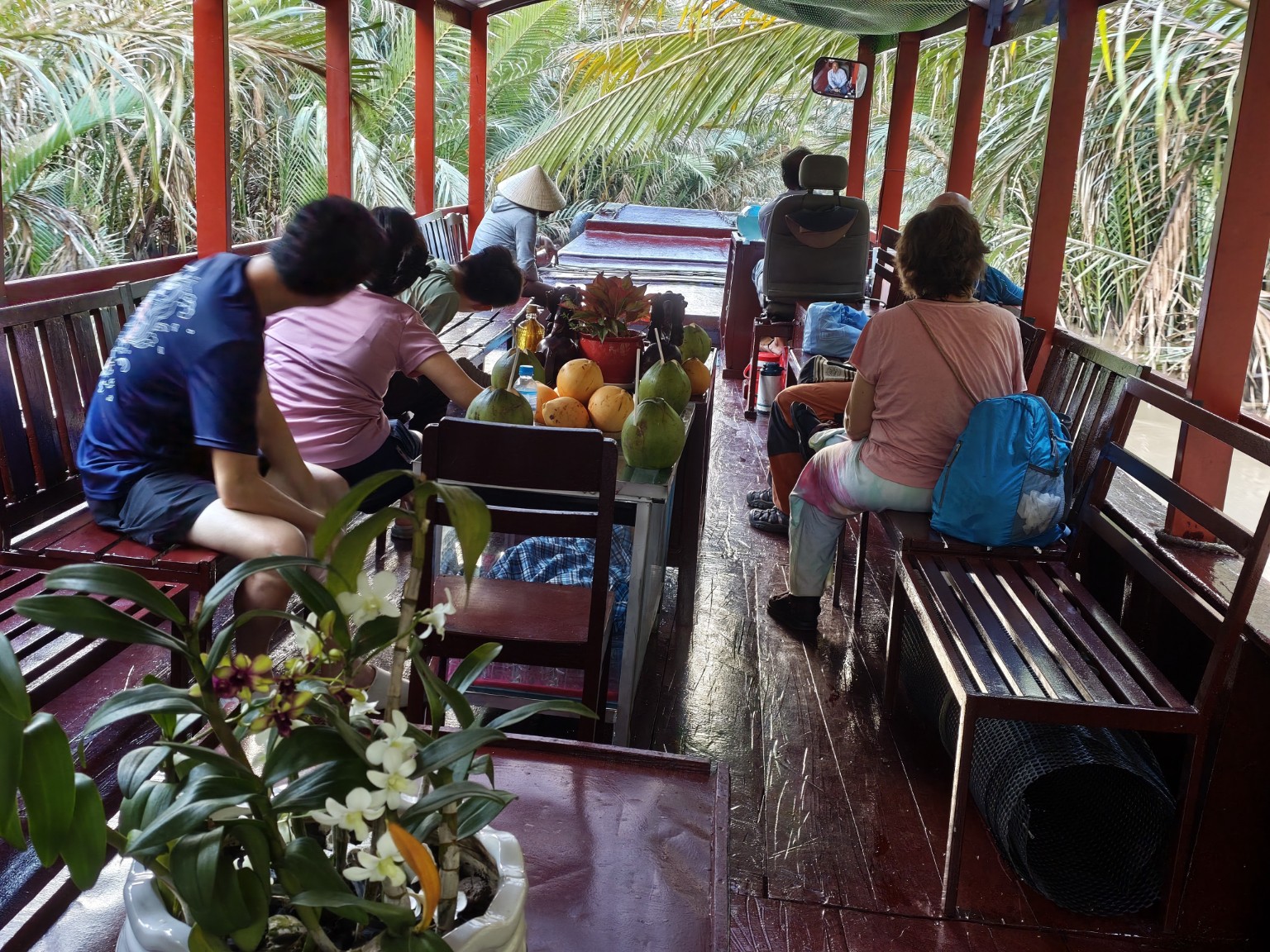
You leave the farm while there is still daylight. A covered wooden river boat carries the group through the wider waterway; fresh coconut and the changing village landscape make the first part feel unhurried rather than like transport to be endured.
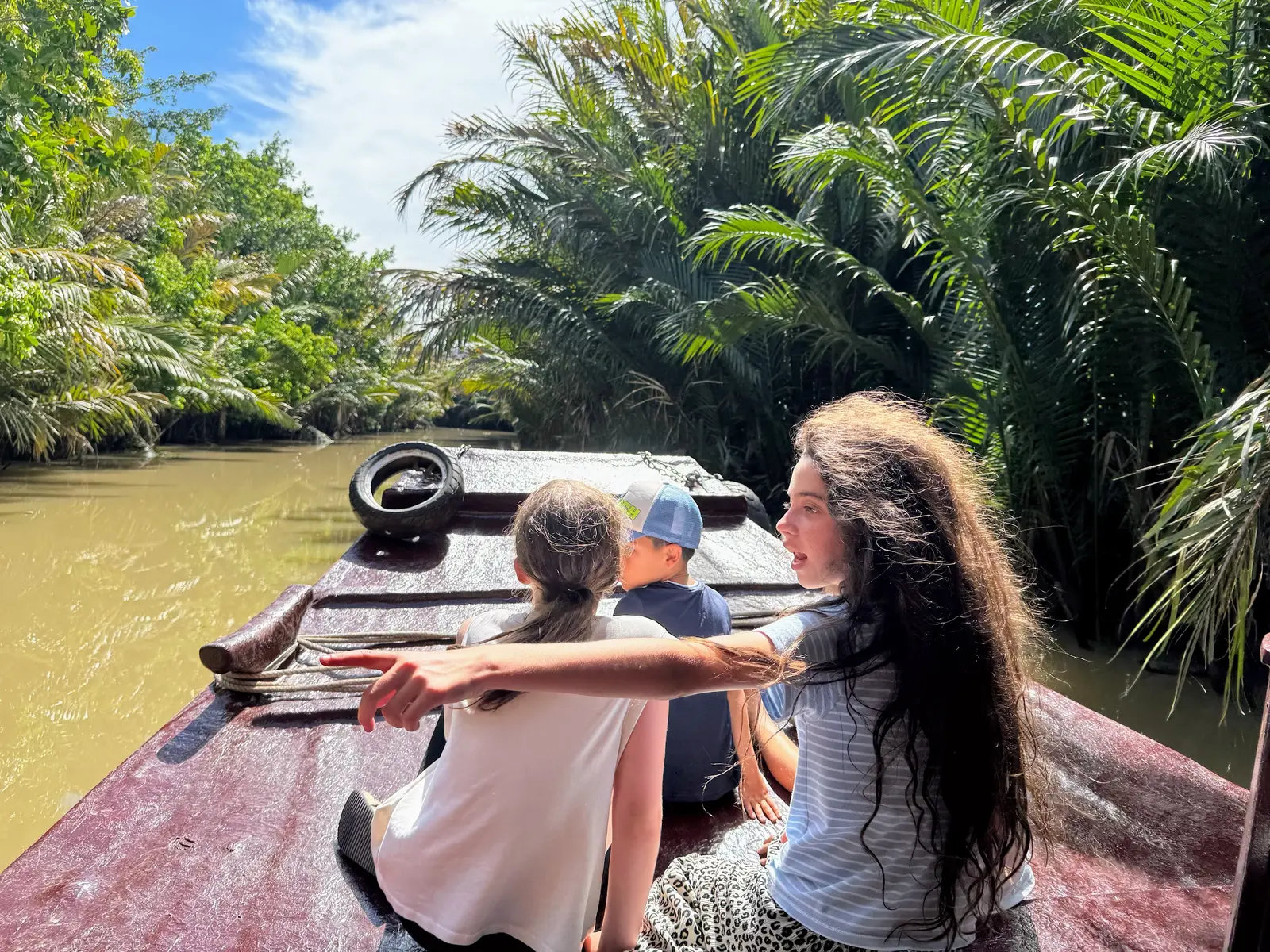
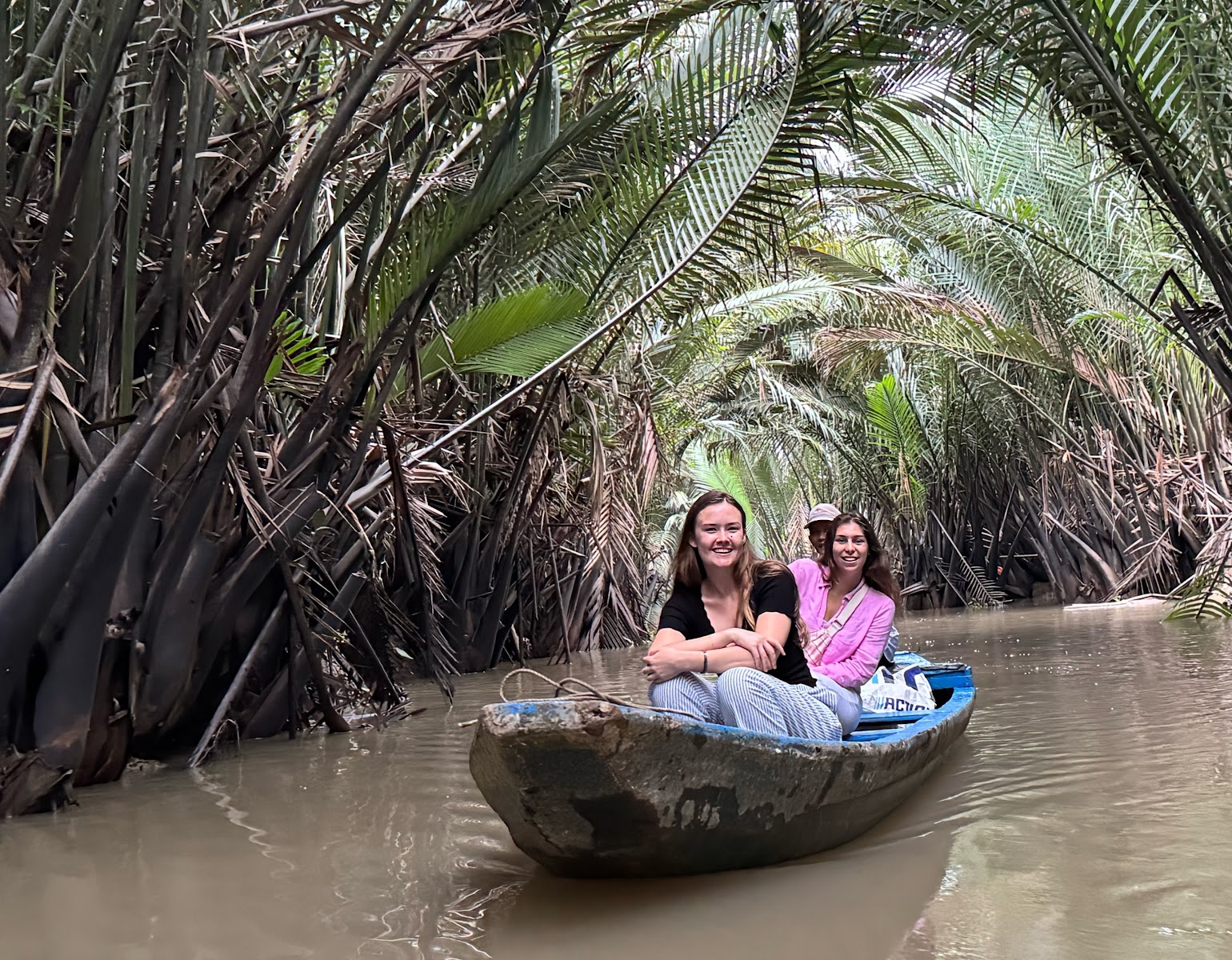
Depending on the route and conditions, a hand-rowed sampan can take you through a smaller nipa-palm canal earlier in the journey. This canal is part of the broader Ben Tre experience—it should not be mistaken for proof of the exact firefly habitat.
See the current route, timing and price →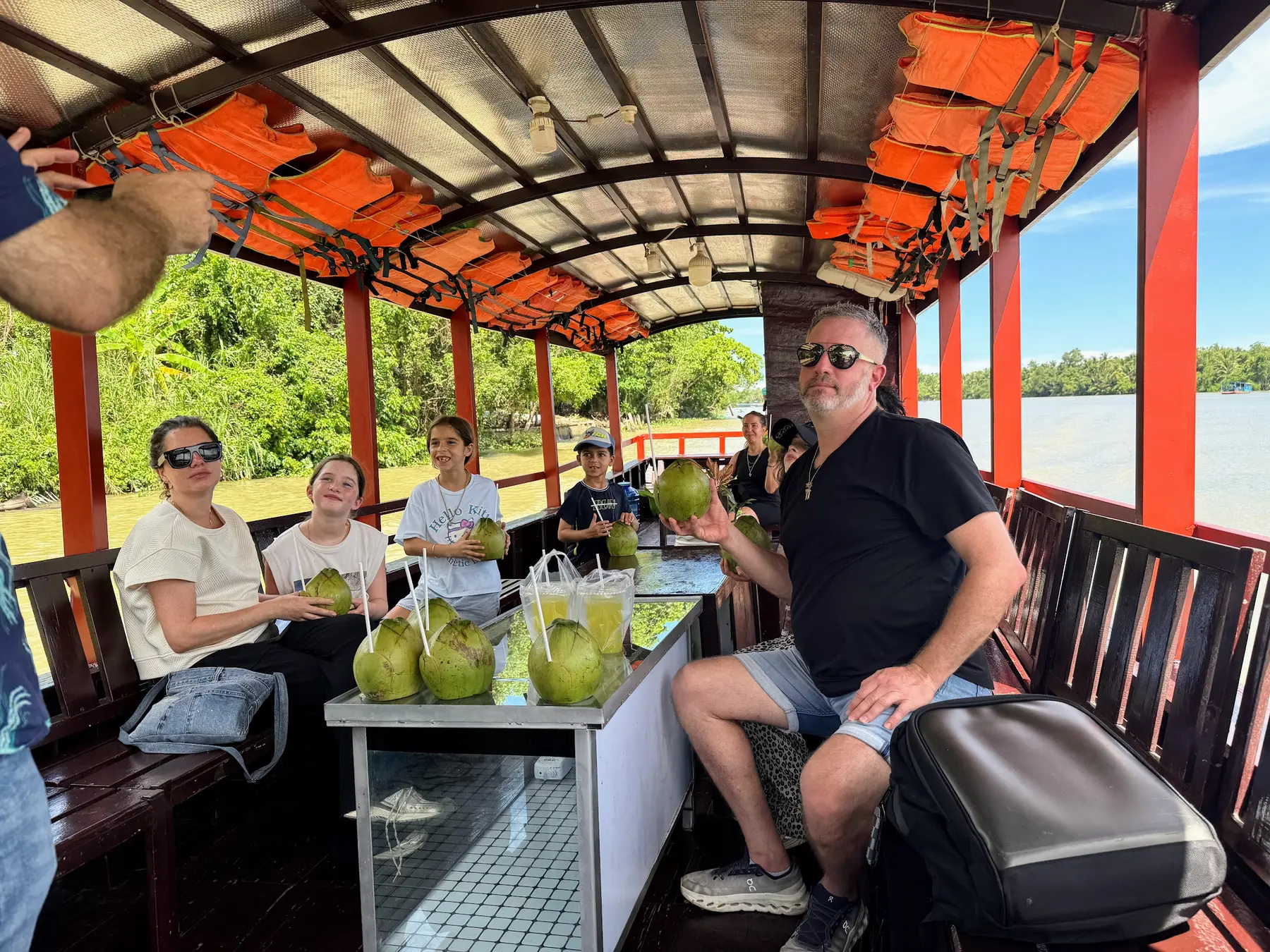
River
Leave in daylight on the larger wooden boat.
Smaller waterway
Move through a quieter canal when the route allows.
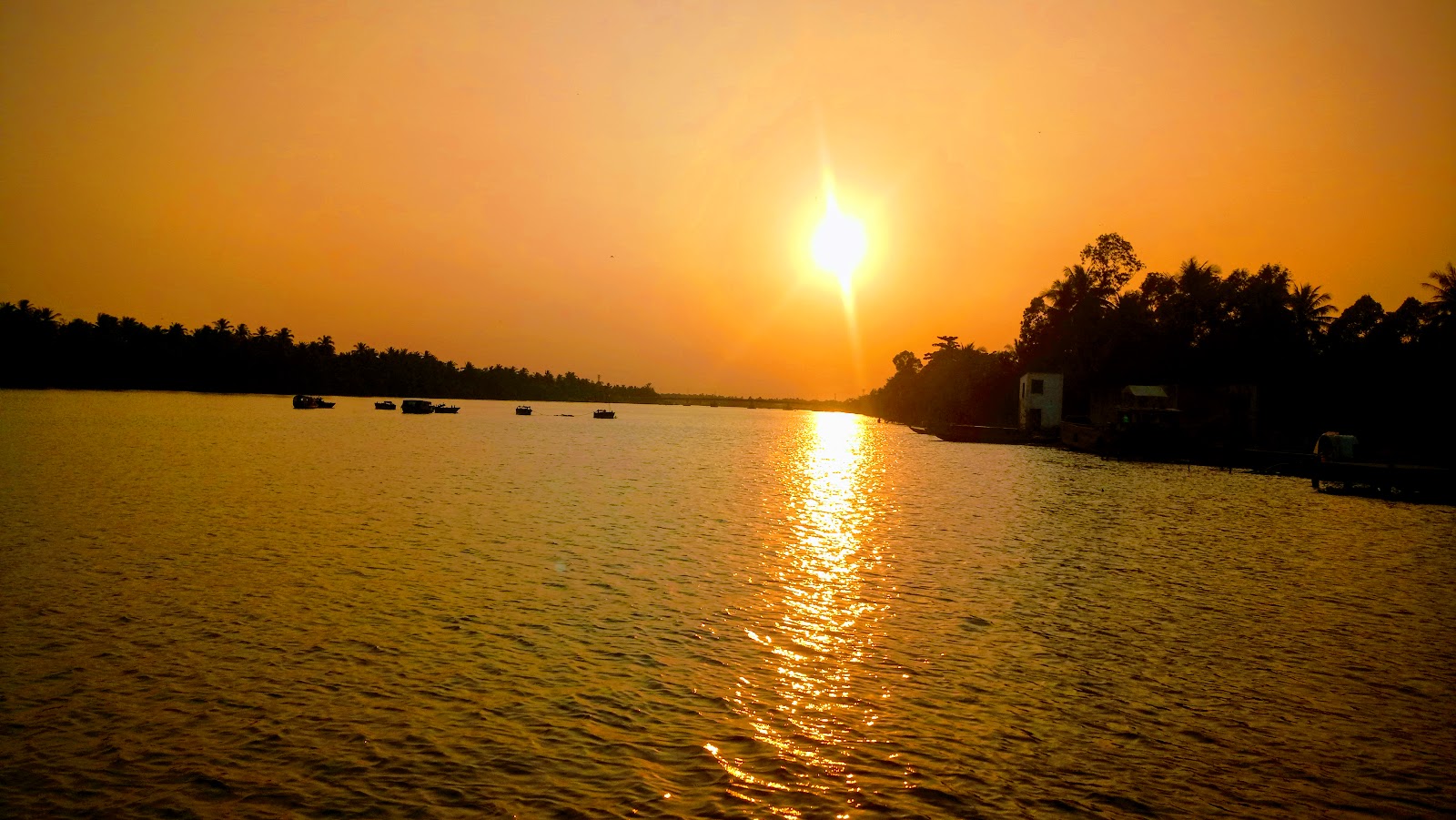
Sunset
Watch colour and sound change on the water.
Darkness
Dim screens, wait, and let your eyes adjust.
Then the river becomes quiet and dark
Near the observation area, bright screens and unnecessary lights are reduced. At first you may see almost nothing. After your eyes adjust, small flashes appear intermittently among riverside vegetation—sometimes more, sometimes fewer.
This is not a staged release or a continuous wall of light. The video records the wider traveler experience: leaving before dark, moving through the river landscape and watching real wild fireflies after sunset.
Is there really a best season?
Not one that has been scientifically established for Ben Tre. Fireflies are seen locally at different times of year, but there are not yet standardized counts across enough seasons to name a single validated peak month.
In local experience, warmer periods appear to show more fireflies than cooler periods. That is a retrospective observation worth monitoring—not a proven rule. Heavy rain, strong wind or unsafe river conditions can change comfort, visibility and boat access without proving anything about seasonal population biology.
Enjoy the whole river evening
- like slow travel, boats, sunset and rural waterways;
- can watch quietly and accept variable wildlife;
- value a real local evening more than a perfect phone image.
Need a guaranteed spectacle
- expect a fixed number or a cinematic swarm;
- want the fireflies to perform on schedule;
- dislike boats, darkness or patient observation;
- see the river journey as wasted time.
What we have observed—and what remains unknown
In our current local observations, fireflies are regularly present at a riverside area in Ben Tre and have been seen congregating on trees locally called bần. The species is unknown and has not been reliably identified.
So far, we have not observed a clear relationship with moon phase or tide. Warmer periods appear to show more fireflies than cooler periods, but that has not been established through systematic long-term monitoring.
Source: first-hand and retrospective local experience of Tran Quoc Thuan / Coco Happy Farm. This is not a scientific population study.
Why your phone may show less than your eyes
Fireflies are tiny, intermittent lights in a nearly black scene. The boat can move, leaves move, and night mode uses a longer exposure—so a clear flash to your eyes can become a faint dot or blurred line on screen. Keep flash off, dim the screen and brace the phone if you try to record. Then put it down for a while: adapted eyes usually understand the scene better than a small sensor.
Watch without changing the scene
Research on studied firefly species supports keeping artificial light and physical disturbance low. It does not identify the local species, but it gives travelers sensible precautions:
- Use only the minimum boat light needed for safety.
- Turn off camera flash and dim phone screens.
- Do not catch fireflies or touch, shake or cut vegetation.
- Avoid loud music and unnecessary shouting.
- Do not ask a boat operator to push into vegetation for a closer view.
- Remain seated, wear the supplied life jacket and follow the operator’s instructions.
What science does—and does not—tell us here
Scientific literature supports general concerns about artificial light and disturbance, but it does not establish the local species, peak season, moon relationship, tide relationship or temperature response at this Ben Tre observation area.
Read the deeper observation and evidence record at Ben Tre Fireflies →
Scientific context: Owens & Lewis (2022); Owens et al. (2018); Lewis et al. (2021). These sources provide general ecology and conservation context, not Ben Tre-specific conclusions.
Practical planning
- Timing: begin before sunset; viewing starts only after the riverbank is properly dark.
- Route: the larger boat, smaller waterways and observation area are different parts of one evening.
- Weather: heavy rain, strong wind or unsafe river conditions may change, delay or cancel the route.
- Clothing: wear light, comfortable clothing and bring simple rain protection when appropriate.
- Children: confirm suitable life-jacket sizes and supervise children closely after dark.
- Expectation: ask about recent observations, but never expect a guaranteed number of fireflies.
Frequently asked questions
Can you really see fireflies in Ben Tre?
Yes. Fireflies are regularly present in current local observations along a dark riverside area in Ben Tre. They are wild, so their number, brightness and exact position vary and sightings are never guaranteed.
What is the best season to see fireflies in Ben Tre?
There is not yet enough systematic local field data to name one scientifically established best season for Ben Tre. In our local experience, warmer periods appear to show more fireflies than cooler periods, but this has not been established through long-term monitoring.
Is the evening only about the fireflies?
No. The experience is a gradual river journey: a larger wooden boat, local waterways, sunset, dusk and the quieter darkness of the observation area. The journey remains meaningful even when wildlife numbers are modest.
Do the moon phase or tide determine sightings?
In our local observations so far, we have not seen a clear relationship between sightings and either moon phase or tide. That is an observation, not proof that no relationship exists.
Which firefly species is seen locally?
Unknown. The species at the local observation site has not yet been identified reliably, so we do not infer a name from photographs, habitat or research conducted elsewhere.
Why are fireflies difficult to photograph with a phone?
They are small, intermittent points of light in a dark, moving scene. A boat, leaves and long phone exposures create blur, while flash overwhelms the scene and should not be used. Your eyes will often see more than your phone records.
Are firefly sightings guaranteed?
No. Recent observations can help guide the route, but nobody can responsibly guarantee the number, brightness or exact location of wild fireflies on a particular evening.
Check the Fireflies evening experience
See the current route, timing, price and practical limits before deciding. The river journey is real; the wildlife remains wild and sightings are not guaranteed.
See the Fireflies evening experienceEditorial note: Coco Happy Farm describes the traveler experience and attributes local observations to Thuần. Ben Tre Fireflies remains the separate deeper evidence resource. No species or fixed best season is claimed.