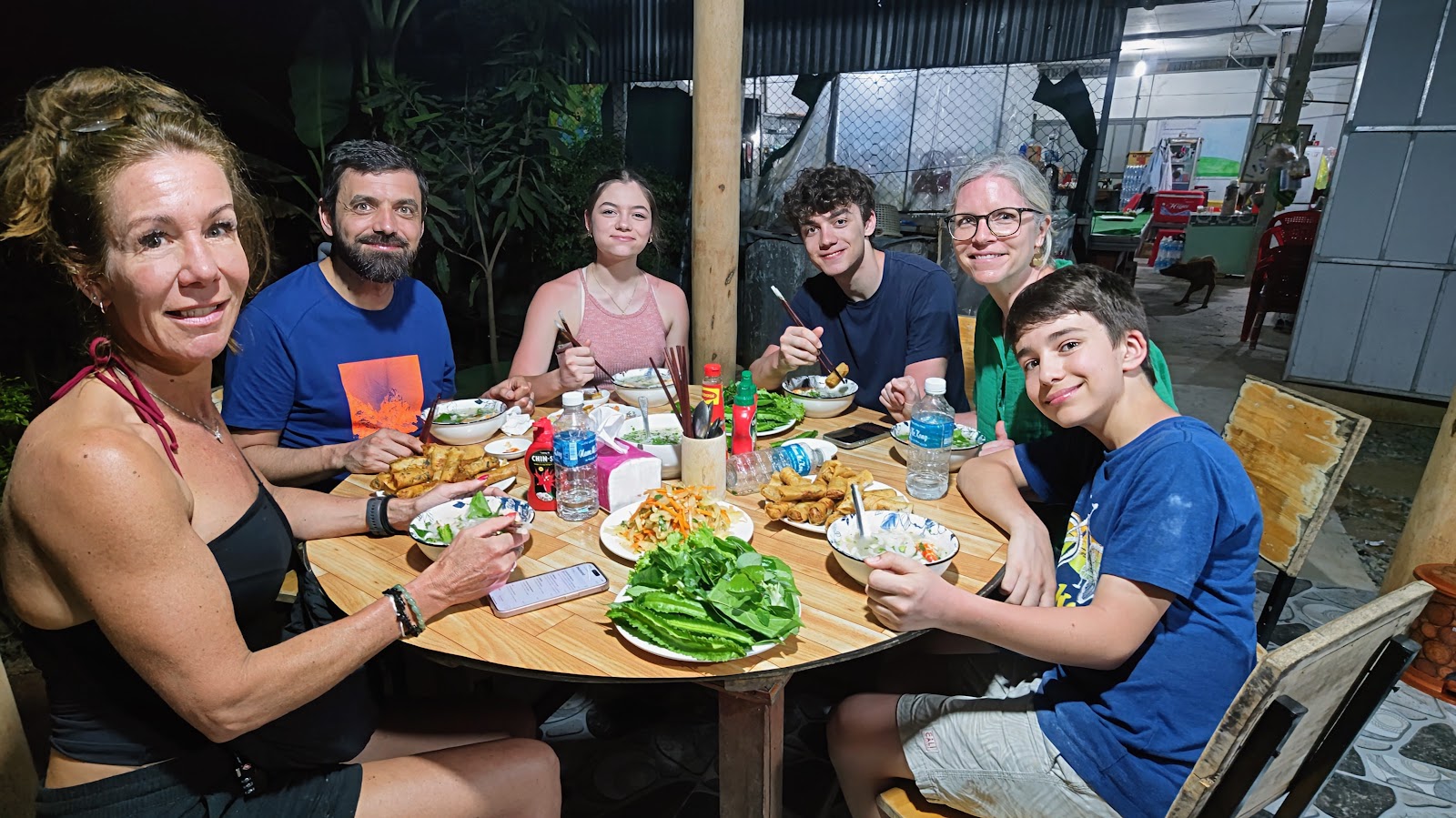
Come to Ben Tre for coconut, but stay curious about the meal around it.
Start with a family-style dinner, try a small rice cake such as bánh khọt, taste river or farmed freshwater seafood when it is genuinely fresh, and see how coconut becomes candy. Add seasonal fruit, a simple breakfast and time at a local café. You will understand Ben Tre food better through ingredients, people and preparation than by racing through a fixed “must-eat” list.
I grew up in a coconut-farming family in Lương Hòa. Food at home was never arranged around what a visitor might expect Ben Tre to look like. It followed who was eating, what was available, what the garden gave us and how much time the family had to cook.
That is still the approach at Coco Happy Farm. We do not sell coconut-heart salad, even though it appears on many Ben Tre food lists. We would rather show the dishes we actually make: bánh khọt with guests, hand-cut bánh canh noodles, a fresh prawn meal to share, breakfast fruit from the farm and everyday food prepared by our family.
How does Ben Tre food taste?
Ben Tre belongs to the wider Mekong Delta food culture: generous produce, rice, fish and prawns, fresh herbs, fruit and a preference for flavours that can lean gently sweet. Coconut water or coconut milk may soften and enrich a dish, but coconut is not poured into everything. Sour soup, salty braises, fresh vegetables and dipping sauces create balance around that sweetness.
The official Vietnam Tourism food guide describes the Delta through fertile produce, freshwater fish and shrimp, rice cakes and tropical fruit. That broad picture is useful, but every home and town has its own rhythm. A local meal may be simpler than a restaurant “speciality” and more meaningful because you can ask who cooked it and why it is on the table that day.
Ingredients that are seasonal, locally sourced or chosen specifically for the meal.
A real family kitchen does not produce the same tourism menu every day.
Order family-style, taste several things and ask how the dish is prepared.
1. Bánh khọt: small cakes, shared around the pan
Bánh khọt are small savoury cakes cooked in round moulds. Rice-flour batter is poured into the hot pan, then cooked until the centre is tender and the edges become crisp. They are usually eaten with lettuce, herbs and dipping sauce, so one bite brings together heat, crunch, freshness and salt-sweet sauce.
At Coco Happy Farm, the important part is not presenting a perfect restaurant plate. Guests see the prepared batter and fillings, then learn how much mixture to pour into each mould. The first cakes may be uneven. That is fine. Cooking beside a local family makes the method memorable in a way that simply ordering the dish cannot.
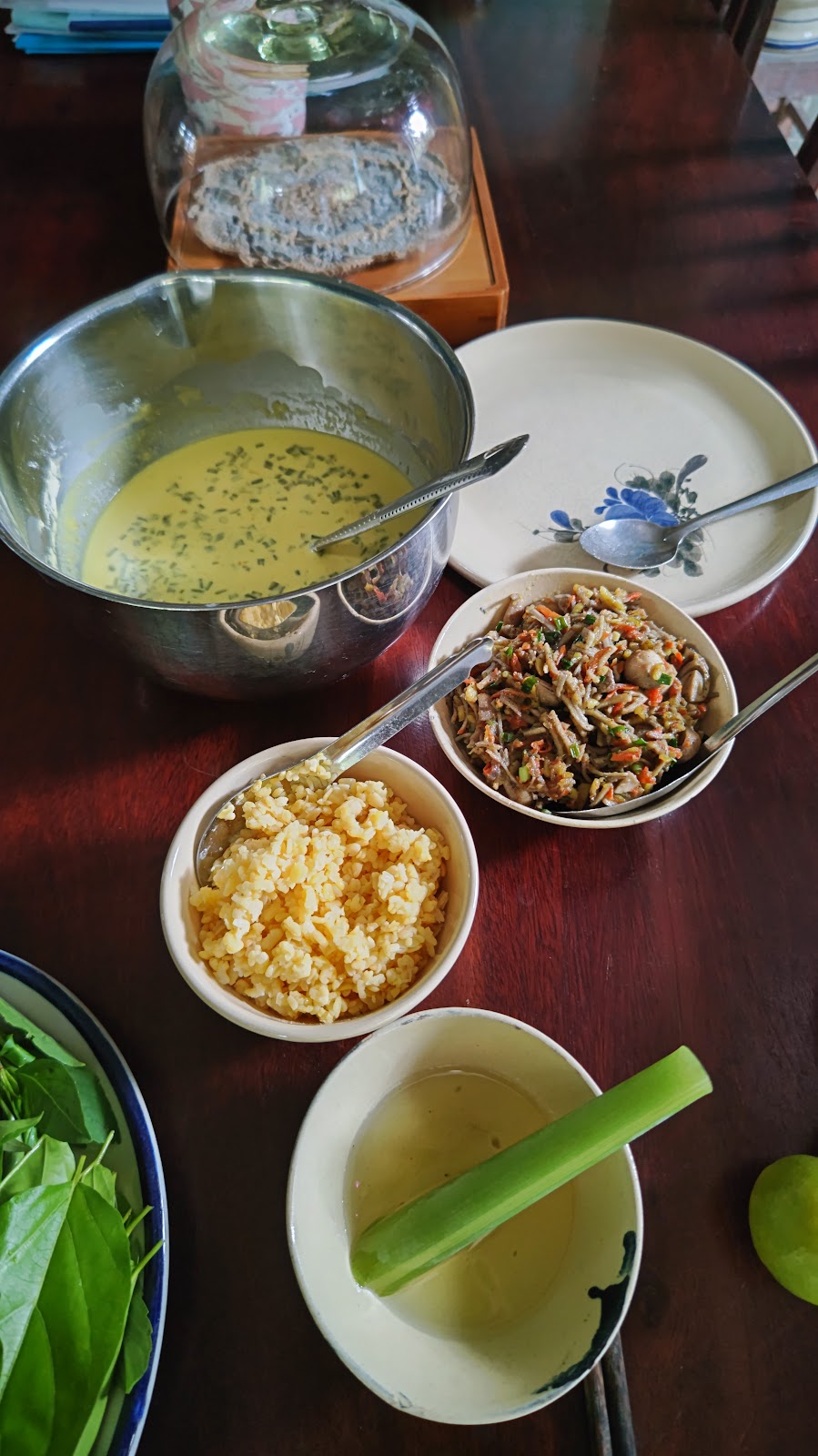 The batter and fillings are prepared before the pan is heated. Photo: Coco Happy Farm.
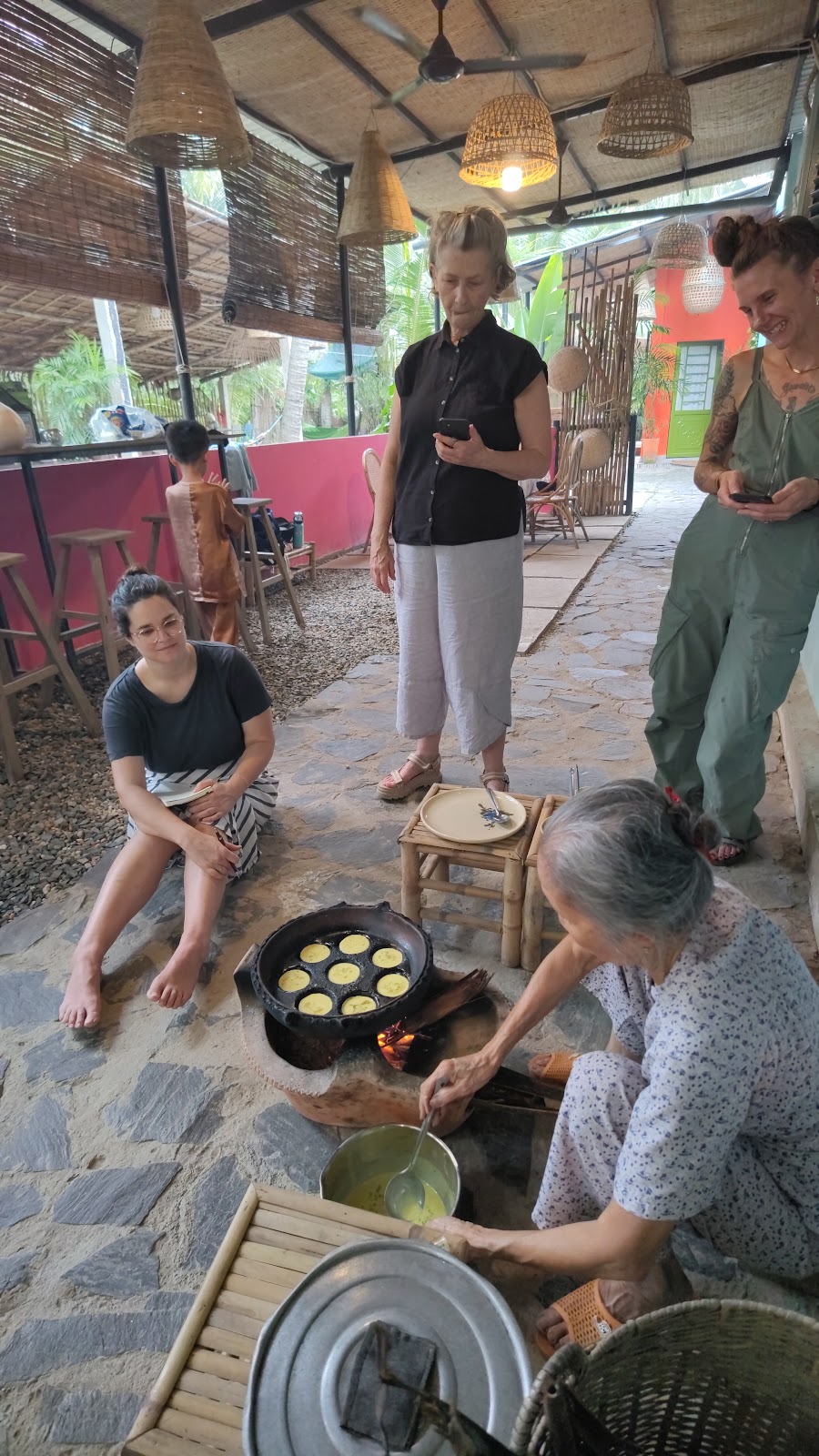 Guests learn by watching the first batch, then trying the small moulds themselves. Photo: Coco Happy Farm.
Bánh khọt is strongly associated with southern Vietnam and especially Vũng Tàu. We include it because it is a dish our family can cook with guests—not because we claim Ben Tre invented it.
2. Giant freshwater prawns steamed in coconut water
A giant freshwater prawn is easy to recognise by its long blue claws. Freshness matters, which is why the photographs here show the prawns alive before cooking rather than a styled finished plate. The meat is firm and naturally sweet; steaming with coconut water keeps the preparation direct and connects the seafood to one of Ben Tre's most familiar ingredients.
At Coco Happy Farm, the one-kilogram prawn option comes with vegetable fried rice and fruit. It is meant to share between two or three people. Availability depends on sourcing, so ask ahead instead of expecting a fixed daily restaurant stock.
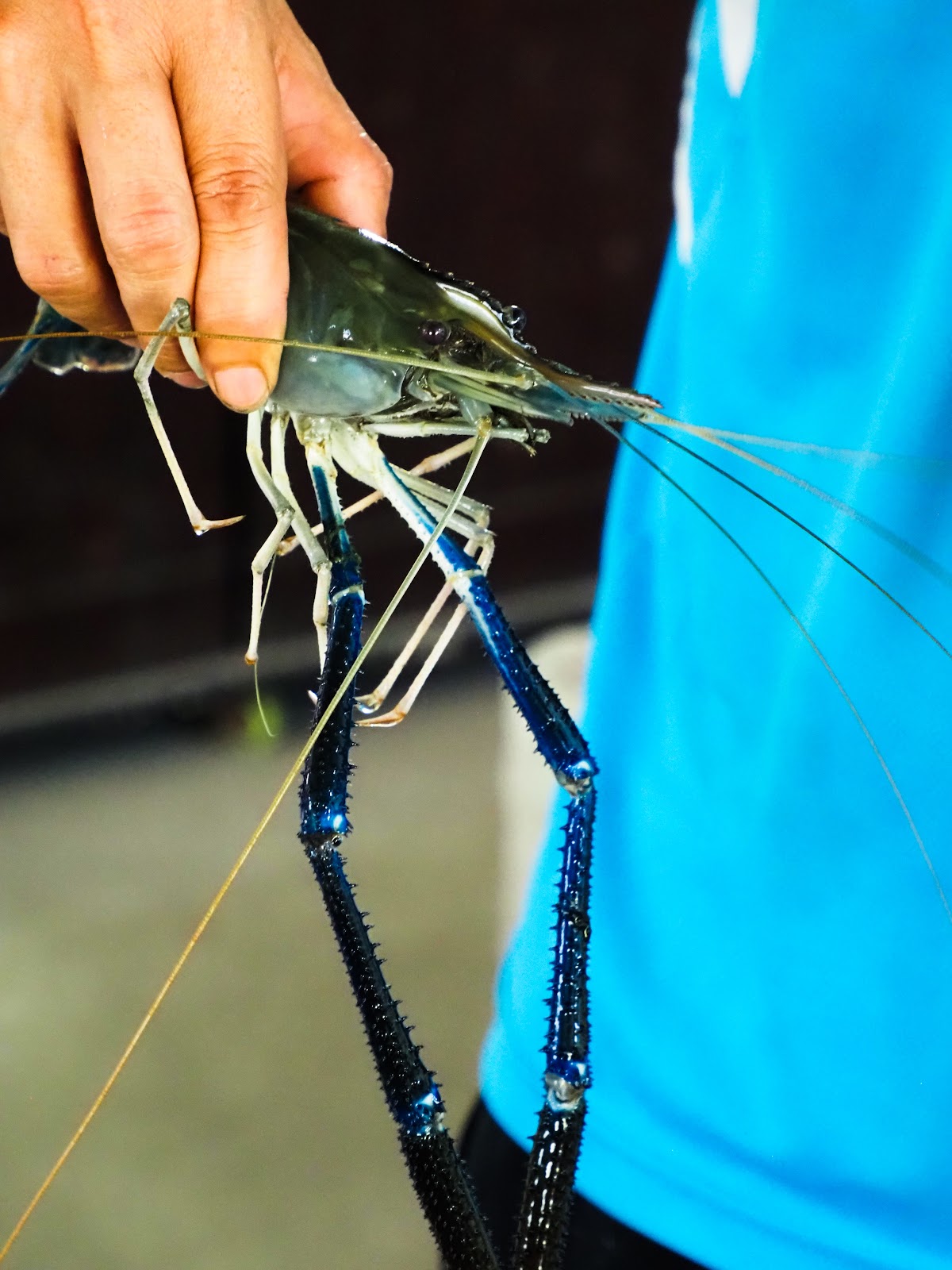 The long blue claws identify the giant freshwater prawn; this image shows the ingredient alive before cooking. Photo: Coco Happy Farm.
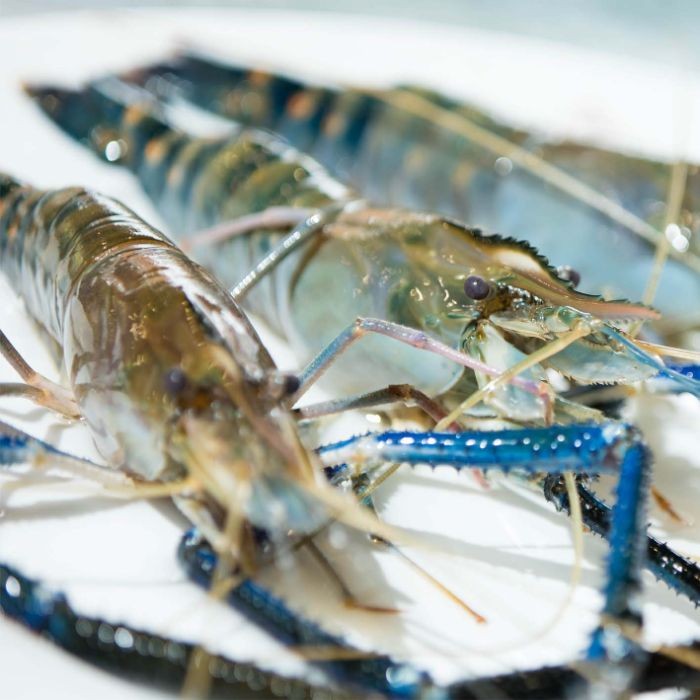 Fresh prawns are selected for a shared meal, then steamed with coconut water. Photo: Coco Happy Farm.
This is a generous order rather than a solo snack. Share it, eat slowly and use the fried rice to catch the juices. If your group has shellfish allergies or does not eat seafood, tell the host before the ingredients are bought.
3. Bánh canh bột xắt: noodles cut by hand
Bột xắt means the dough is cut. During the cooking class, guests roll the dough into thin rounds and slice it into strips by hand. The noodles will not all look identical, and that handmade texture is part of the experience.
Bánh canh refers to a family of thick Vietnamese noodle soups rather than one single recipe. Broth and toppings vary by place and household. At the farm, we focus on the method our family teaches, not on claiming that one bowl represents every version in the Mekong Delta.
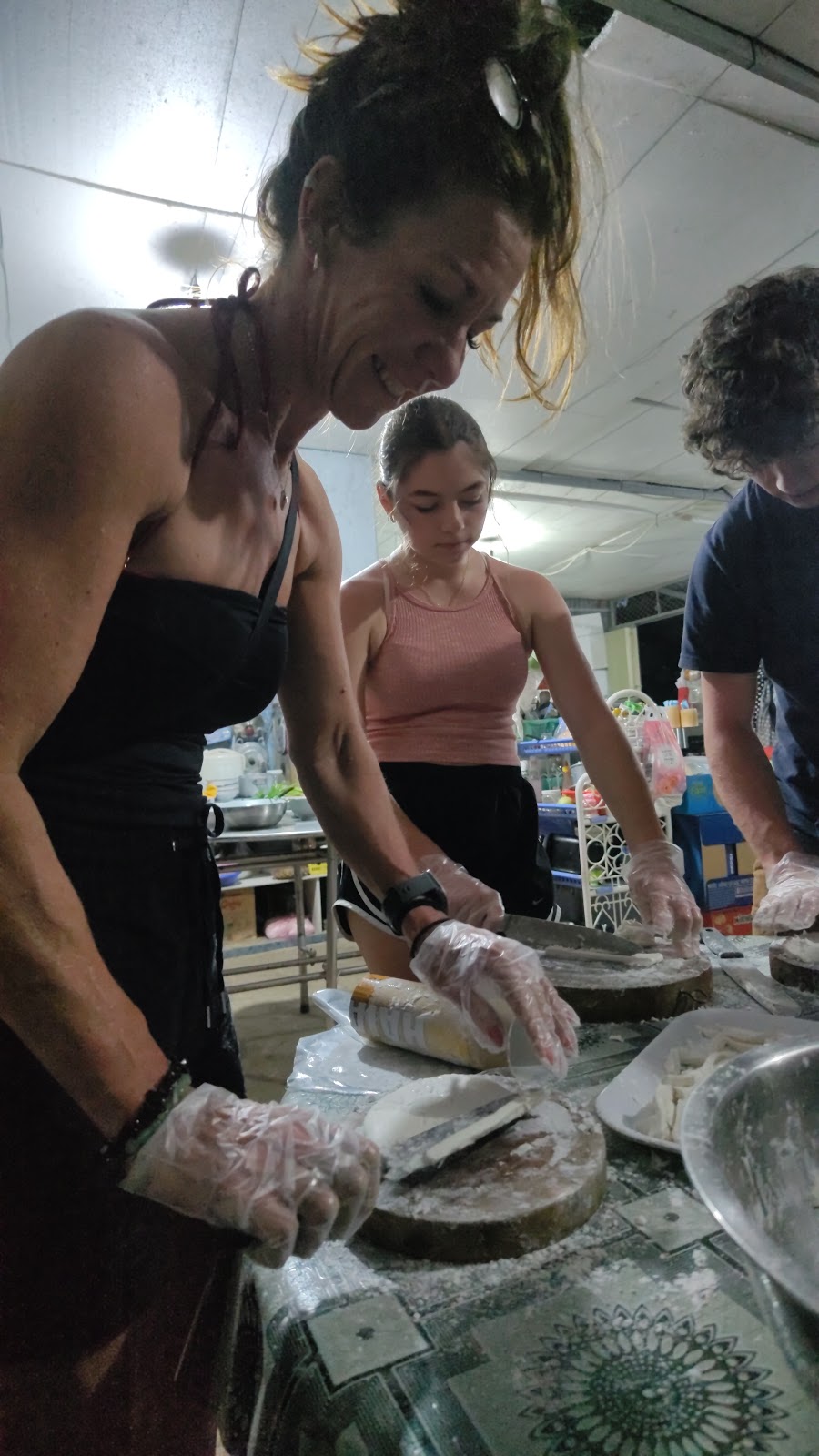
This is a good activity for travelers who want more than a recipe. You learn the pressure of the knife, the thickness of the dough and how much preparation happens before a bowl reaches the table.
4. A meal from a family kitchen
My aunt—my mother's younger sister—is one of the people who cooks in our family kitchen. The photograph is not a restaurant set. It shows a working counter with herbs, vegetables, bowls, sauces and the everyday tools needed to bring several dishes together.
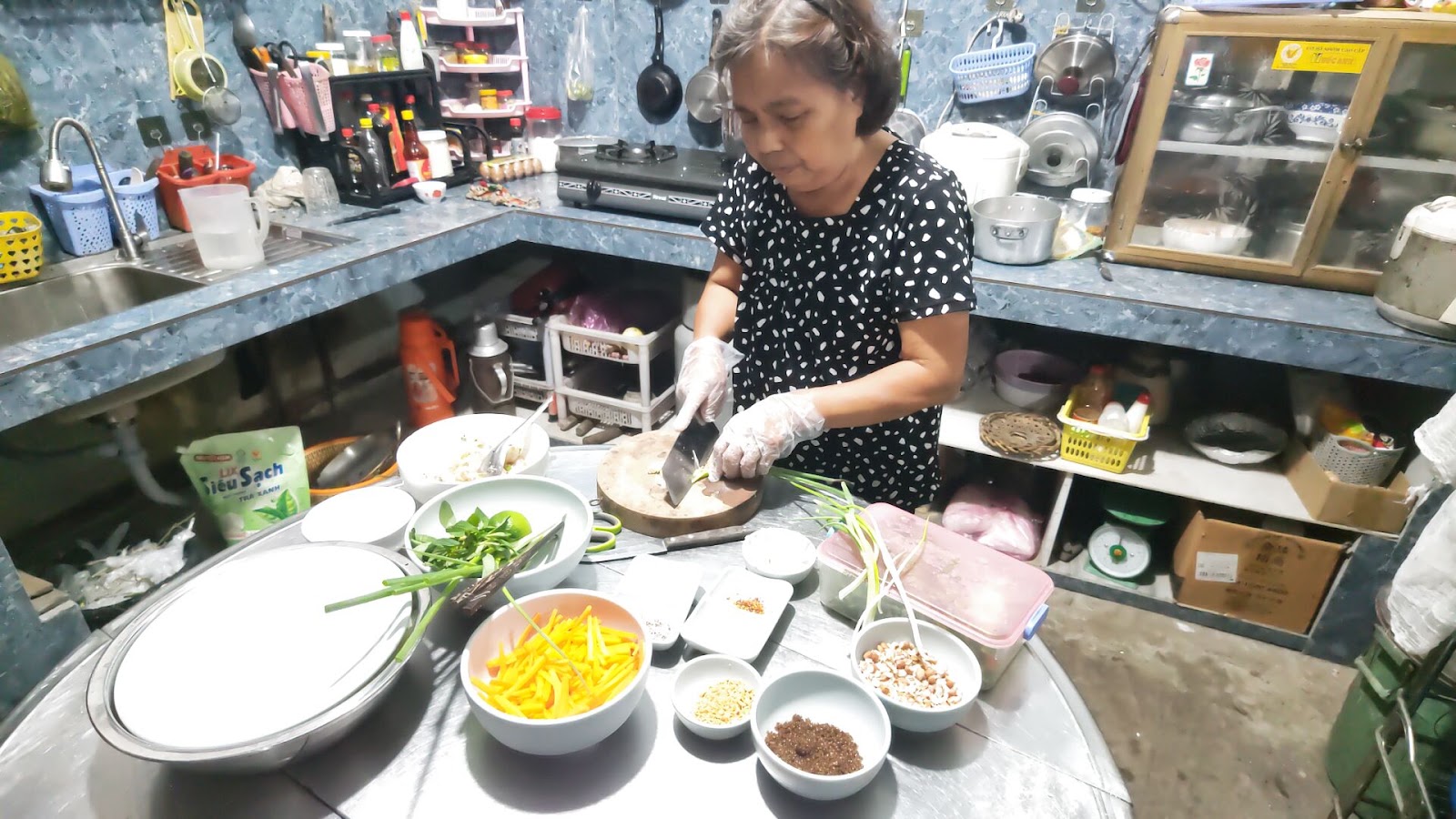
Vietnamese family meals are designed to share. Rice anchors the table, while vegetables, soup, meat or seafood and dipping sauce move between everyone. There is no need for each person to order a separate main course. This way of eating also lets travelers try more flavours without wasting food.
Ask what is available rather than insisting on a dish from an online list. A truthful answer—“we do not cook that here”—is a sign that you are dealing with a real kitchen, not a staged menu.
5. Farm breakfast: simple food, honest provenance
A good rural breakfast does not need to be exotic. At Coco Happy Farm it may include eggs, bread and familiar breakfast items alongside ripe mango and fresh orange juice. The important local detail is that the mango and oranges in this photograph were grown at the farm.
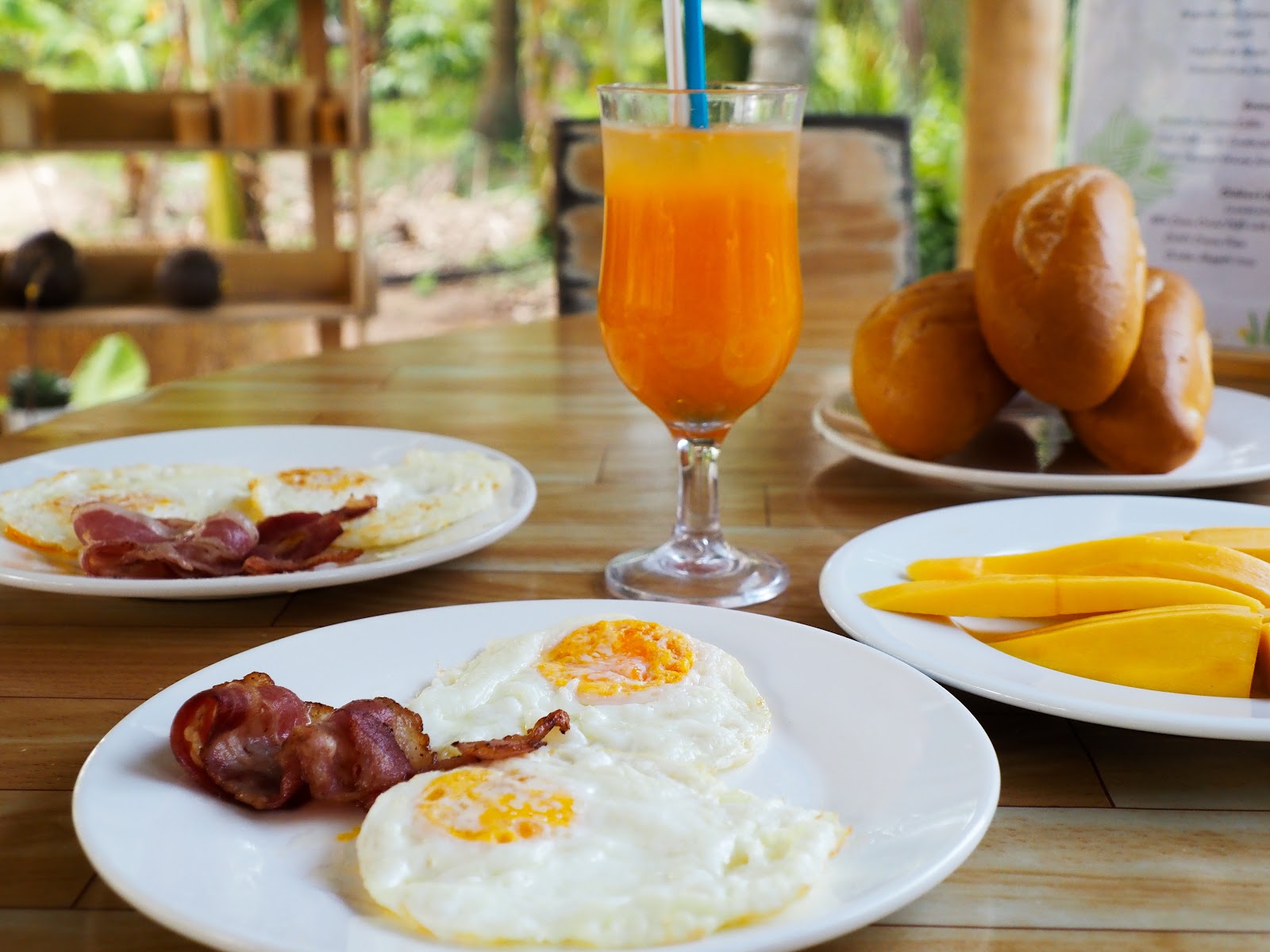
Fruit follows the garden and season. That means one guest may receive mango while another visits when a different fruit is ready. Seasonality is not an inconsistency; it is evidence that the food does not arrive according to a fixed resort display.
6. Coconut candy: from hot mixture to hand-wrapped pieces
Coconut candy is the one Ben Tre food almost every visitor will hear about. The useful experience is seeing more than the final packet. Coconut milk and sugar are cooked into a thick, elastic mixture, cooled and cut, then each small piece is wrapped for sale.
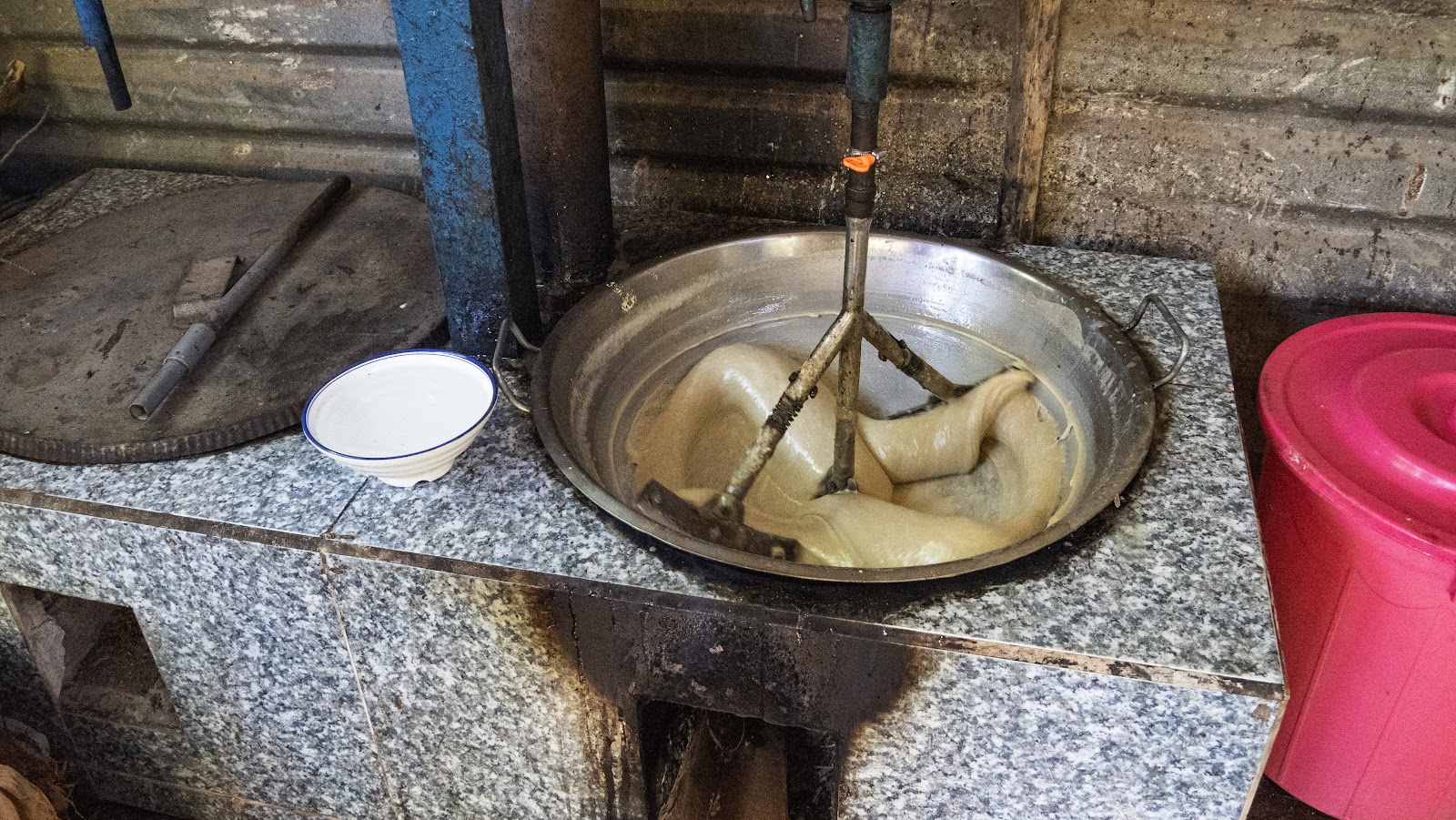 The hot coconut mixture thickens as it is continuously worked in the pan. Photo: Coco Happy Farm.
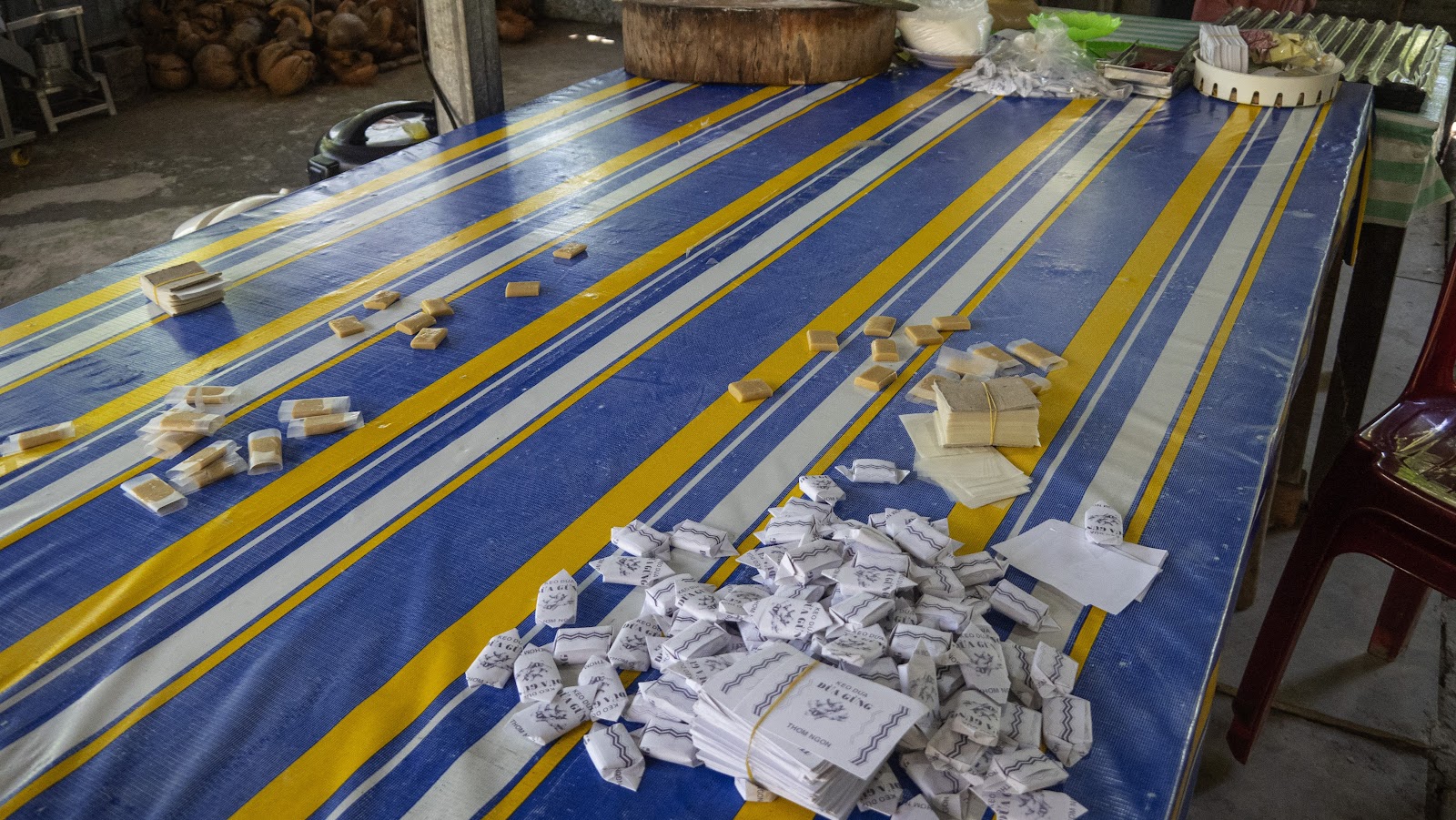 After cooling and cutting, the small pieces are wrapped by hand. Photo: Coco Happy Farm.
Taste it while the process is being explained, then buy only if you genuinely want some. A workshop should add context about coconut labour and transformation, not become a compulsory shopping stop. For the wider story of the crop, read our Ben Tre Coconut Kingdom Guide.
Where to eat in Ben Tre
A family meal or farmstay
Choose this when conversation, shared dishes and the story of the ingredients matter more than a long menu. Tell the host about allergies and dietary needs before arrival.
A hands-on cooking class
Best for learning one or two methods deeply. Pouring bánh khọt or cutting bánh canh noodles makes the meal active and gives families something to do together.
Small local eateries and markets
Look for places that specialise in one or two dishes and are busy with local customers. Morning is often the most interesting time for markets, fruit and breakfast food. Pointing, smiling and showing a translated dietary note can be more practical than expecting an English menu.
A garden café such as Thúy Café
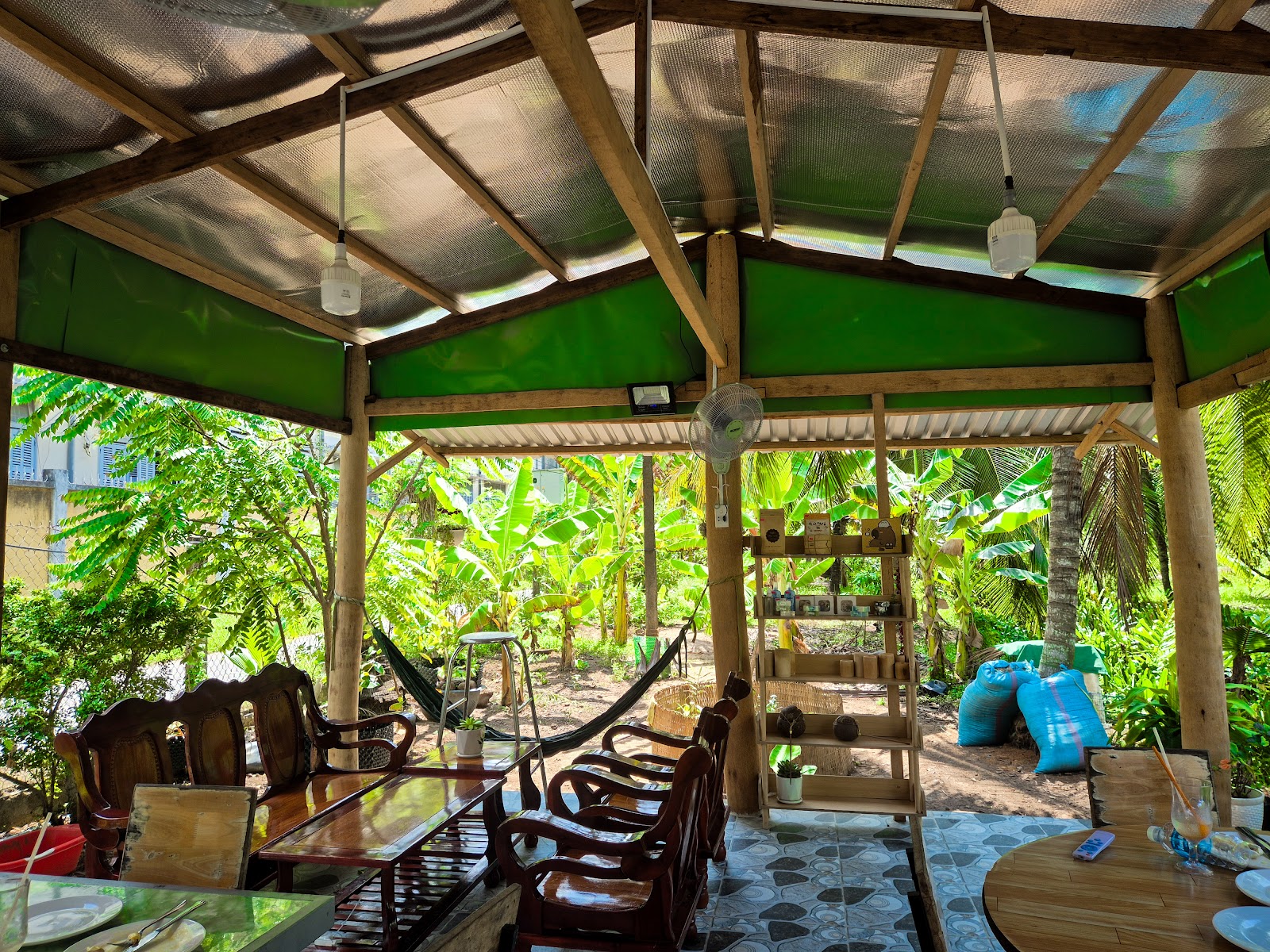
A café stop is part of eating well because it gives the day space. The open-sided shelter, garden view and hammocks at Thúy Café create a quiet place to drink, rest and let lunch settle. Confirm the current menu and opening time locally rather than relying on an old listing.
Practical food advice
- Explain allergies early. Shellfish, peanuts, fish sauce and shared cooking surfaces are common concerns.
- Define vegetarian clearly. Ask whether fish sauce, shrimp paste or meat broth is used.
- Ask before ordering seafood. Fresh prawns may need advance sourcing and are better shared.
- Drink filtered or sealed water. Choose fruit juice prepared with clean equipment and safe ice.
- Accept seasonality. Farm fruit and some ingredients change with weather and harvest.
- Share portions. Family-style dining reduces waste and lets you try more dishes.
- Do not judge a kitchen by décor alone. Clean preparation, fresh ingredients and honest communication matter more.
Frequently asked questions
What food is Ben Tre famous for?
Ben Tre is best known for coconut and coconut candy, but its food story is wider: tropical fruit, freshwater prawns and fish, rice dishes, noodle soups, small savoury cakes and family meals built around what is fresh.
Does every Ben Tre dish contain coconut?
No. Coconut water, coconut milk, flesh and sugar appear in some dishes, but not every local meal is coconut-based. A balanced Ben Tre meal may include rice, vegetables, soup, seafood or meat with no coconut at all.
Can I try coconut-heart salad at Coco Happy Farm?
No. Coco Happy Farm does not sell coconut-heart salad. We prefer to describe the food we genuinely cook and serve rather than repeat every dish found on generic Ben Tre food lists.
What is bánh khọt?
Bánh khọt are small savoury rice-flour cakes cooked in a mould until the edges are crisp. They are commonly eaten with lettuce, herbs and dipping sauce. At the farm, guests may learn to pour the batter during a cooking activity.
What is bánh canh bột xắt?
It is a home-style noodle dish whose dough is rolled and cut into strips by hand. In a cooking class, making the noodles is as important as eating the finished bowl because guests can feel the texture and learn the family method.
What is included with the coconut-steamed giant freshwater prawns?
Coco Happy Farm's one-kilogram giant freshwater prawn option is steamed with coconut water and comes with vegetable fried rice and fruit. It is designed to share between two or three people. Ask ahead about availability.
Are vegetarian meals available in Ben Tre?
Usually yes when arranged in advance, but fish sauce, shrimp paste and meat stock can appear in dishes that look vegetable-based. Explain clearly whether you are vegetarian or vegan and mention allergies before the meal is prepared.
Where should I eat in Ben Tre?
Mix different settings: a home-cooked meal or cooking class, a small local eatery, a relaxed garden café and a coconut-candy workshop. The best choice depends on whether you want a particular dish, local conversation or a slow place to rest.
Come hungry for the story, not just the menu.
Stay at Coco Happy Farm, share a family meal and ask about a cooking class or the coconut-steamed giant freshwater prawn option for your dates.
Editorial note: This guide is based on Tran Quoc Thuan's experience growing up in a coconut-farming family and hosting meals and cooking activities at Coco Happy Farm. Dishes, fruit and seafood availability change. Wider culinary context was cross-checked with the official Vietnam Tourism guide to dining in the Mekong Delta and its guide to Vietnamese snacks and Ben Tre coconut candy.