Ben Tre is called Vietnam's Coconut Kingdom because coconut palms shape both the land and daily life.
The province's waterways, humid climate and garden agriculture support vast areas of coconut. But the real story continues after harvest: fruit moves through family yards and small workshops into food, oil, candy, fibre, fuel and craft. The best way to understand it is to combine a working garden, village roads and honest conversation with local people.
I grew up in a coconut-farming family in Lương Hòa, Ben Tre. At our farm, coconuts are planted, harvested, opened, shared with guests and sold according to the season and market. That perspective is different from a short demonstration arranged only for tourists.
This guide explains what visitors are actually seeing: why the gardens look the way they do, how a coconut moves from palm to workshop, and how to visit without treating demanding farm work as a performance.
A landscape built around water and coconut palms
Ben Tre sits between branches of the Mekong. Rivers feed a dense network of canals, while smaller garden ditches help farmers manage water around raised planting beds. Coconut palms tolerate the Delta environment well and form a high green canopy above homes, fruit trees and narrow concrete lanes.
From a main road, the province can look ordinary. Turn into a village and the pattern becomes clear: palms, small bridges, irrigation channels, houses, boats and workshops all belong to the same living landscape.
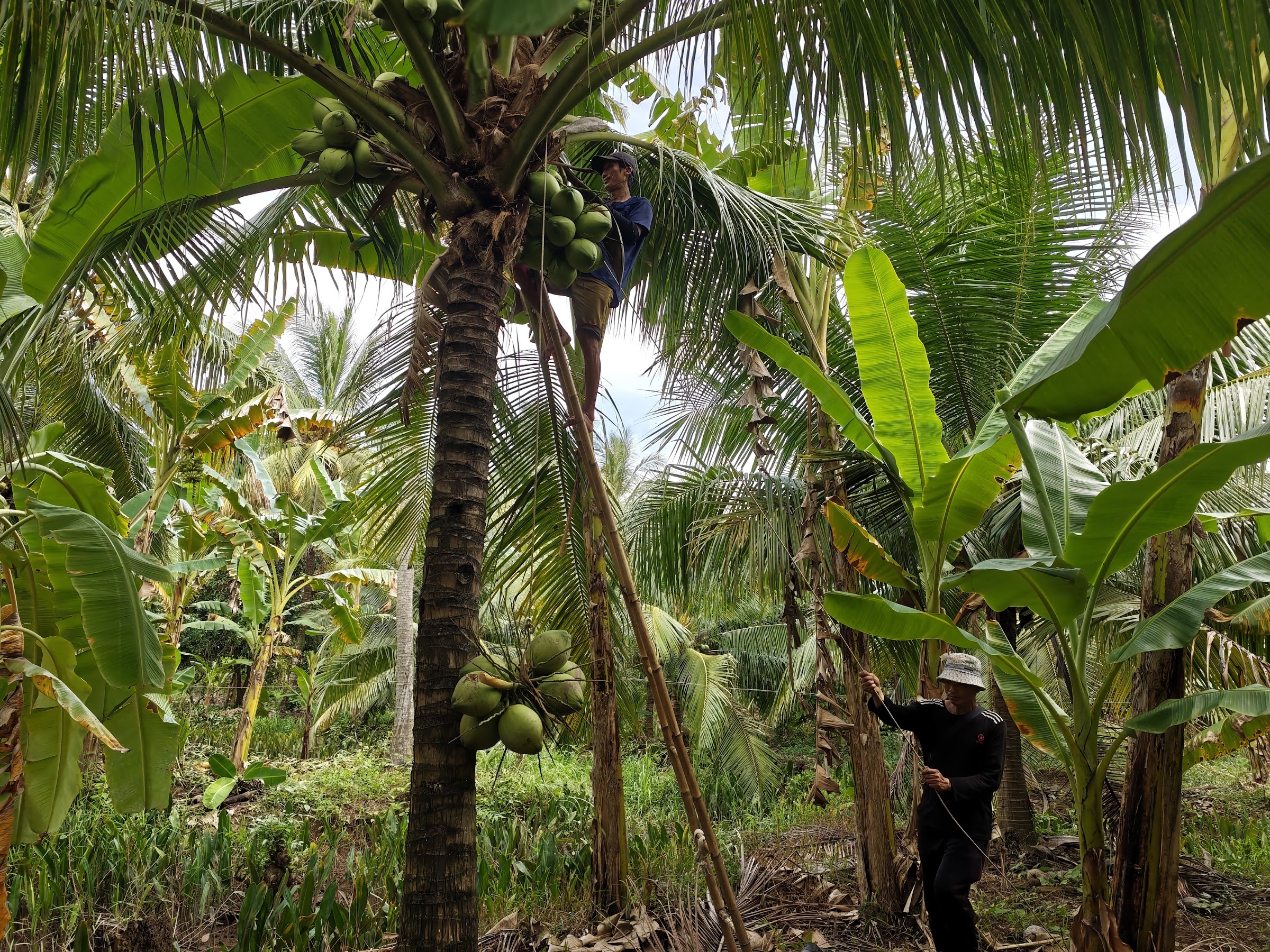 Ben Tre's coconut gardens are mixed working landscapes, not uniform plantations. Photo: Coco Happy Farm.
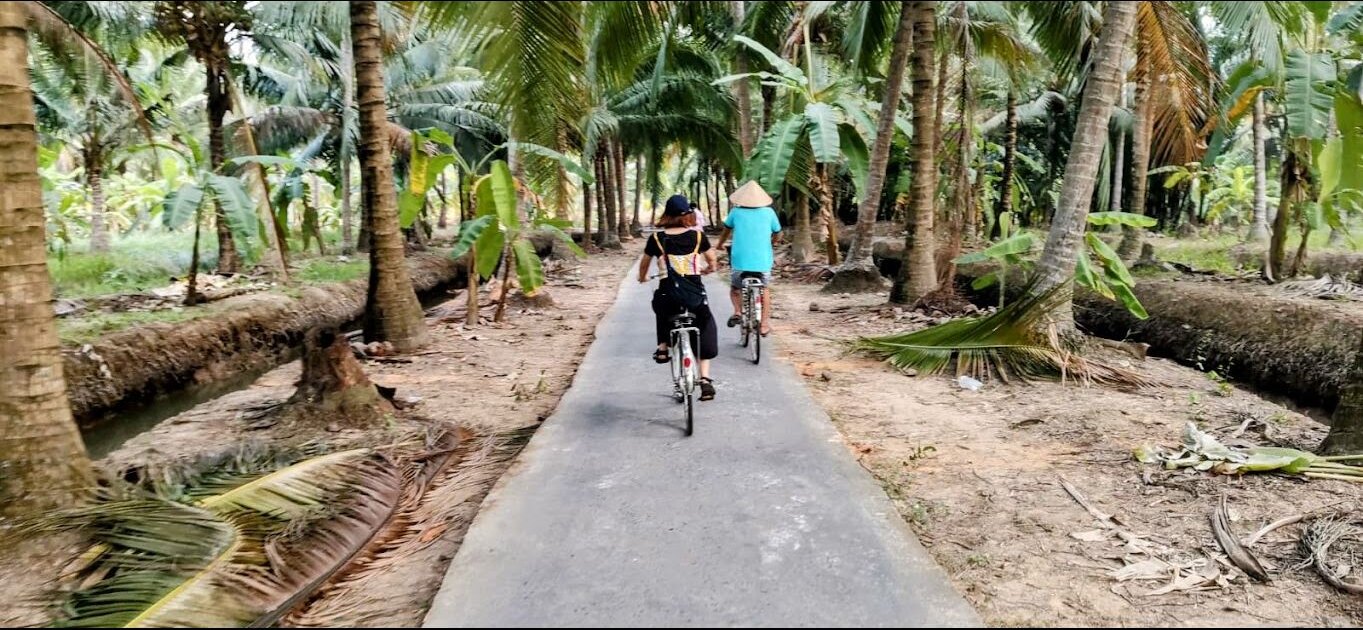 A bicycle reveals the small lanes, bridges and garden canals that cars often pass too quickly. Photo: Coco Happy Farm.
How coconuts are harvested
A coconut palm can carry fruit at several stages. The farmer decides what is ready according to variety and use: young coconuts for drinking, mature fruit for milk and processing, or older dry coconuts for seed and industrial uses.
Harvest methods vary. Skilled workers may climb, use a long pole or work from a ladder. Fruit is heavy, the palm is tall and the ground below may be wet or uneven. Visitors should never stand beneath a bunch or attempt harvesting without the farmer's clear permission and supervision.
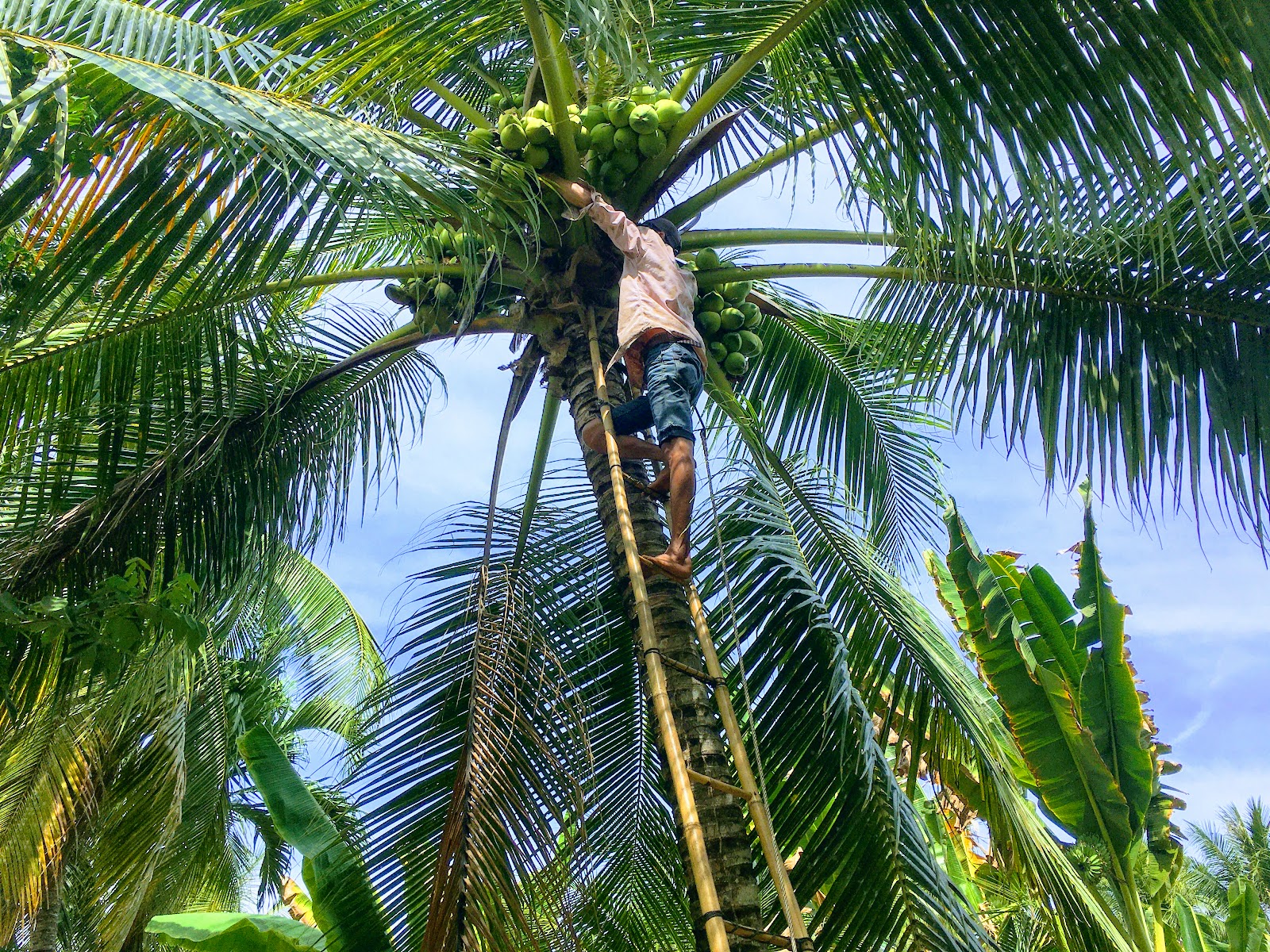 Climbing a coconut palm is physical, skilled work and should be observed from a safe distance. Photo: Coco Happy Farm.
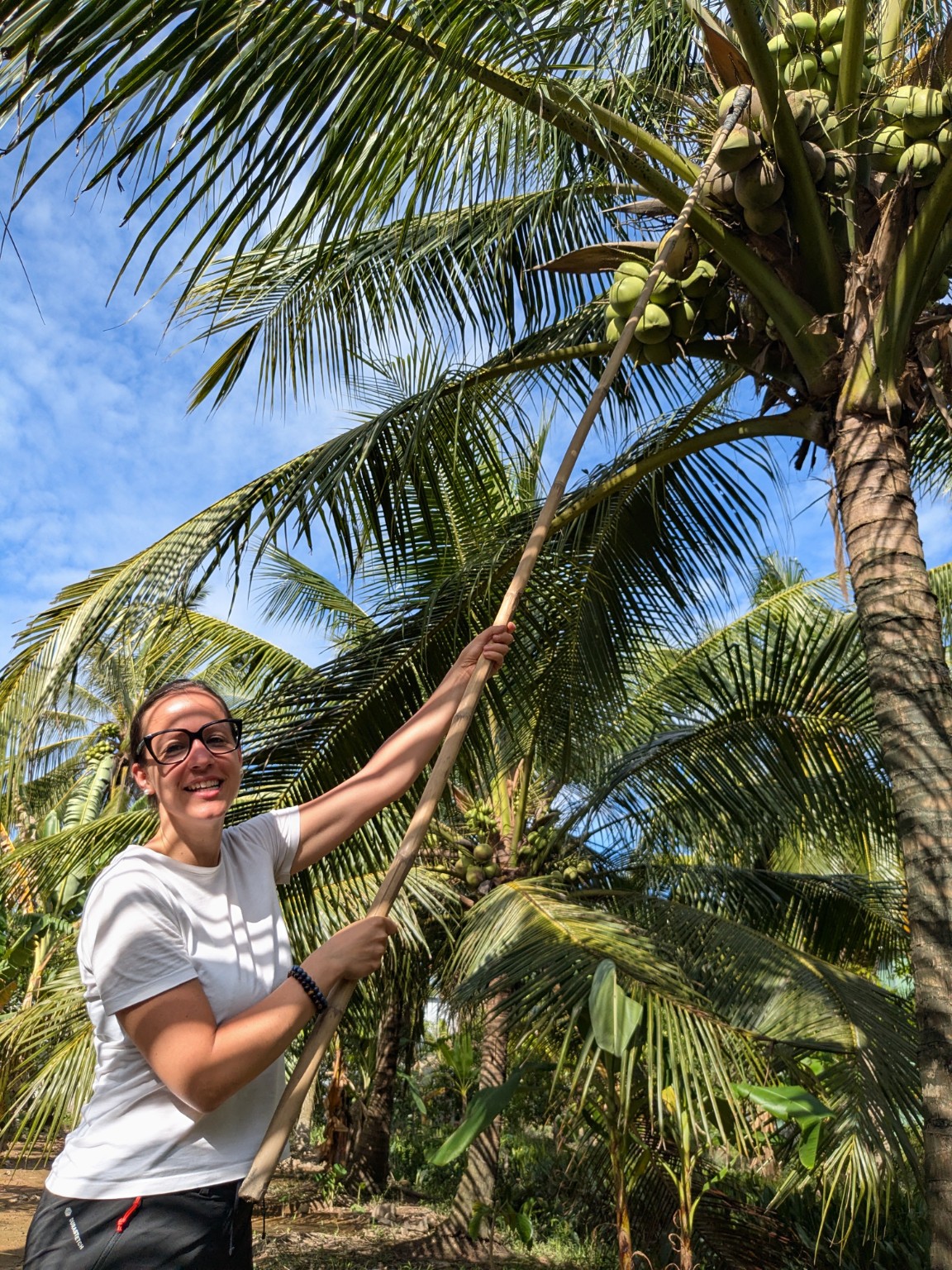 When conditions are suitable, a supervised attempt can help guests understand the weight and skill involved. Photo: Coco Happy Farm.
One fruit, many useful parts
The green or brown exterior hides several layers. The fibrous husk protects the hard shell. Inside are white coconut meat and liquid; their maturity changes the flavour, texture and best use. Young coconut water is refreshing, while mature meat produces rich coconut milk and oil.
Almost every part can enter another local activity. Husk becomes fibre and growing material; shell can become charcoal or craft; leaves are woven or used around the farm; trunks may be used as timber after a palm's productive life. Not every product is made at every farm, so a trustworthy guide should explain where each stage actually happens.
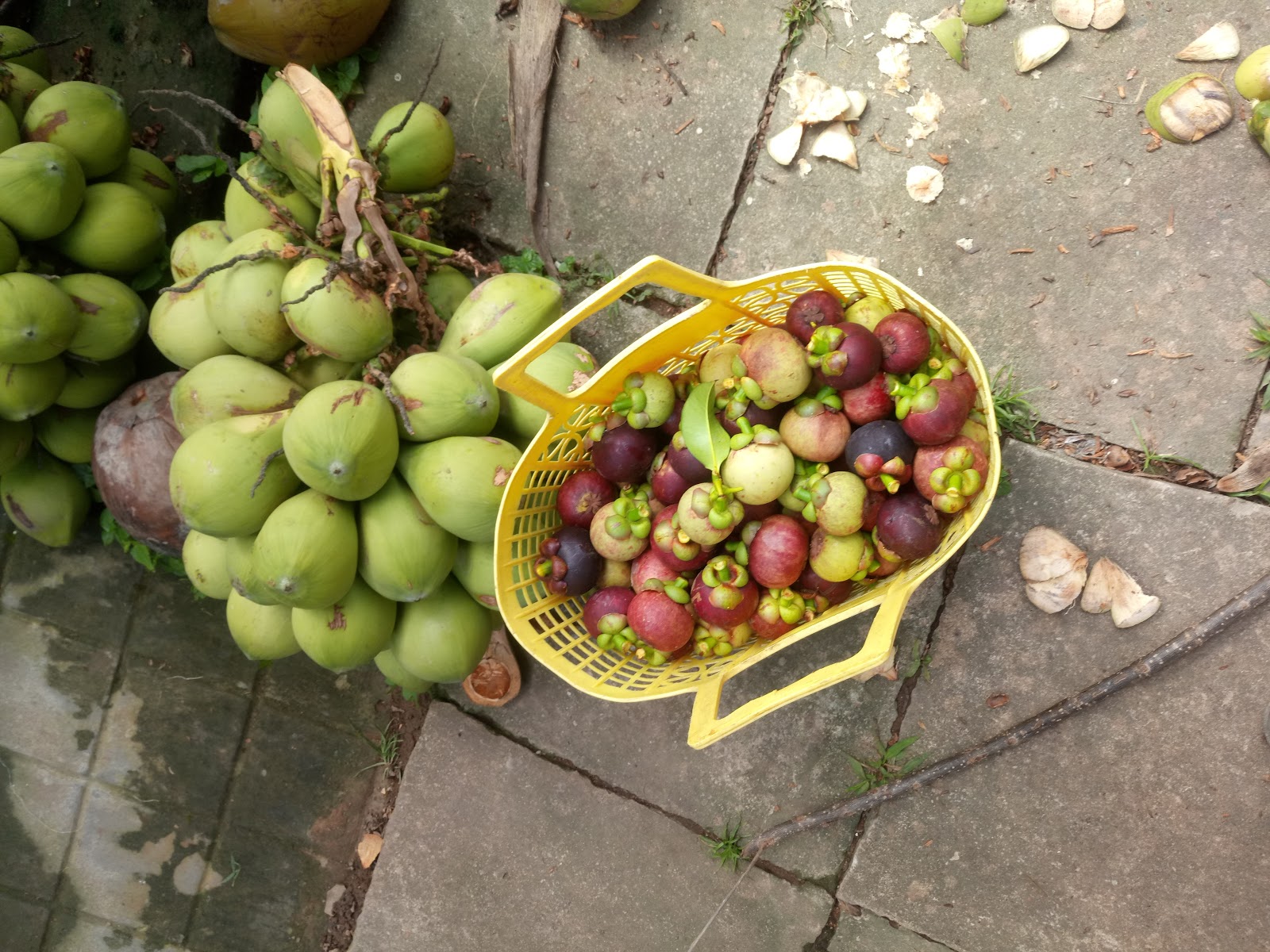 Fresh coconuts share the garden with seasonal fruit; availability changes through the year. Photo: Coco Happy Farm.
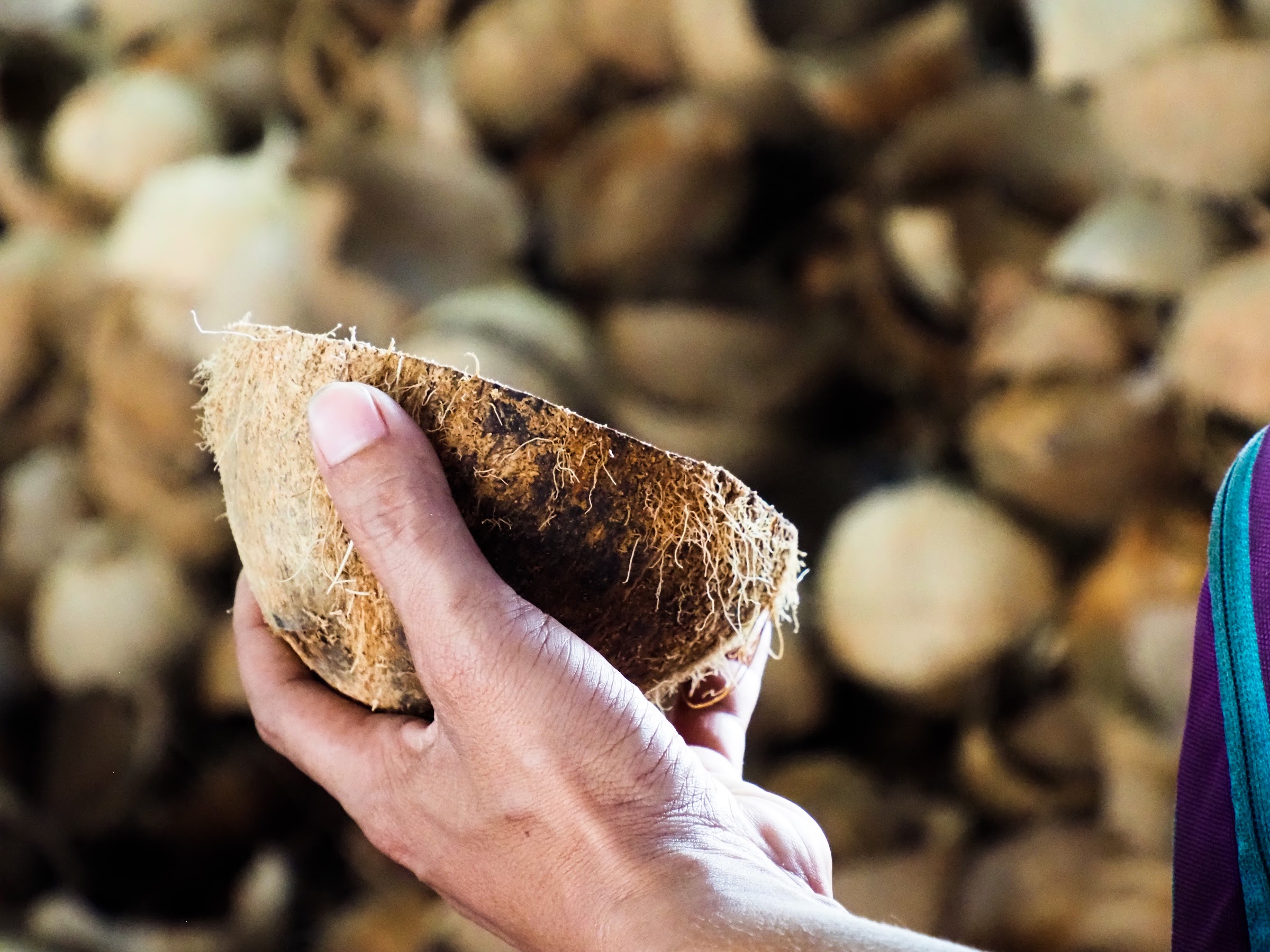 A mature coconut can also begin the next generation as a seedling. Photo: Coco Happy Farm.
From farmyard to village workshop
The Coconut Kingdom is a chain of livelihoods. Farmers grow and cut fruit; collectors consolidate loads; drivers and boats move them; workers remove husk, shell or meat; cooks and small factories transform the ingredients. Market prices and demand affect many families at once.
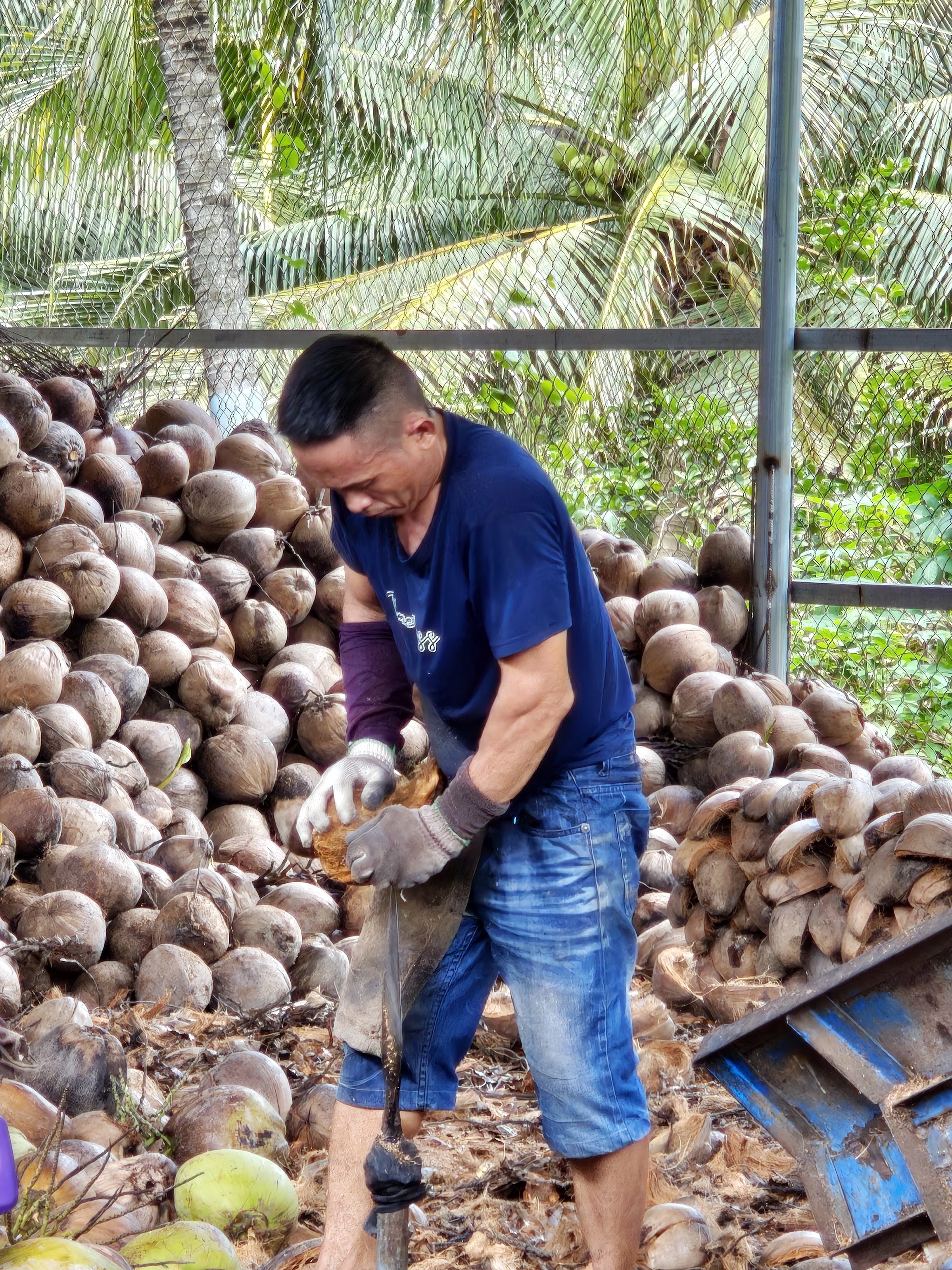
Much of this work is repetitive and demanding. A pile of husks is not waste arranged for a photograph—it may represent hours of labour and the raw material for another business.
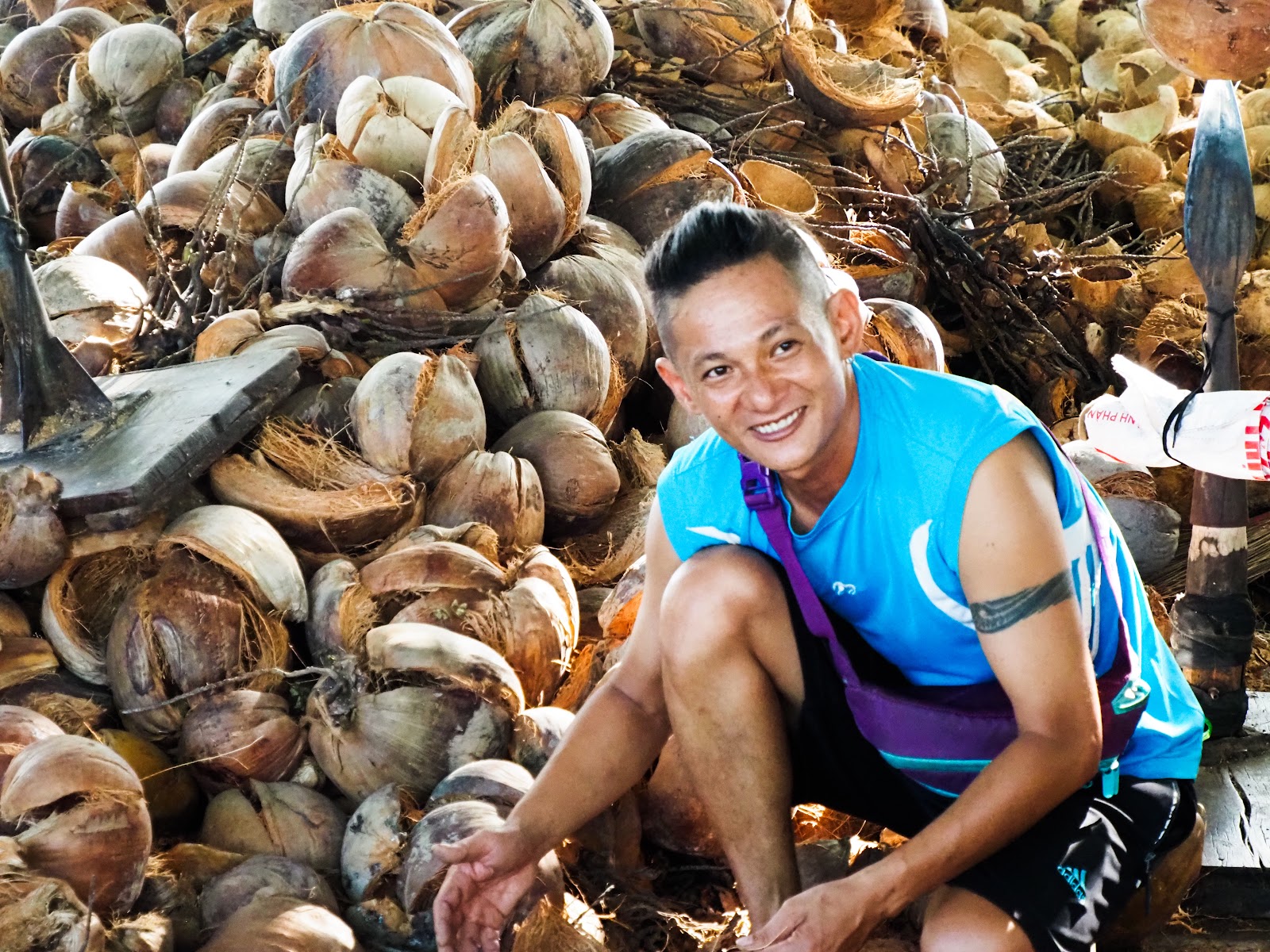 Husk processing is one link in a long rural supply chain around the coconut. Photo: Coco Happy Farm.
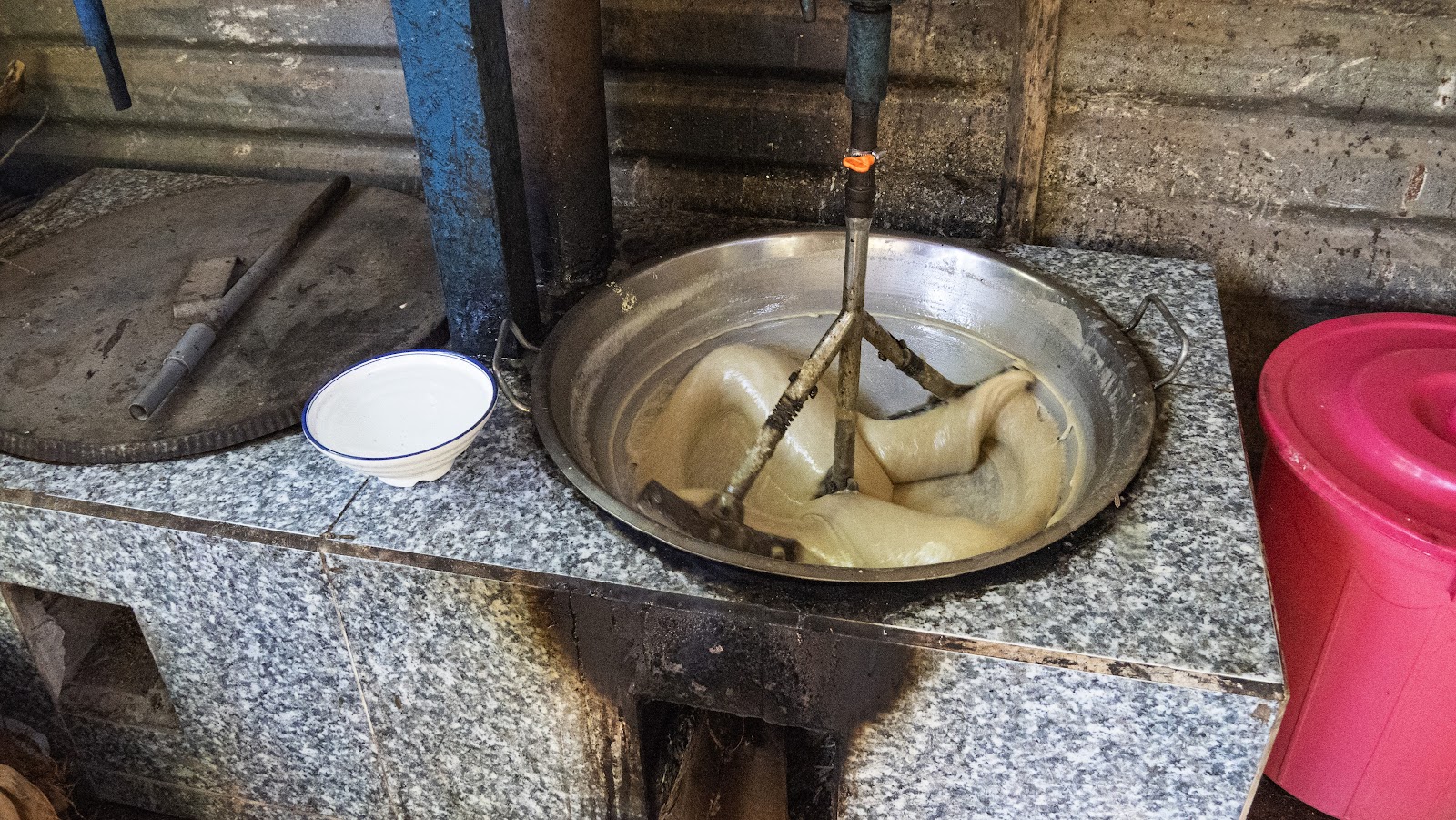 Coconut candy turns coconut milk and sugar into Ben Tre's best-known edible souvenir. Photo: Coco Happy Farm.
Coconut in Ben Tre food and hospitality
Fresh coconut water is the simplest introduction. In the kitchen, grated mature coconut is pressed for milk, adding richness to sweet soups, cakes, curries and savoury dishes. Coconut candy is famous, but it is only one expression of a versatile ingredient.
At Coco Happy Farm, in-house guests receive fresh coconut and seasonal fruit when available. That wording matters: a working farm follows harvests and weather, so the exact fruit changes rather than appearing on a fixed hotel schedule.
Ask whether the coconut is young or mature, where it came from and what happens to the husk and shell. A simple fresh coconut becomes more meaningful when you understand the work behind it.
How to experience the Coconut Kingdom
Cycle village lanes. This is the clearest way to see how palms, homes, canals and small workshops connect. Ride slowly and give way to local traffic.
Visit a working garden. Look for honest seasonal explanations rather than a promise that every crop and activity is available every day.
See one processing stage. A small candy, husk or coconut-meat workshop can add context when it is genuinely operating and visitors do not obstruct workers.
Eat locally. Try fresh coconut and a family meal. Food shows how the crop moves from landscape into daily life.
Stay overnight. One or two nights allow time for village cycling, river life and a farm visit without racing between unrelated attractions.
Visit responsibly
- Ask before entering a garden, workshop or family yard.
- Do not climb trees or stand below a coconut harvest.
- Never expect workers to stop production for a staged photograph.
- Buy only if you genuinely want the product; avoid tours built around sales pressure.
- Keep groups small on narrow paths and do not block local traffic.
- Accept seasonality: a real garden cannot display every fruit on demand.
- Choose hosts who explain both the benefits and the hard work of coconut farming.
Frequently asked questions
Why is Ben Tre called the Coconut Kingdom?
Coconut palms shape Ben Tre's landscape, farming, food, transport and small industries. The name describes an entire local economy and way of life, not one tourist attraction.
Where can I see coconut farms in Ben Tre?
Coconut gardens spread across rural districts outside Ben Tre city. Staying or cycling in the countryside gives more context than visiting only a roadside workshop.
Can visitors harvest a coconut?
Sometimes, when fruit is ready and a farmer can supervise. Harvesting is skilled work and should never be promised on demand or attempted without permission.
What products are made from Ben Tre coconuts?
Local products include fresh coconut water, coconut milk, oil, candy, dried coconut, fibre, coir products, charcoal and handicrafts made from shell, leaves and wood.
Is a coconut-candy workshop worth visiting?
Yes, if the visit explains ingredients and real production without pressure to buy. It should be one part of understanding the coconut economy, not the entire Ben Tre experience.
How long should I spend in Ben Tre?
One day can introduce the landscape, but one or two nights allow time for village roads, food, river life and a working farm without turning the visit into a rushed checklist.
See the Coconut Kingdom as a living place.
Stay at our family-run farm in rural Ben Tre, cycle the village lanes and learn how coconuts connect gardens, food and local livelihoods.
Editorial note: This guide is based on Tran Quoc Thuan's experience growing up in a coconut-farming family and hosting visitors at Coco Happy Farm in Lương Hòa, Ben Tre. Farm work, crops, workshop activity and product availability change with season and local conditions.