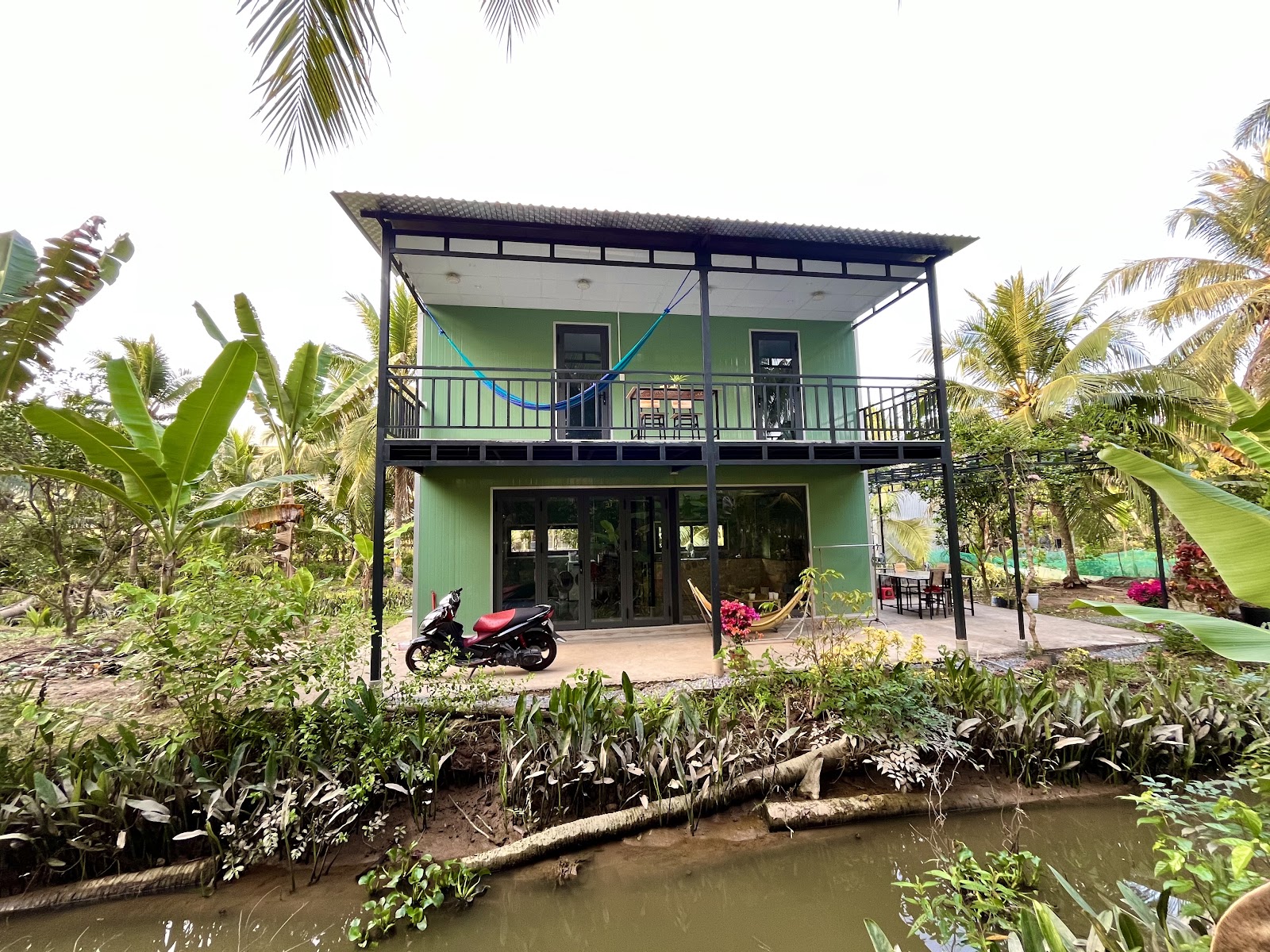
Choose the host and setting before the activity list.
For coconut villages, quiet lanes and narrow waterways, look in rural Ben Tre. For a farm-style stay combined with Cai Rang floating market and city services, look around Can Tho. Vinh Long and Cai Be are good for orchard and island landscapes. Before booking, verify the exact room, bathroom, meals, transport and whether the family actually lives or works on the property.
“Best farmstay” is a difficult search because travellers use the word for several different experiences. Some want a comfortable ecolodge surrounded by greenery. Some want to eat with a family and see ordinary rural work. Others mainly want a swimming pool, air conditioning and an attractive base for boat tours. These are all valid, but they are not the same holiday.
I have lived in Ben Tre for decades and host international guests at our family farm. The most satisfied visitors are rarely those who choose from photographs alone. They understand the location, the level of comfort and how much of the experience is hosted. The most disappointed guests often booked the word farmstay while imagining a resort.
What does “farmstay” really mean in the Mekong Delta?
Vietnam has no traveller-facing rule that makes every property using the name farmstay identical. A real farmstay may be a working family farm with guest rooms. It may also be a small countryside property whose owners organise visits to nearby growers, artisans and waterways. A homestay may involve close contact with the host family—or it may function much like a guesthouse.
Do not judge authenticity by rustic furniture. Ask practical questions: Who hosts the activities? Does the family live or work nearby? Where does the food come from? Can you walk or cycle into an ordinary village? What happens when there are no tours?
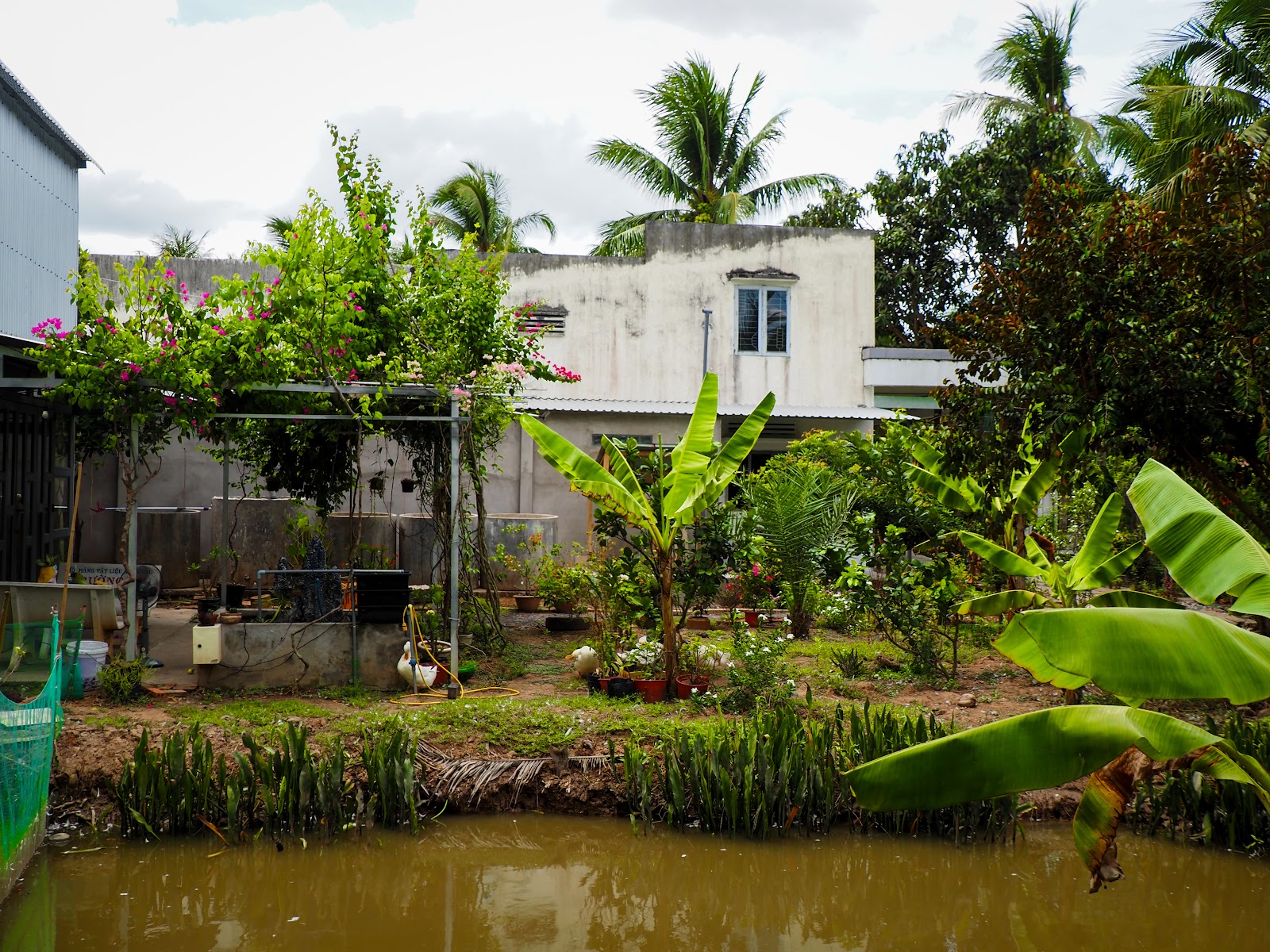 In the Delta, small canals are part of farming and everyday transport—not just scenery. Photo: Coco Happy Farm.
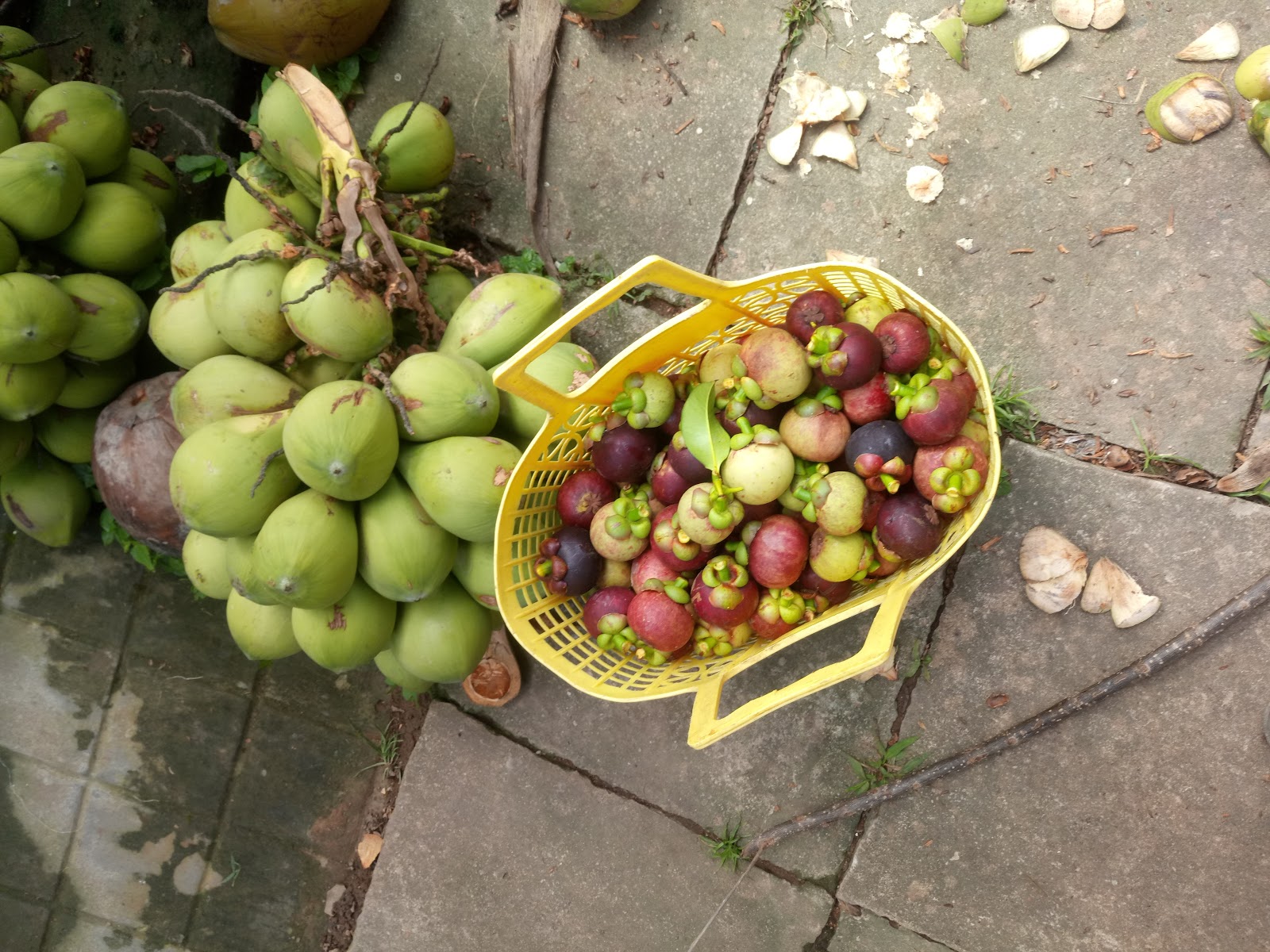 Seasonal fruit means availability changes; a trustworthy host will not promise every fruit all year. Photo: Coco Happy Farm.
Which Mekong Delta area should you choose?
Choose by route as well as atmosphere. If you travel from Ho Chi Minh City to Ben Tre and then Can Tho, one or two nights in each place creates a natural progression from quiet countryside to a regional city. Our Ben Tre vs Can Tho comparison explains the difference in more detail.
Seven things to check before booking
- The exact location: “Ben Tre” may mean the city or a village an hour away. Ask for the map pin and final transfer.
- The exact room: photographs across room categories can be mixed. Confirm air conditioning, bathroom privacy, hot water, stairs and beds.
- What is included: breakfast, bicycles and fruit may be included while boats, cooking and dinner cost extra.
- Who hosts you: a family host, hired guide and hotel receptionist create different experiences. None is automatically wrong, but clarity matters.
- Meal arrangements: rural properties may require orders several hours ahead and may not have restaurants within walking distance.
- Your independence: ask whether you can cycle or walk safely without a guide and what there is to do during free time.
- The honest limitations: insects, frogs, rain, early village sounds, uneven paths and weak transport are normal rural realities.
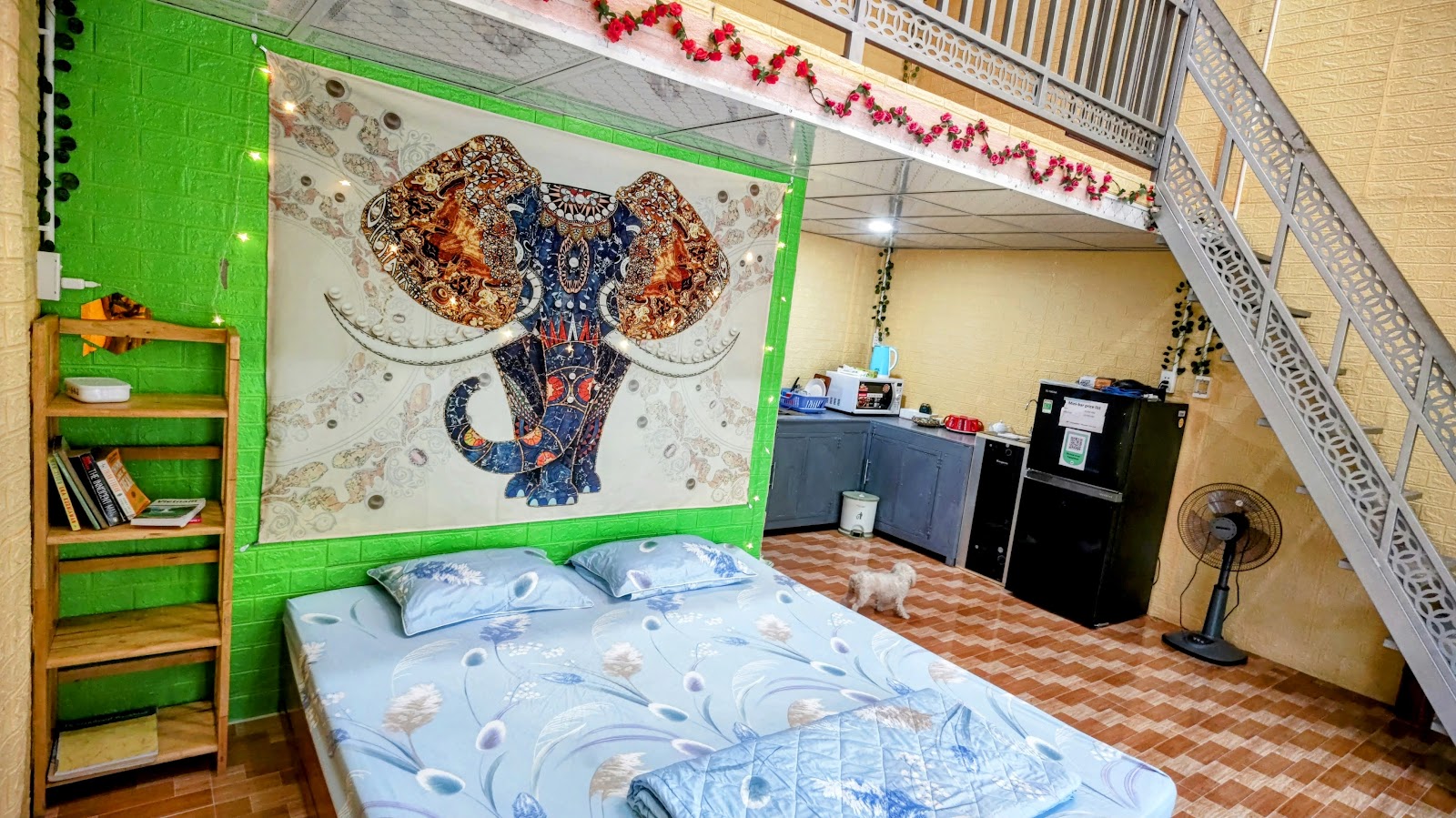 Look at the exact room type rather than relying on a property’s most attractive photograph. Photo: Coco Happy Farm.
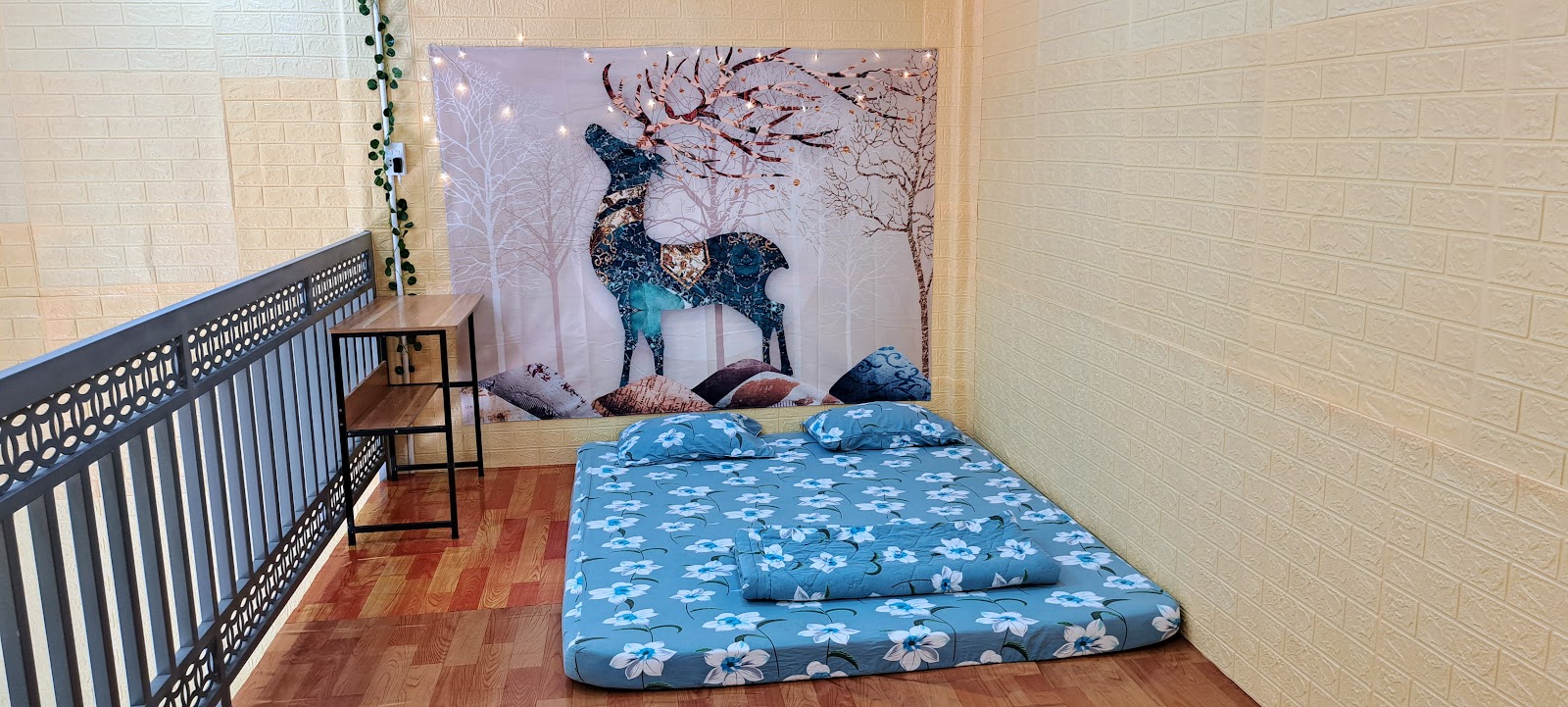 A loft can suit families and friends, but privacy, stairs and bed layout should be discussed first. Photo: Coco Happy Farm.
“Free activity” does not always mean a private guided tour.
Ask whether bicycles are simply available, whether a host accompanies you, whether other guests can join, and how long the experience normally lasts. Clear expectations protect both the traveller and the small family business.
What makes a farmstay day memorable?
The strongest rural stays give you a rhythm rather than a checklist. A morning might begin with breakfast and a bicycle ride before the heat. Midday can be quiet. Later, you might enter the garden, prepare food with the family or travel by boat when the light softens. Free time is not a service failure; it is part of slow travel.
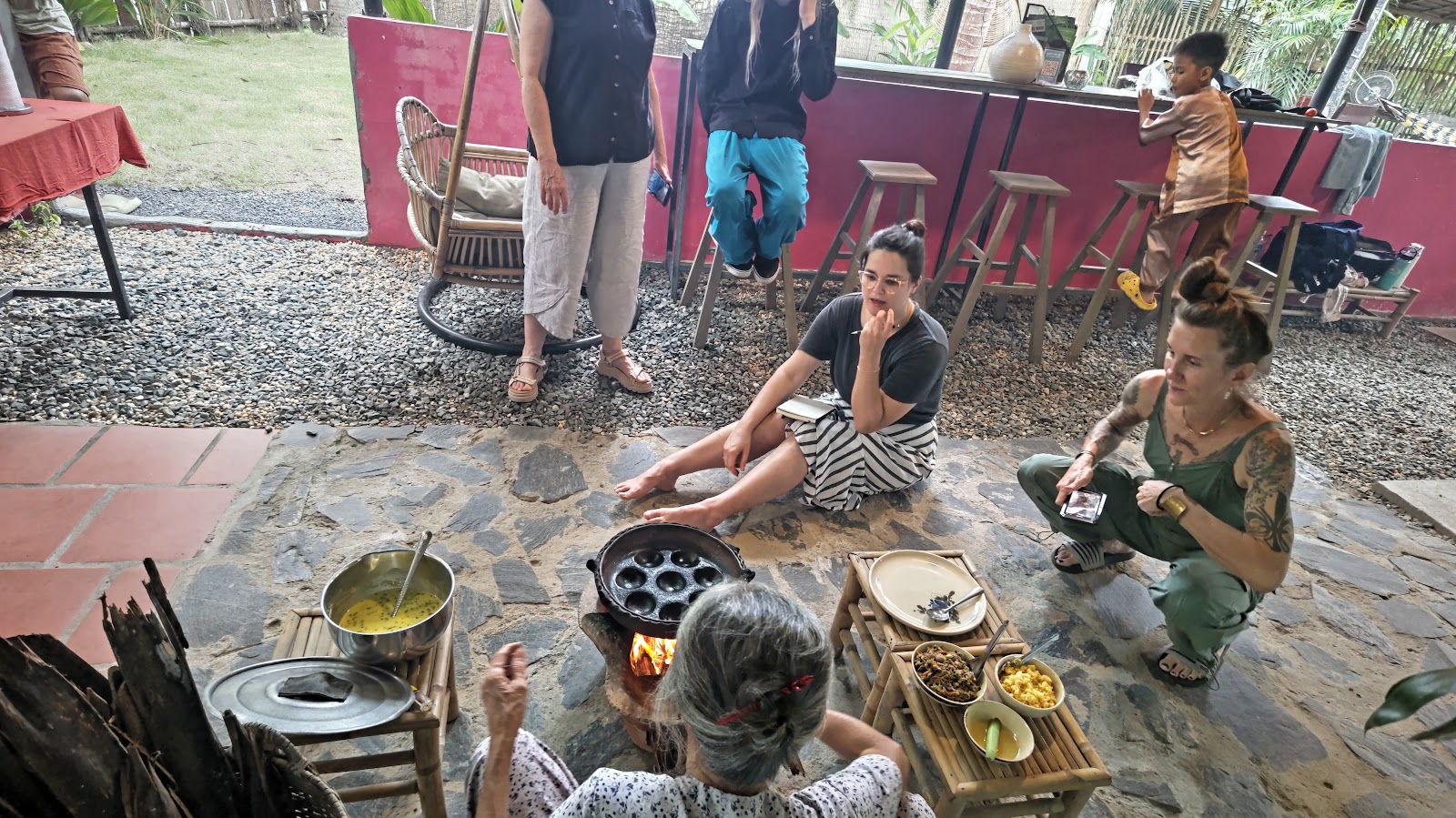
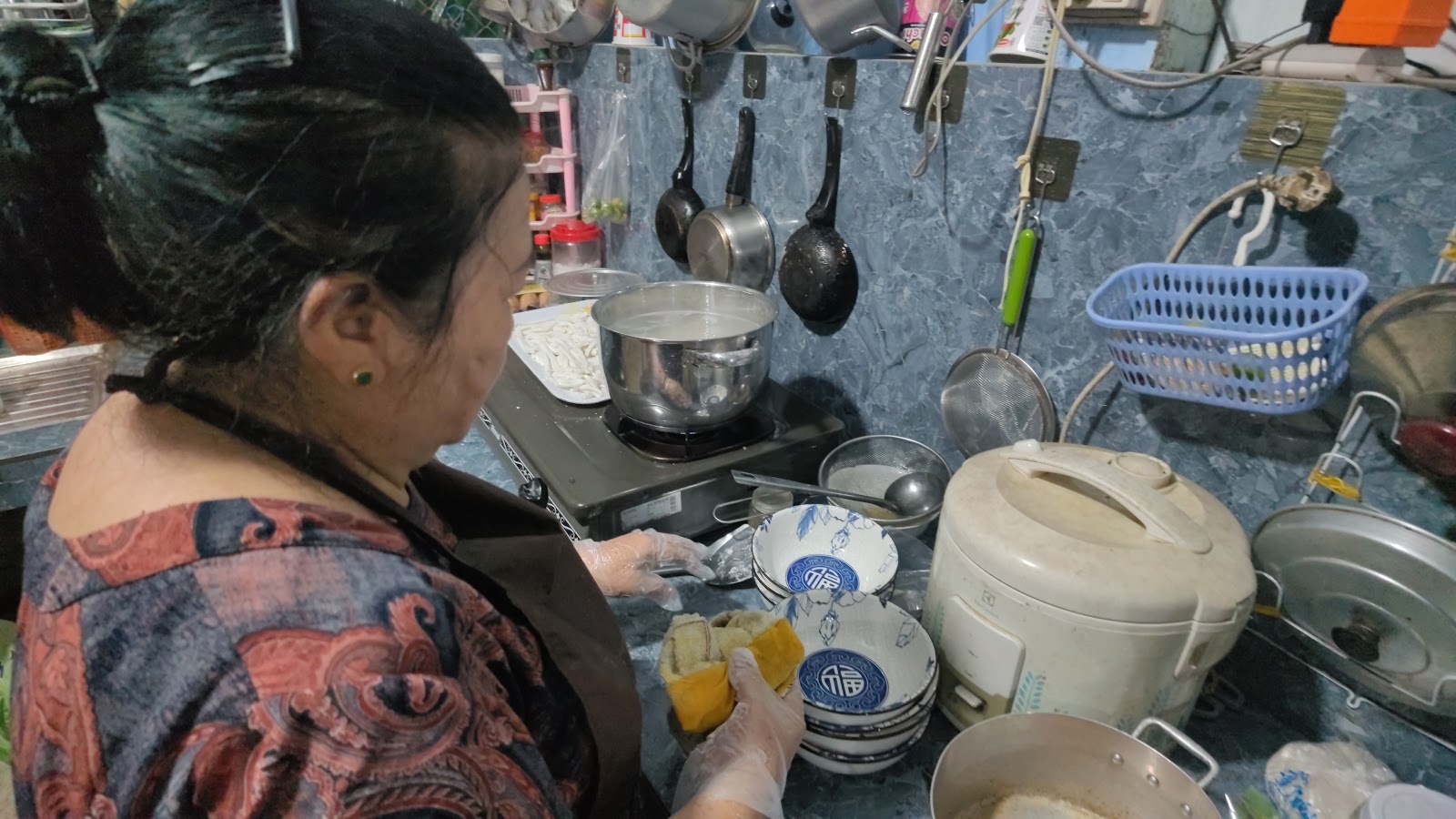 Home cooking happens in a working kitchen, not a studio arranged only for photographs. Photo: Coco Happy Farm.
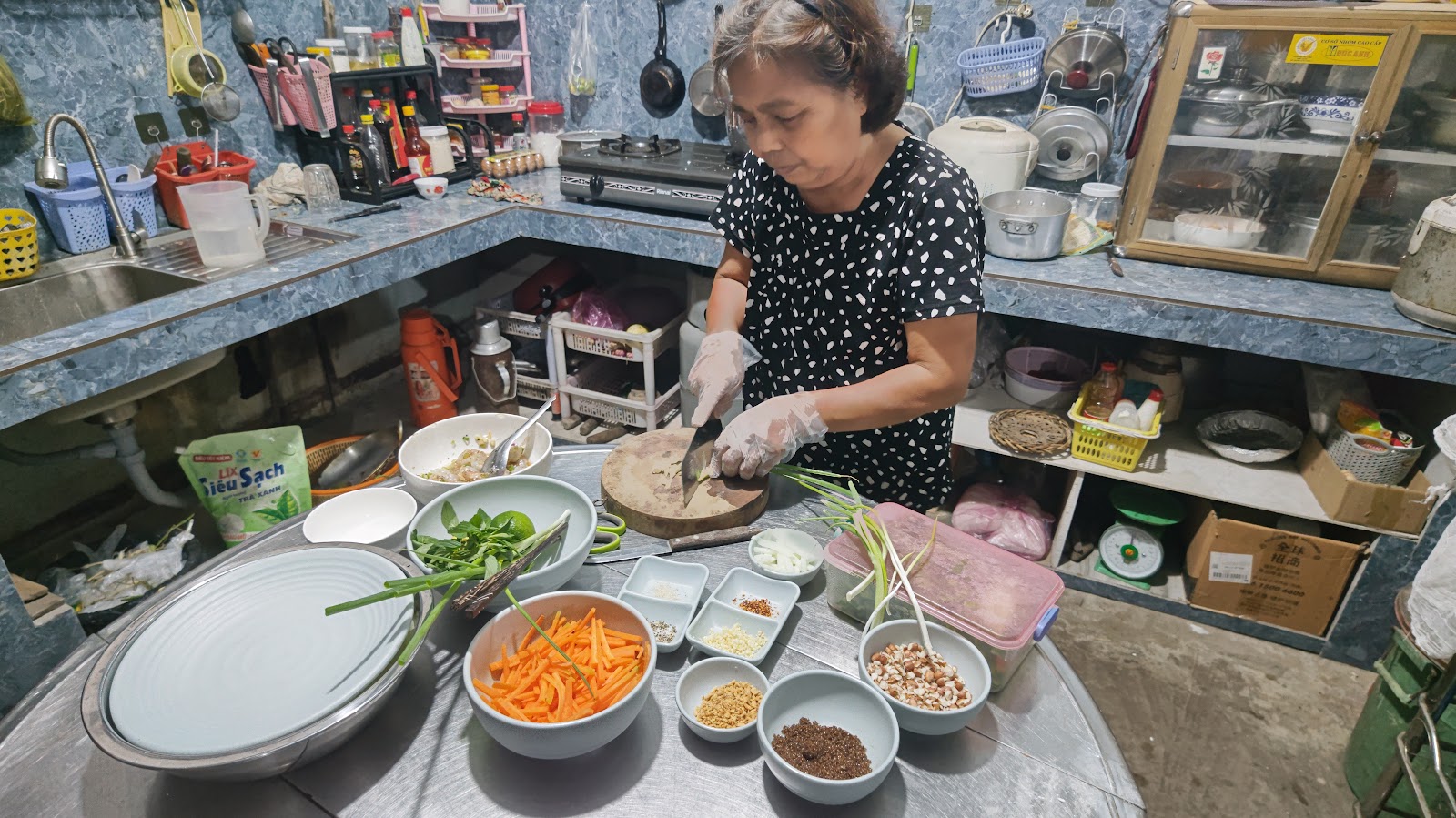 Ask about dietary needs early; small kitchens need time to buy ingredients and separate preparation. Photo: Coco Happy Farm.
Local craft visits can also be meaningful when they remain connected to real work. In Ben Tre, coconut processing and mat weaving are more informative than a sequence of souvenir stops. The difference is time: a good host explains what people make, who buys it and how the work has changed.
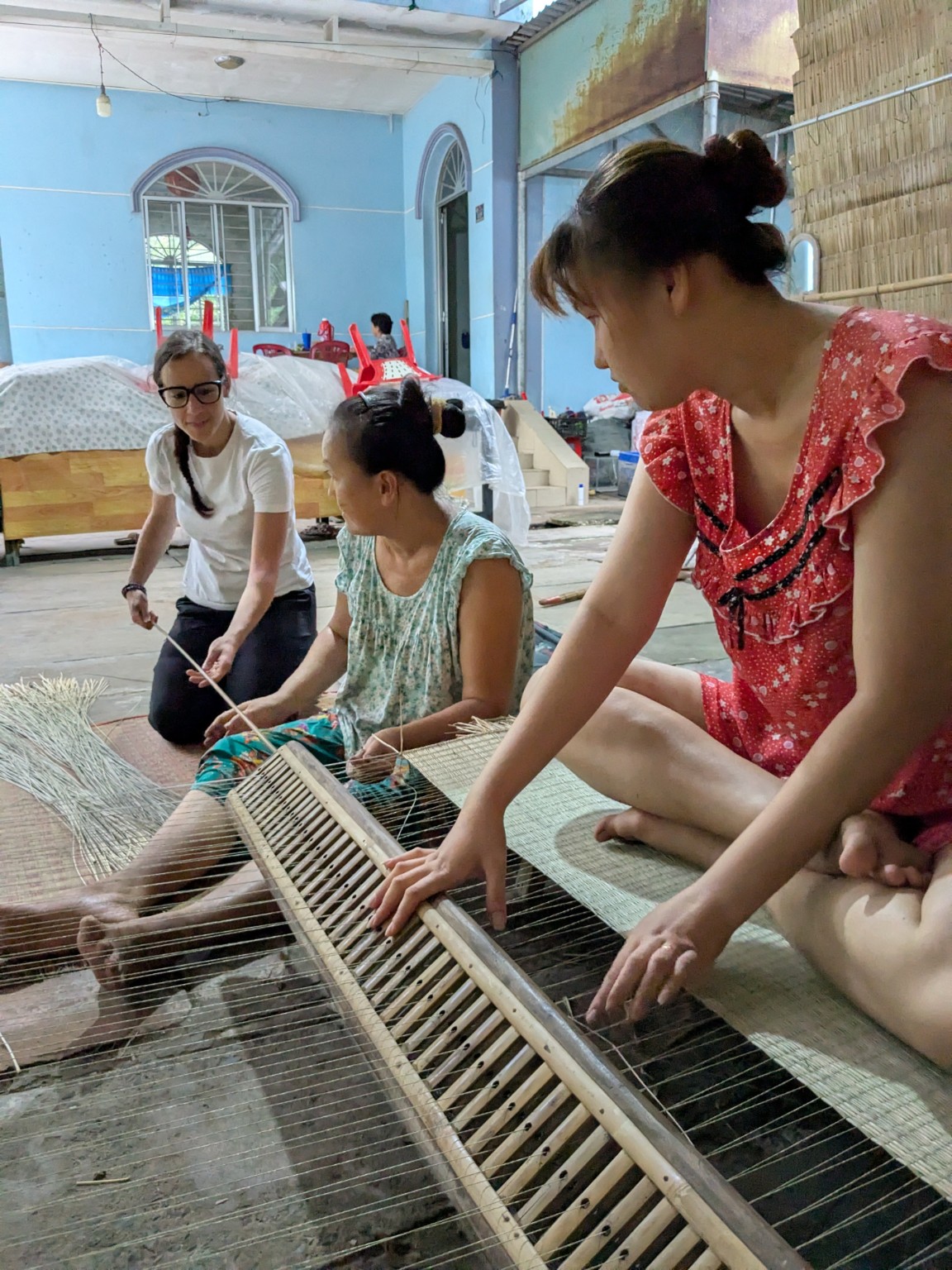 Mat weaving is still a village livelihood in parts of Ben Tre. Photo: Coco Happy Farm.
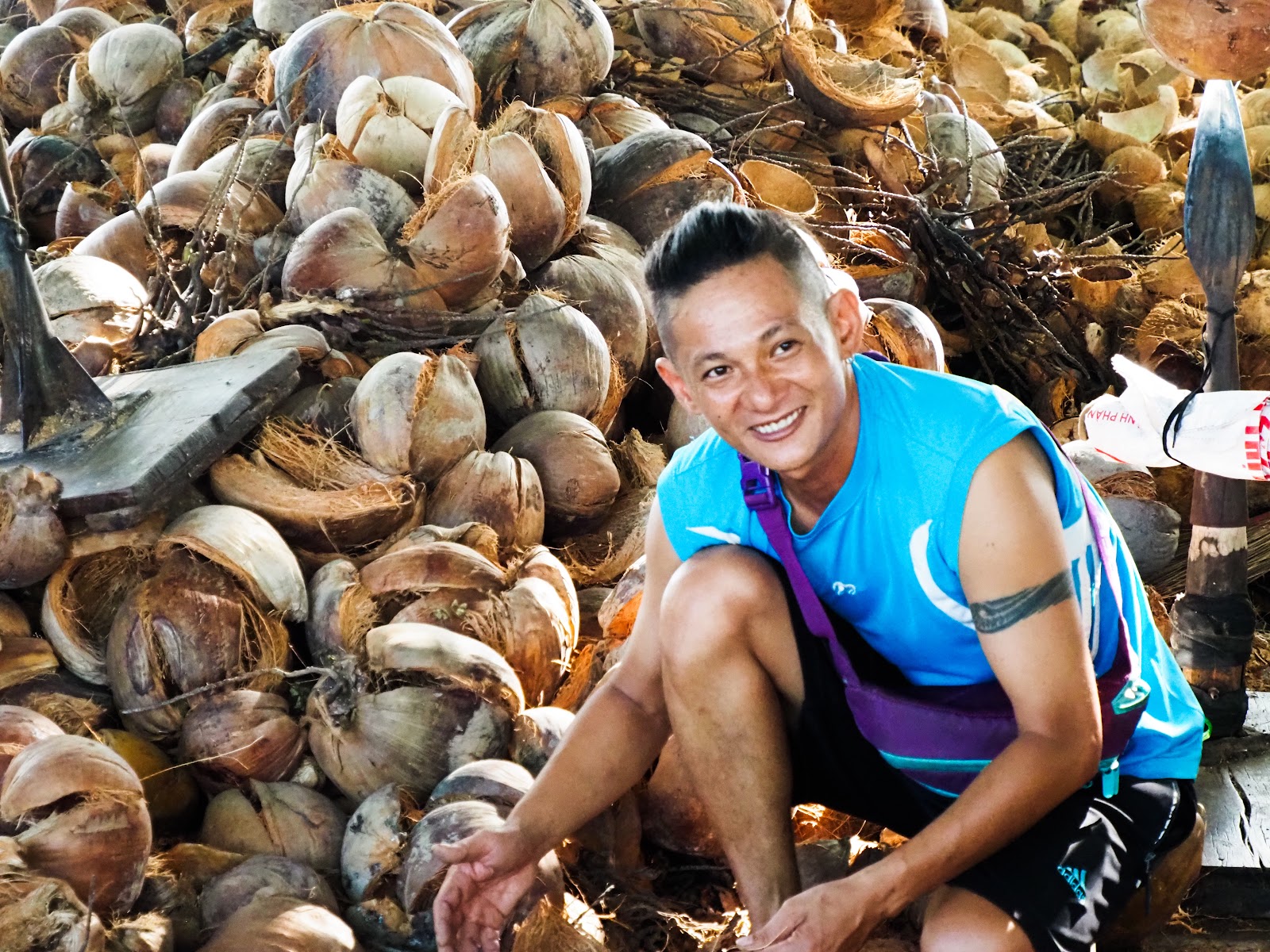 Coconut farming supports many small jobs beyond selling the fruit itself. Photo: Coco Happy Farm.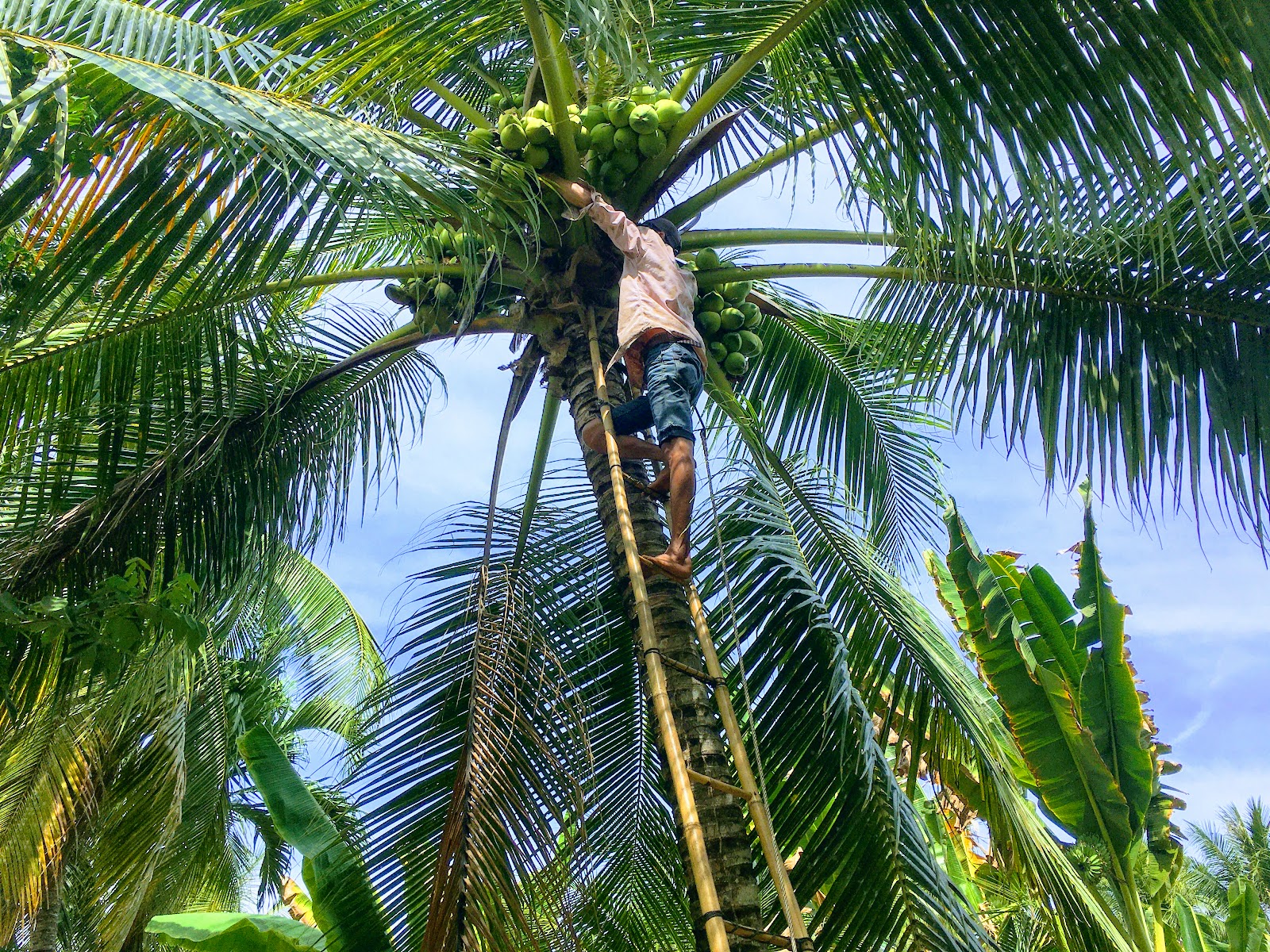
Where does Coco Happy Farm fit?
Coco Happy Farm is a small family-run stay in Lương Hòa, outside Ben Tre city. My parents farm, my sister Thúy looks after the kitchen, and I host guests and local experiences. The style is rustic and personal, not luxurious. Rooms have practical comforts, but the farm remains close to village sounds, insects, rain and ordinary family life.
- Travellers who want a quiet coconut-growing village
- Couples, families and solo guests comfortable with simple hospitality
- Guests who value cycling, gardens, boats and local food
- People willing to slow down and leave free time in the day
- Visitors who prefer honest advice to a packaged resort programme
- Travellers expecting luxury facilities or a swimming pool
- Guests who need restaurants and nightlife at the doorstep
- People wanting full-time staff attention
- Visitors uncomfortable with rural nature and sounds
- Anyone who expects every activity to be private or guaranteed
In-house guests can use bicycles, receive fresh coconut and seasonal fruit when available, and normally join a complimentary village cycling experience. Boat trips, cooking classes, meals and transport are separate unless the booking clearly says otherwise. Read our complete honest guide to Coco Happy Farm before deciding.
How many nights should you stay?
Works if you arrive by early afternoon and accept a focused schedule. A late arrival leaves little time beyond dinner and sleep.
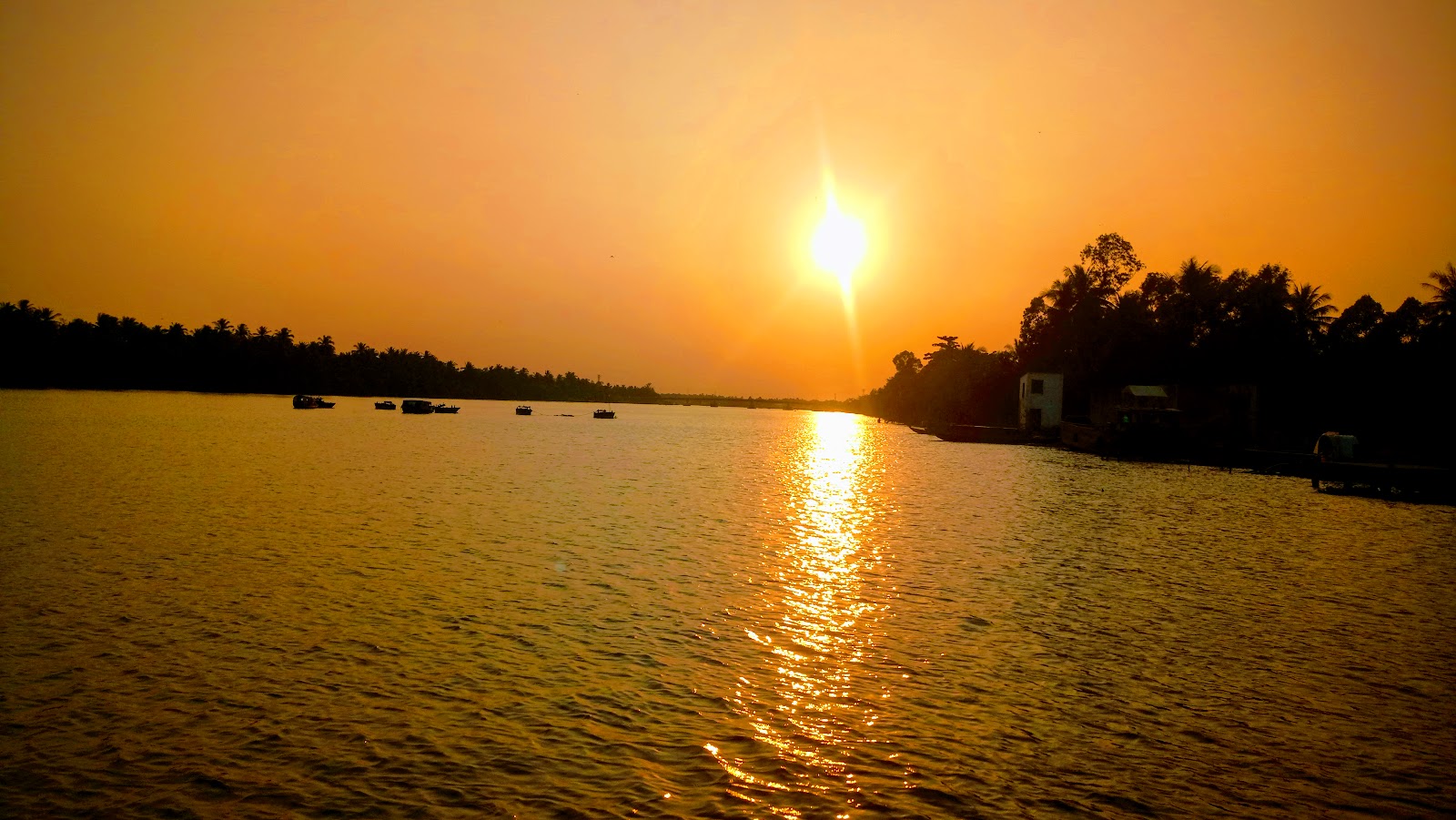
Best for most guests. You can combine a light river afternoon, an active cycling morning and genuine free time.
Good for families and slow travellers. Add fishing, a cooking class or a quiet farm day without repeating the first two days.
For realistic schedules, compare our two-day Mekong Delta itinerary and three-day itinerary. The order matters: after travelling to the farm, a mostly seated river experience is gentler than cycling; the more active ride is better after a full night’s sleep.
A simple booking test
Send the property three questions before paying: Which exact room will we sleep in? What can we realistically do at our arrival time? How do we reach you and continue to our next destination? A thoughtful, specific reply is often a better quality signal than a long list of attractions.
Read recent reviews for patterns, not perfection. One complaint about a frog or a quiet evening may simply confirm that the property is rural. Repeated confusion about rooms, meals, transport or surprise charges is more important.
Frequently asked questions
Which area has the best farmstays in the Mekong Delta?
There is no single best area. Ben Tre suits coconut villages, cycling and narrow canals; Can Tho suits travellers who also want the floating market and city convenience; Vinh Long and Cai Be work well for orchard and island stays; farther west suits travellers continuing toward Chau Doc or Cambodia.
What is the difference between a farmstay and a homestay?
The names are used loosely in Vietnam. A farmstay should have a real connection to land, gardens or agricultural work, while a homestay may simply be a small family-run accommodation. Check the location, hosts and daily activities rather than trusting the label.
How many nights should I stay at a Mekong Delta farmstay?
Two nights is the best balance for most travellers. It allows one active day, quieter mornings and evenings, and flexibility for weather. One night can work with an early arrival; three nights suits families and slow travellers who enjoy unplanned time.
Are Mekong Delta farmstays suitable for children?
Many are, especially those with gardens, bicycles and family rooms. Parents should confirm water safety, life jackets, stairs, bed arrangements, bicycle sizes, meal flexibility and distance from medical services before booking.
Do farmstays have air conditioning and private bathrooms?
Some do and some do not. Even within one property, room types can differ. Check the exact room listing for air conditioning, bathroom privacy, hot water, mosquito protection, stairs and bed layout.
Should I book a farmstay directly or through an OTA?
Use the channel you trust. OTAs provide familiar payment and cancellation systems; direct booking makes detailed questions easier. Compare the same room, meal plan, cancellation policy and included activities before comparing prices.
Is Coco Happy Farm a luxury resort?
No. It is a small family-run rural farmstay with practical comforts, personal hosting and simple village experiences. It suits travellers seeking local life, but not guests expecting polished resort facilities, nightlife or full-time staff service.
Looking for the right kind of rural stay?
Start with the experience you want, then choose the place. If a quiet Ben Tre village sounds right, see Coco Happy Farm’s room options or message Thuần on WhatsApp with your dates, group size and arrival plan. If another Mekong area fits better, we will say so honestly.
Editorial note: This guide is based on daily experience running a family farmstay in rural Ben Tre and helping international guests plan wider Mekong Delta journeys. Accommodation standards, transport and included activities change; verify current details with each property. All photographs are original Coco Happy Farm images.