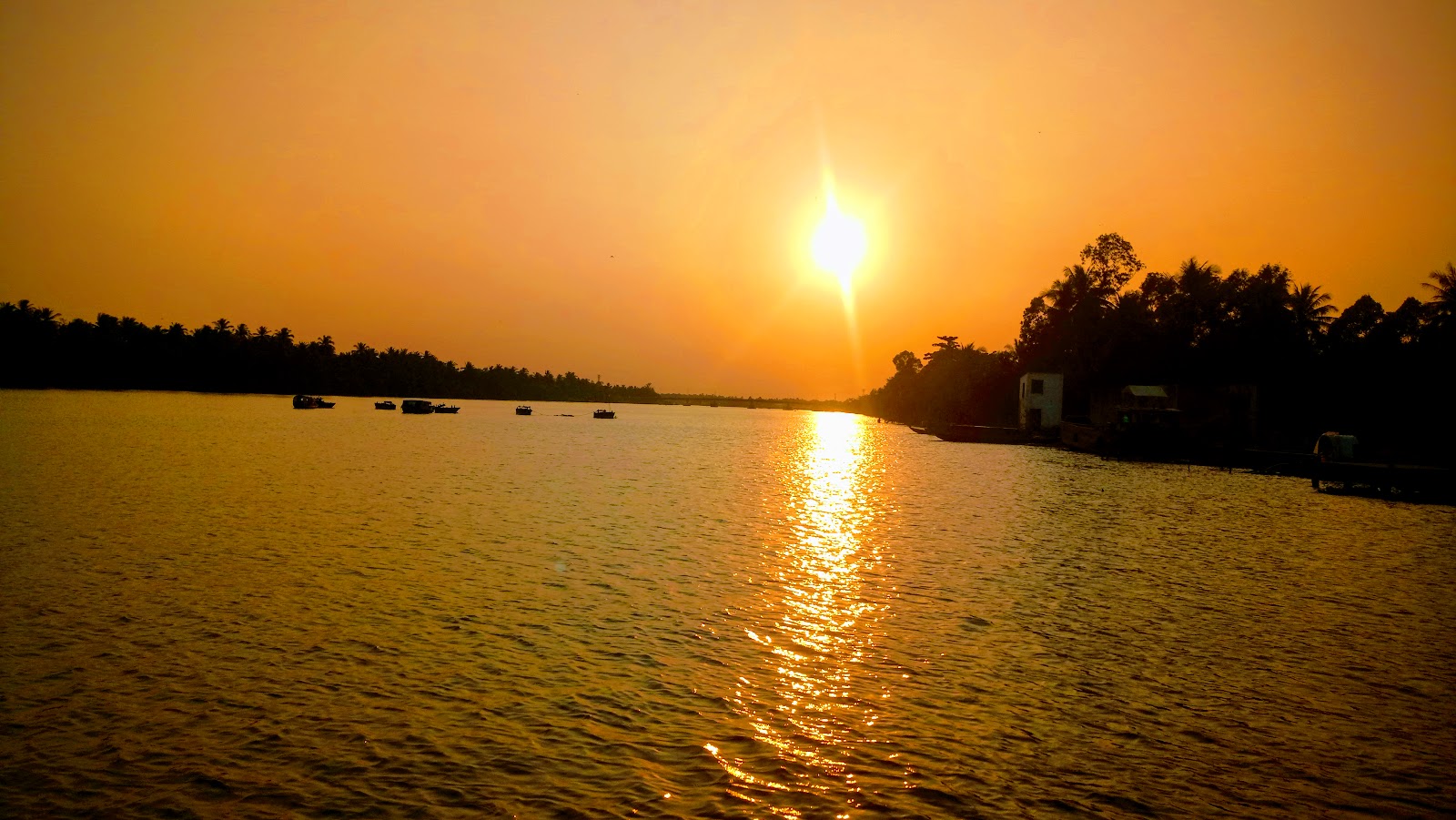
Visit from December to February for the easiest all-round first trip.
For generally drier conditions, plan between December and April. For the greenest countryside and a wider changing mix of seasonal fruit, consider May to November and accept intermittent tropical rain. Ben Tre is a year-round destination: your preferred pace matters more than finding one “perfect” month.
The climate in southern Vietnam does not divide neatly into four seasons. Ben Tre stays warm and humid, while rainfall creates the clearest practical difference. Vietnam’s official tourism guidance describes the Ho Chi Minh City and Mekong Delta dry period as December to April and the rainier period as May to November.
That broad pattern helps with planning, but it cannot predict one afternoon. A dry-season day can still be hot, and a wet-season shower may pass quickly. A responsible local host watches the actual weather, river and route rather than promising that a calendar month will behave perfectly.
Ben Tre season calendar at a glance
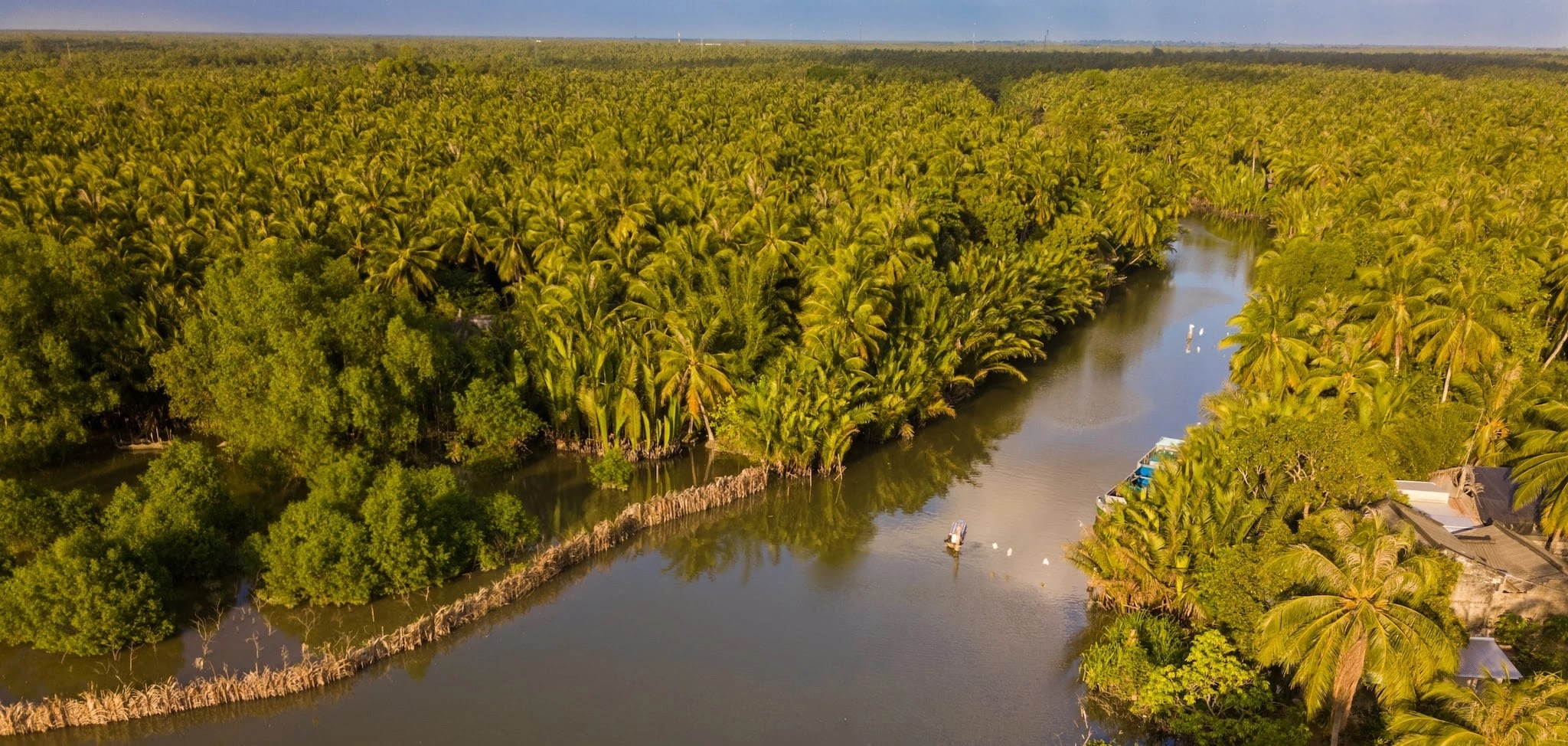
What the dry and wet seasons really feel like
Easier outdoor planning
Clearer conditions are more common, so cycling, walking and boats are simpler to schedule. December through February is often the most comfortable compromise, while March and April can feel hotter.
Greener and more changeable
Rainfall becomes more frequent, humidity stays high and vegetation looks especially lush. A shower does not always consume the day, but lightning or heavy rain must be treated seriously.
The dry season is the easier choice for travellers who need a predictable sequence of outdoor activities. It is not a cool season: midday heat and sun can still make a slower schedule necessary. Start active mornings earlier, carry water and leave the middle of the day for lunch or shade.
The rainy season is not a promise of rain from breakfast to bedtime. It is a period with more frequent, less predictable rain. A shower may be brief; another may arrive with lightning, poor visibility or local flooding. No single anecdote or monthly average can tell you whether a particular cycling route or boat departure is safe.
One real rain moment—kept in proportion
On one cycling outing, our group stopped under shelter when heavy rain arrived. It passed in roughly 15 minutes, and the ride could continue after the route was checked. That is one observed outing, not a rule for Ben Tre’s rainy season. Future showers may be shorter, longer or unsafe for the same activity.
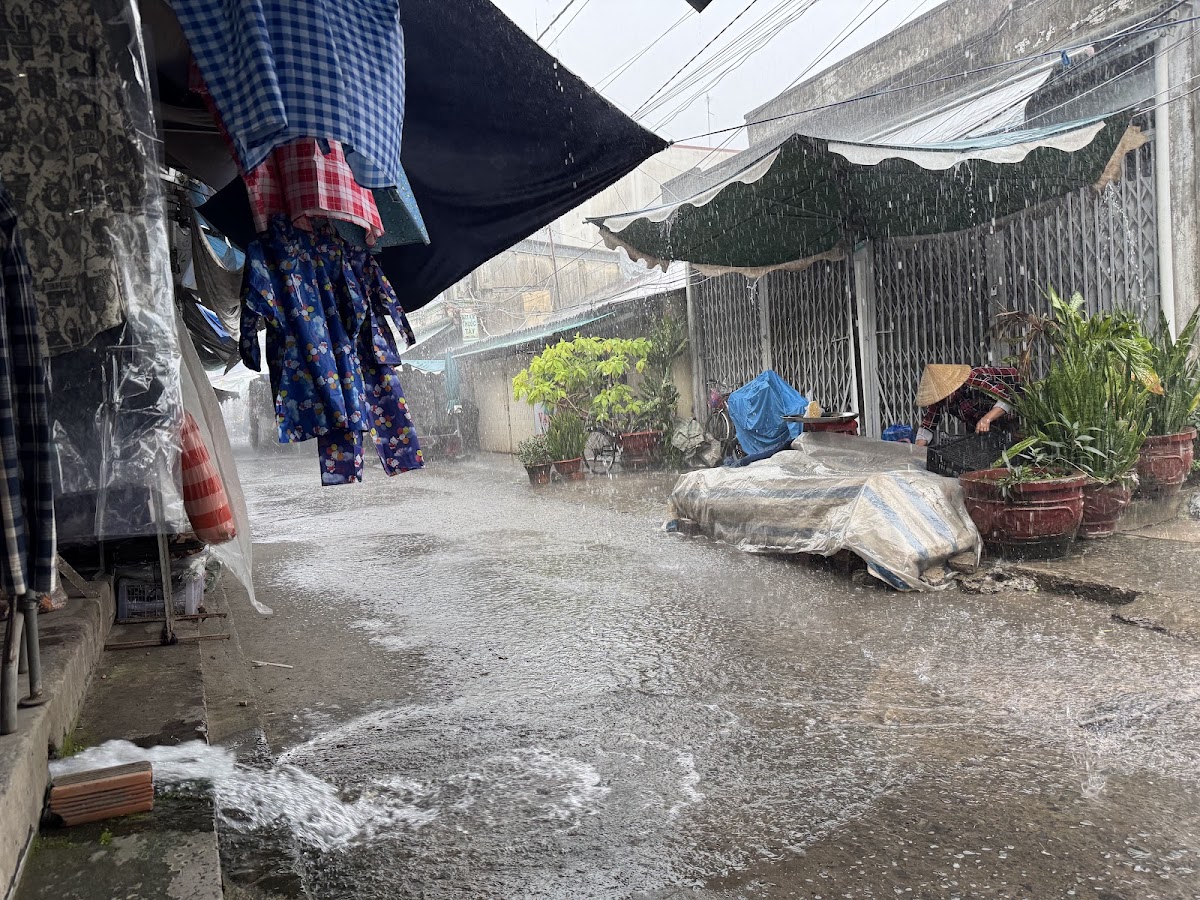 Shelter can turn a shower into a pause when conditions remain safe. Photo: Coco Happy Farm.
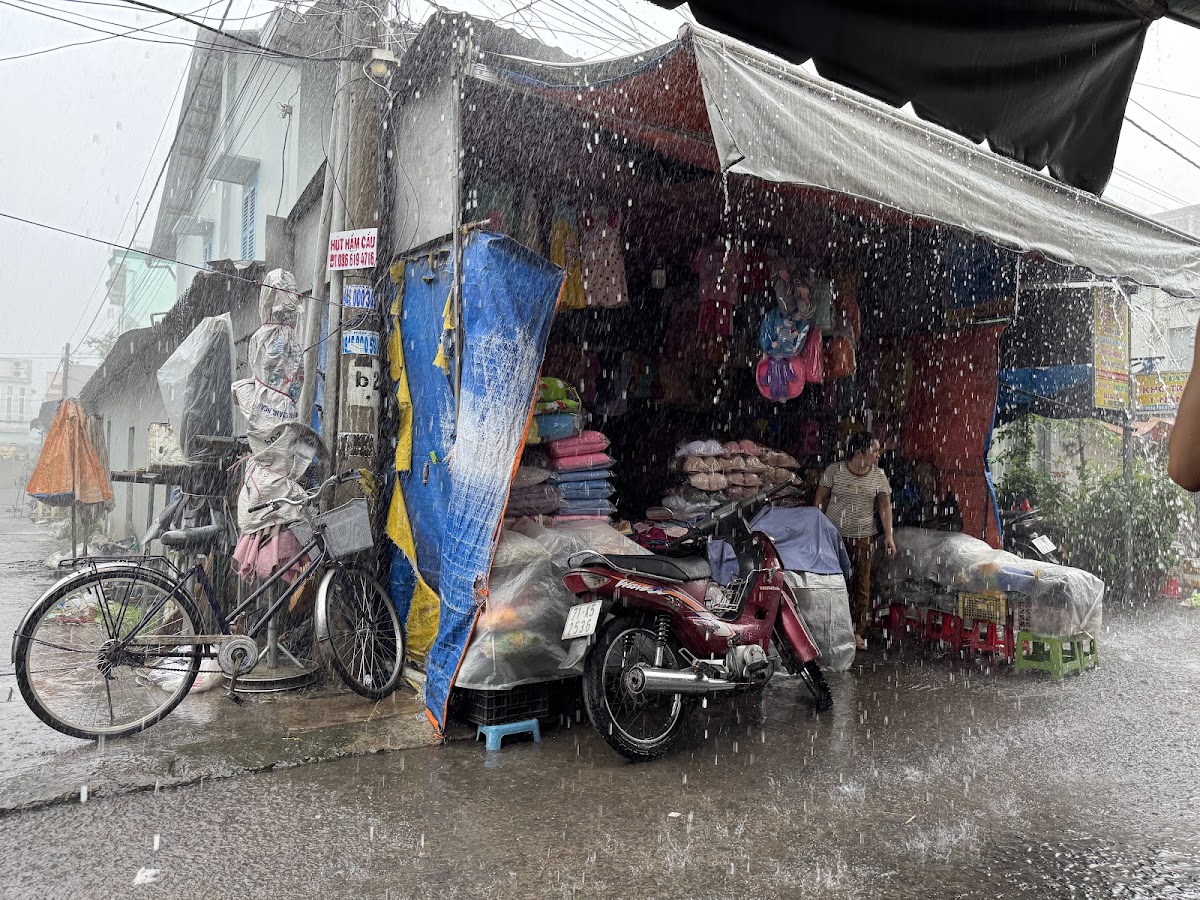 Local shops protect goods quickly; visitors should keep doorways and working space clear. Photo: Coco Happy Farm.
Best time for cycling, boats and fireflies
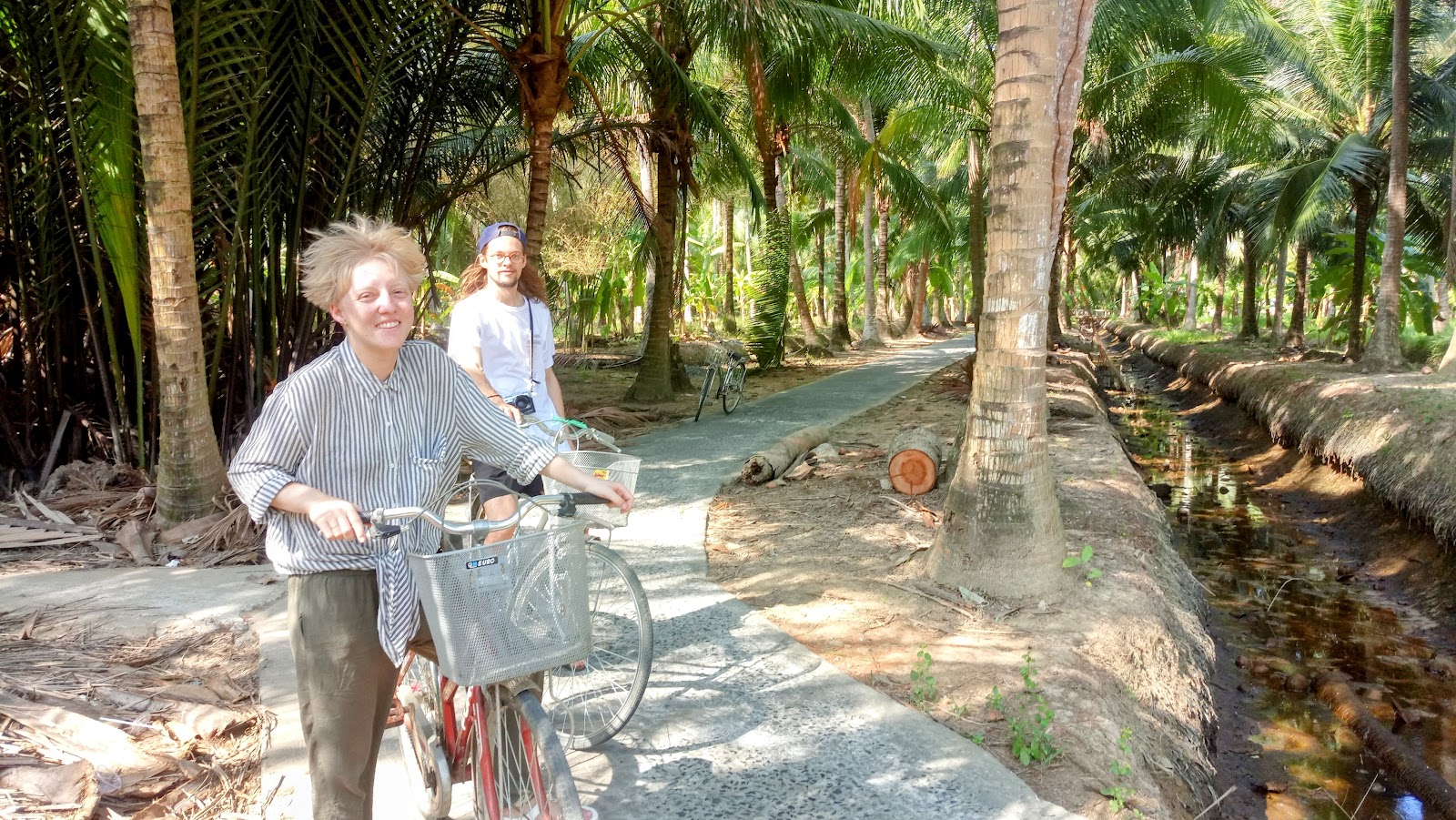
Village cycling
Drier months make the route more predictable, but cycling can work throughout the year. At Coco Happy Farm, the regular complimentary ride for in-house guests normally starts at 10:00 and lasts about two hours. An earlier, longer route of roughly three hours is only possible when arranged in advance. Heat, rain and riders’ confidence can change the route.
Hand-rowed sampan and river evenings
Boats operate in both broad seasons when local conditions are safe. A late-afternoon departure adds softer light, while a hand-rowed sampan is about the quiet canal rather than a fixed weather spectacle. Water level, wind and rain can change the exact route.
Fireflies
There is no honest month in which wild fireflies can be guaranteed. Habitat, wind, rain, moonlight, water and conditions on the evening all influence sightings. Choose the sunset and fireflies experience because the river at dusk is worthwhile; treat visible fireflies as wildlife, not a scheduled light show.
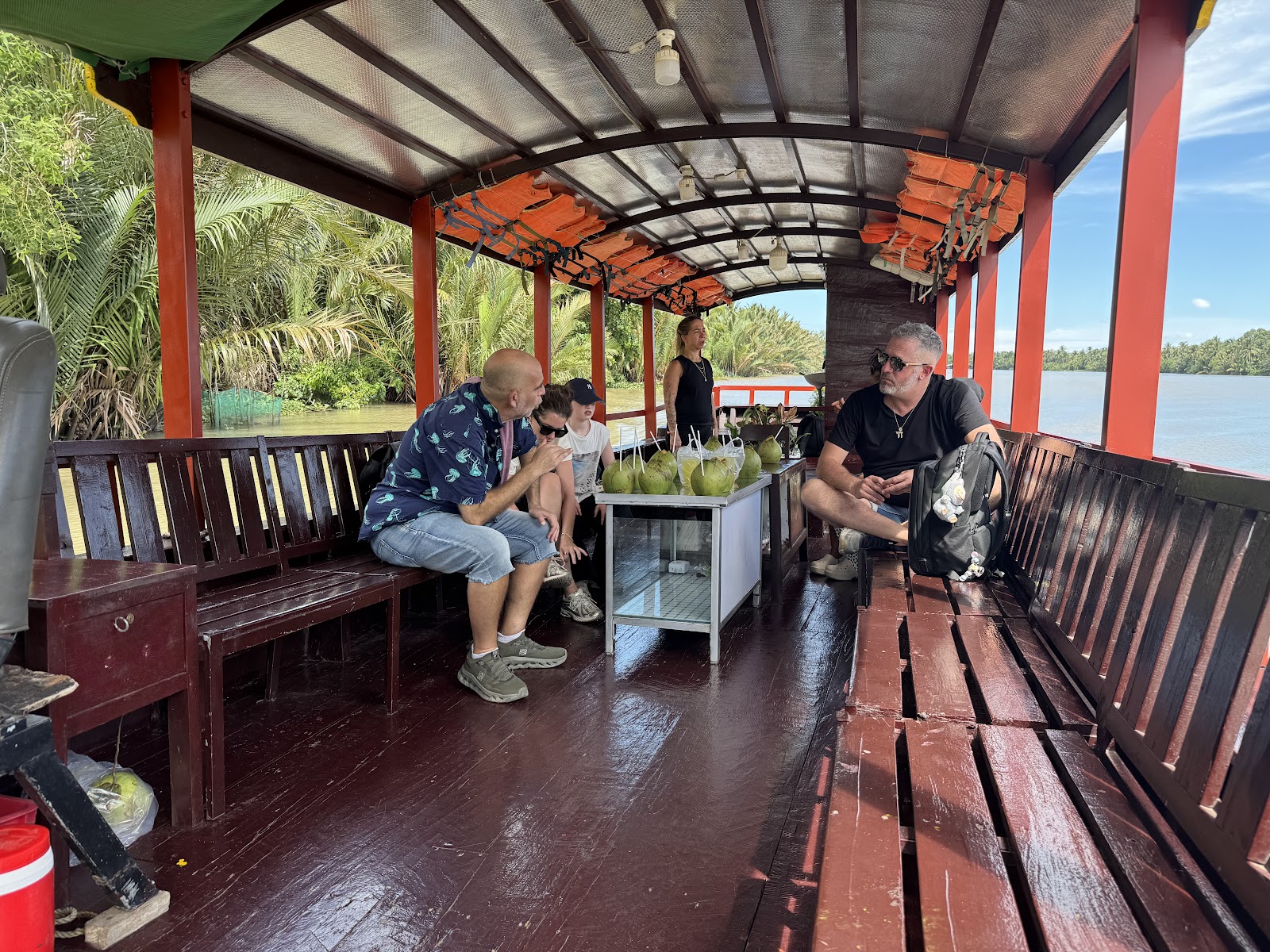 A wider boat reveals the river landscape before dark. Photo: Coco Happy Farm.
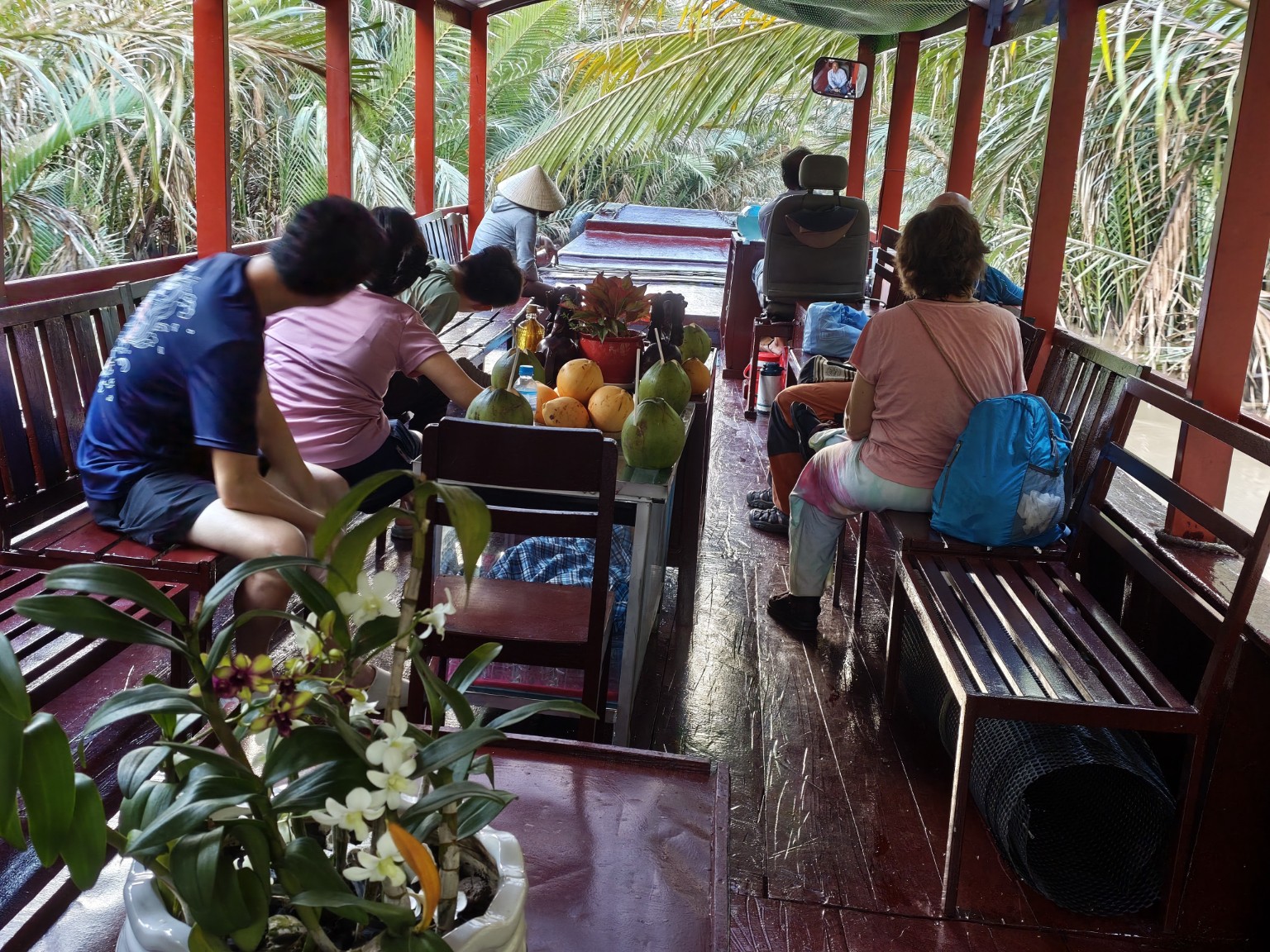 Route and timing remain subject to weather and water conditions. Photo: Coco Happy Farm.
When is fruit season in Ben Tre?
Across the Ben Tre region, coconut is the constant thread, but not every tropical fruit is available every month. Official Vietnam tourism guidance describes mangosteen as especially abundant from May to August and notes that rambutan can have more than one harvest. Pomelo is available across much of the year. These are regional fruit-season notes, not a list of crops at Coco Happy Farm. Actual timing still varies with cultivar, weather, garden and market.
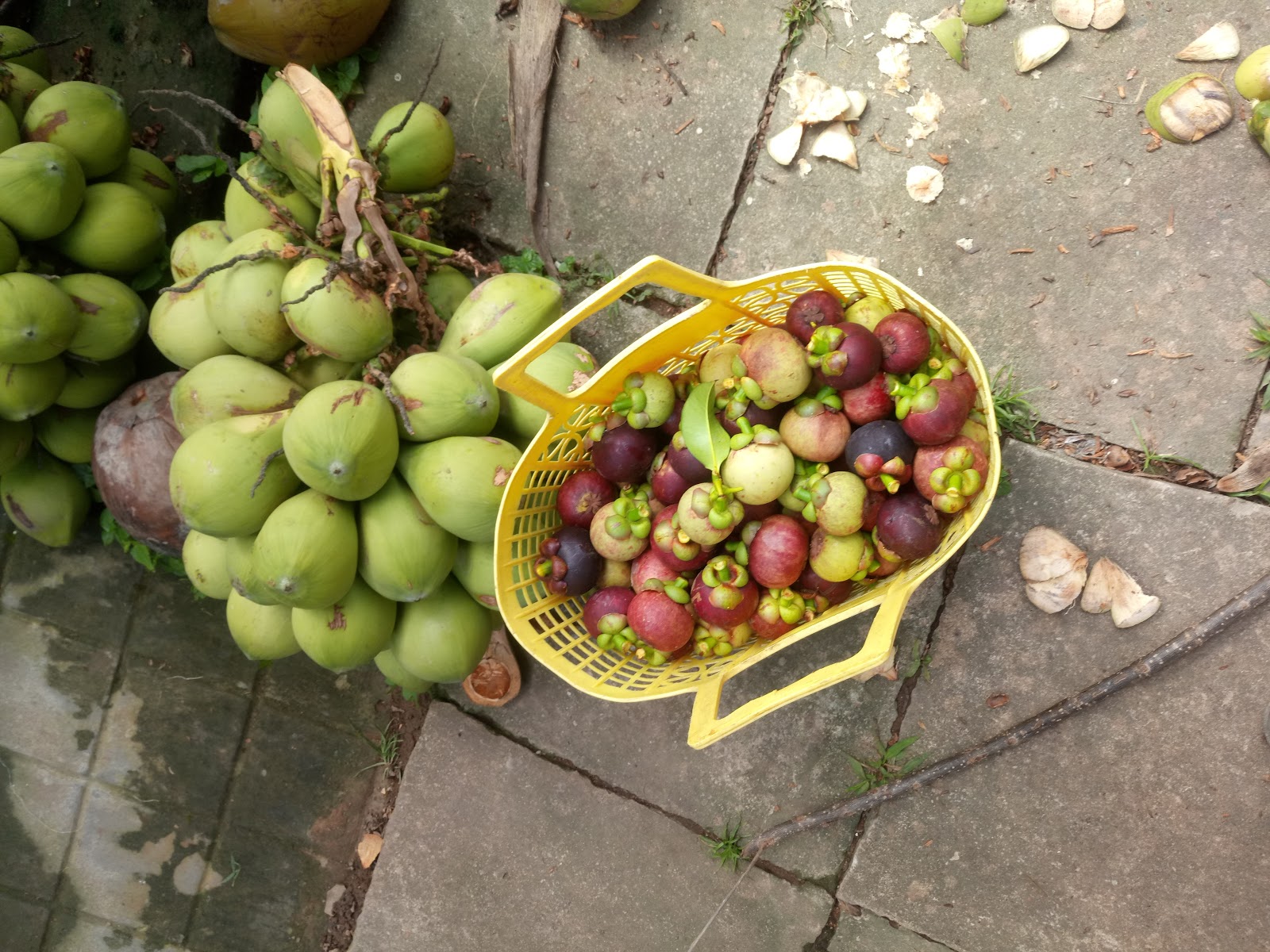
In-house guests receive complimentary fresh coconut and seasonal fruit when available. This is not an unlimited buffet or a guarantee that one named fruit will be ripe during the stay.
What grows at Coco Happy Farm throughout the year?
Coco Happy Farm is a working tropical farm, not simply accommodation surrounded by decorative gardens. Coconuts, passion fruit, cacao, bananas, oranges, pomelos, papayas and jackfruit fruit on the property year-round. Coconuts, passion fruit, cacao, bananas and oranges normally provide edible fruit year-round. Pomelos, papayas and jackfruit may be on the tree without being ripe during a particular stay. Mangoes are seasonal, approximately February to June. These are facts about our farm, distinct from the regional fruit calendar. The passion-fruit trellis is one part of this everyday farm landscape. Weather and natural fruiting cycles still change how the garden looks and which fruit is ripe or available. Fruit on the tree does not guarantee that guests can pick or eat every fruit during every stay. When choosing when to visit Ben Tre, think of the garden as a changing working place rather than a fixed harvest calendar.
Choose your travel dates by priority
For a first trip with the simplest balance of outdoor plans and generally drier weather.
If dry conditions matter most and you can schedule activity around stronger heat.
For very green landscapes and changing fruit harvests, with rain flexibility built in.
For an unhurried stay where the itinerary can move around the day’s conditions.
If you can choose only by flight price or annual leave, do not postpone Ben Tre waiting for a perfect month. Stay at least one night, keep one flexible block in the itinerary and confirm any river activity shortly before arrival. Read the complete Ben Tre travel guide or compare locally hosted tours starting in Ben Tre.
What to pack in every season
- Light, breathable clothing and a modest layer for cultural sites;
- sun protection, a refillable bottle and mosquito repellent;
- secure shoes or sandals with grip for boats and damp paths;
- a light rain jacket or poncho, especially from May to November;
- a waterproof pouch for phones and documents;
- flexible expectations when weather or wildlife changes the plan.
The farm is at 674 Hoa Binh Hamlet, Luong Hoa Commune, in the Ben Tre travel area. Following the 2025 administrative merger, the current province is Vinh Long; “Ben Tre” remains the familiar destination name used by travelers and local tourism services.
Frequently asked questions
What is the best month to visit Ben Tre?
December through February is the easiest all-round period for many first-time visitors because conditions are generally drier. Ben Tre remains tropical and warm, so the best month still depends on whether you prefer easier outdoor planning or greener wet-season landscapes.
When is the rainy season in Ben Tre?
The wider southern Vietnam and Mekong Delta wet season generally runs from May through November. Rain is often intermittent rather than continuous, but heavy showers, lightning or unsafe river conditions can require a route or timing change.
Can you see fireflies all year in Ben Tre?
Fireflies may be present at different times of year, but they are wild insects and sightings are never guaranteed. Rain, wind, moonlight, water conditions and habitat on the evening matter more than a promise tied to one month.
When is fruit season in Ben Tre?
Coconut is central to the area throughout the year, while other fruit changes by harvest. Mangosteen is often most abundant from May to August, and rambutan can have more than one harvest, but exact fruit at one farm must never be guaranteed in advance.
Is the wet season a bad time for cycling and boat trips?
No. The countryside is especially green, and many showers can be worked around. Hosts must still change or cancel an activity when lightning, heavy rain, strong wind, flooding or river conditions make it unsafe.
Can I visit Ben Tre year-round?
Yes. December to April is generally easier for dry-weather planning; May to November is greener and rainier. Choose flexible plans, pack for tropical weather and confirm time-sensitive activities shortly before arrival.
Choose the season, then keep the day flexible.
Tell Thuần your dates, group size and whether you care most about cycling, fruit, boats or fireflies. Coco Happy Farm can explain what is realistic for that week without promising weather or wildlife. Message Thuần on WhatsApp or compare the three room types.
Sources and editorial method: Broad season guidance was checked against the official Vietnam Tourism weather and climate guide. Fruit timing was checked against its guide to Vietnamese fruit. Local activity advice comes from Tran Quoc Thuan’s experience living in Lương Hòa and hosting guests at Coco Happy Farm. Weather, harvests, water and wildlife vary; confirm conditions for your dates.